 |
|
ASIA |
| Ballingal Investment Advisers |
| Primus Financial Holdings |
| Solomon Strategic Consulting |
| Bohai Bank |
| GCA Savvian |
| Return to main index |
MEET THAT RAREST of beings: the fund manager who had a good 2008. In the 12 months from February 28 2008 to the same date this year, Ballingal Investment Advisers’ Pacific Macro fund was up 27.7%. Its other fund, the Pacific Fund (distinguished from its sibling by a greater focus on equities), had a good year as well.
The performance of the fund is a salient lesson to the hedge fund industry. Ballingal Investment Advisers does not rely on excessive leverage or a view on a particular asset class. It generates returns through a deep knowledge of the multiple markets in which the fund operates.
When founder and chief investment officer Andrew Ballingal sits down opposite Euromoney in a meeting room in his firm’s modest Hong Kong offices, however, there’s little of the triumphalism that such a performance in a grim year for the hedge fund industry might justify. Ballingal is pleased with the results, but a tough start to 2009 in which both funds lost money (though in late April they were both up again) demonstrated what a difficult business delivering absolute returns can be.
So how did Ballingal’s funds make money when all about them their peers were losing theirs?
“I don’t think there was any great secret to it,” Ballingal replies. “We have a strong sense of value, a strong contrarian instinct and a strong research team. We also have the willingness and ability to look across the region and across asset classes. For instance, both funds did well in the second half of 2008 being short commodities, particularly oil and copper, and from our calls on interest rates and currencies – particularly being short the Aussie dollar. Timing one’s bearishness was also important; the oil and copper plays, in particular, required an enormous amount of patience, as did waiting for the Australian dollar to crumble. Finally, it required strong nerves to stay bearish after the initial big decline in prices.”
Many of his peers held similar views, Ballingal says, but were – in one of his favourite phrases – “richly humiliated by the markets”, as those with naturally bearish instincts were ruined by the seemingly never-ending bull market of the last decade. Some are no longer around to reap the rewards of their eventual vindication.
There’s no sense of Schadenfreude evident as he expounds the point, no evident excessive joy in having been proven right. Aside from a natural bearishness that he sustained when it seemed the whole world was turning bullish on the Asia story, Ballingal’s recent success comes from a holistic view of the region and the possible investment strategies available in it.
 |
|
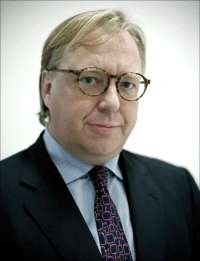
“I don’t think there was any great secret to it. We have a strong sense of value, a strong contrarian instinct and a strong research team” Andrew Ballingal, Ballingal Investment Advisers |
“Our investment approach has the advantage of enabling us to join up the dots, to exploit opportunities across the region and across asset classes; if we do our homework, we should nearly always be able to deploy capital on favourable terms,” he says. “With too narrow a strategy you’ll have extended periods where you either can’t or shouldn’t do anything. In both our investing and our business we try to keep our feet on the ground. We aim to provide good service as well as good returns to our investors, including clear communication of what we are doing and why. I want people to come in and find a hard-working, effective investing firm.” Ballingal also likes to be conservative: despite a good year his funds are both reducing leverage now, and in the report for the Macro fund’s performance in 2008 he states: “The fund operates at moderate levels of leverage in the commodity, equity, bond, money and currency markets, with ‘equity-equivalent risk’ typically kept below 100% gross, ie, the fund is not generally geared beyond the equivalent of a fully invested equity fund on equivalent risk basis.”
Ballingal speaks frankly and quickly, frequently interrupting one intelligent observation with another, starting lists of numbered arguments that are never finished, his thoughts racing ahead of his (nonetheless impressive) ability to articulate them. He is aware of the somewhat staccato nature of his discourse and acknowledges it. The markets are misbehaving themselves today, he says, and that accounts for his occasionally distracted manner.
This jumpiness is a taste of the coming year, Ballingal believes: despite the relative success of his firm’s funds he and partner Geoffrey Barker, portfolio manager of the Macro fund, are reducing the gearing of both entities in preparation for a grinding bear market.
“2008 was a year of extremes with many markets experiencing unprecedented volatility as financial liquidity tightened and valuation anomalies were exposed,” they wrote in their December report for the Macro fund. “There is no question that these conditions benefited our fund and we doubt that they will recur on the same scale in 2009. More plausibly, we will see a more skittish trading environment with fewer strong, clear trends to latch on to; it is likely that we will therefore have to adopt a shorter-term trading style.”
Sense of outrage
It is this adaptability, as well as the ability of both funds to look at multiple asset classes, drawing on both Ballingal’s and Barker’s long experience in the region, that Ballingal says accounts for much of their success. The two also share a certain cynical sense of humour, a habit of making mordant observations on the industry and its follies that also carry a sense of outrage where there is perceived wrongdoing. It is manifest when Ballingal talks about the inability of anyone in a position of authority to apologize meaningfully for the mess that’s been made of the US financial system, and manifest again in the following passage from Barker’s Big picture client letter in March 2009: “…what is [the] problem? Is it a failure of the market? Is it that the state has withered away too much? Have we permitted excessive competition and entrepreneurialism? Has creative destruction run amok? Has the playing field been made too flat? Have you been popping tablets and sniffing glue?
“The real story has been about protecting society’s elites, privatizing profits and socializing losses. This has been exemplified by the Greenspan put, the misalignment of rewards and incentives, interference by central banks in the currency and money markets, a failure to apply consistent standards across capital markets, and the serial propensity to bail out the incompetent at the expense of the prudent.”
Prudence is what Ballingal wants to offer with his funds, and what prevents him from enjoying his current success or the failure of some rivals too much. The present crisis has shown that strategies that can seem safe and diversified can prove to be anything but when the unexpected occurs. Risk models, 10-year performance charts, correlation studies have been shredded by the exploding crisis, the faith of those who would predict the markets’ future by trying to model their present and past has surely been shaken.
Is there not a contradiction, Euromoney wonders, between the humble, sceptical, agnostic investment attitude of Ballingal in person and the neat rows of performance data marching ever upwards and the diagrams of value at risk that colour the funds’ promotional literature?
“We try to keep our minds open and to be humble – to recognize that we regularly get it wrong,” Ballingal replies. “You were kind enough, for instance, to point out earlier that we had a bumpy start to this year after a good 2008. We were too bullishly positioned and, as it turned out, had over-estimated the extent to which we were diversified. For the first couple of years, we fully recognized we were learning to drive, and acted accordingly, driving carefully rather than wrapping the new Ferrari round the first tree we encountered. We have learned a great deal since then, and continue to. While performance has been gratifying over the past couple of years – and anyone in our business should be primarily judged on their record – the markets never allow room for complacency.”
That consistent record is the hardest thing to achieve if you are in the business of promising absolute returns over a meaningful period of time, Ballingal believes. It is also one of the reasons why managers in the absolute-return business – he dislikes the term “hedge fund” – can and should charge the fees they do despite the recent controversy surrounding the issue.
Where hedge funds went wrong
Renaissance Technologies’ James Simon announced in January that his firm was waiving the 1% management fee on its futures fund for 2009, after it fell 12% in 2008, and there is growing pressure on managers to justify the very existence of management fees when performance is poor. Does Ballingal believe that performance fees are still justified? “Absolutely,” he says. “Literally; if you manage money for a fund aimed at delivering absolute returns, your first obligation is not to lose meaningful amounts of money over a meaningful period of time. If you do, you’re just not doing your job. Performance fees recognize the reality that to do well over time is very difficult; they also compensate managers for the fact that most hedge funds have, in my opinion, very little franchise value. The value lies in an ability to perform well over time, and to the extent that you can do that very difficult thing, you should be highly compensated.”
The issue of fees, Ballingal believes, is a distraction from the real problem. He has a different theory on where hedge funds went wrong.
“The old hedge fund model was that you had a fairly intimate and long-term relationship between the investor – typically an individual or family – and the manager. It was understood for the manager that trust would only be won over time but that reciprocally the investor had made an implicit commitment to stick around. Now some players on both sides seem keener on the quick buck.”
The emergence of the fund of funds changed that relationship, he says, by commoditizing the industry and putting investors at one remove or more from the ultimate managers of their money.
“A number of the larger alternative brands began to seek alternative sources of return. Rather than relying on performance fees as the primary return, they decided to put firm value ahead of fund returns, seeking to capitalize on clients’ assets by selling part or all of the firm – as well as continuing to charge performance fees. The close alignment of interest so critical to the hedge fund proposition began to erode.” Performance fees were not the villains of the piece, Ballingal says, and should in fact have acted as brakes on exactly the kind of fund size inflation that he has just criticized.
“The sheer scale of a number of players also set alarm bells ringing,” he says, “with some firms beginning to look like and act more like big investment banks. Beyond a certain size, it becomes increasingly difficult to make consistent returns, and hedging certainly becomes more difficult. The performance fee is supposed to be a mechanism to regulate the amount of assets you manage; if you take on too much you’ll find it harder to make the returns.
“Anyone can get lucky in one year; the real test is time.”


