 |
|
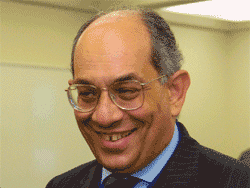
Youssef Boutros-Ghali: deficit is big, but healthy |
The economy is expected to grow 6.2% this fiscal year, according to a recent government report, while the annualized inflation rate is just over 12%. The inflation rate has more than trebled since the end of 2005. But finance minister Youssef Boutros-Ghali says that the figures do not mean that the economy is overheating and adds that he expects the inflation rate to fall to between 8% and 9% next year.
Speaking last month at Euromoney’s Egypt investors conference, the minister admitted that the high inflation rate was “partly self-inflicted”. He claimed that one-off shocks, such as a 40% adjustment in energy prices last year, contributed to the present level. However, Boutros-Ghali reckoned that the situation was under control. Last year the central bank embarked on a tightening of monetary policy, and in February the ministry of trade and industry announced a significant cut in customs duties. The average import tariff was cut by 25% to 6.5%.
The minister also dispelled concerns about the level of the country’s fiscal deficit, which last year hit 8.6% of GDP. “There is no weakness in the fiscal area,” he said. He expected the deficit to fall to 5.6% of GDP this year, boosted by windfall revenues from the sale of a 3G licence and privatizations. The most notable transaction was in October when the government sold an 80% stake in Bank of Alexandria to Italy’s Sanpaolo IMI for $2 billion.
However, Boutros-Ghali said that a sizeable fiscal deficit was a necessary price to pay for helping the poorer sections of society. “Unless the fruits of reform are channelled to lower income groups, we won’t be able to maintain the pace of reform. Therefore the deficit is big but it’s healthy.”
He added: “Countries that rely on establishing a core group that pushes the economy forward will see increasing income disparities. Unless we reach out to the poorer sections [of society] they will be left by the wayside.” However, he said that government was committed to continuing with its reform agenda, with 45 privatizations slated for this year.
He added that the government would soon issue a local-currency bond in the international capital markets raising E£5 billion ($875.7 million). This would be followed by a dollar bond.