 |
| Barry Colvin |
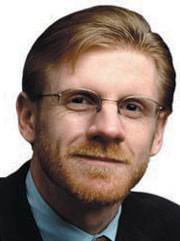
Barry Colvin gave up his competitive running career years ago to devote himself to keeping Tremont?s fund of hedge funds business on track. ?My favourite hobby is working to run this business,? he says. While he exudes dedication to his job he says: ?If I wasn?t doing this, I?d run a health club. I love that environment.? In his position as president and CIO of Tremont since the beginning of 2002, Colvin leads the firm?s research and investment management activities. Over coffee at the Park Lane Hotel in London, he explains he?s in the city to research hedge fund managers. He spends a lot of time on business travel, so his wife usually joins him.
Colvin joined Tremont as director of research in 1999. He says of his first year: ?I reordered the firm to focus on top-down selection in addition to manager selection.? That is, he concentrated on finding good strategies as well as good managers, rather than purely on bottom-up manager selection.
In the same year, he reoriented the department from being generalists into strategy specialists: ?So people focus on particular strategies. They know the managers and do strategy research in that particular area.?
Colvin believes one of the ticking bombs in his industry is the fact that increasingly hedge funds of funds are leveraging their products in an attempt to generate additional return. ?Returns have come down a little bit and volatility is low so people seem to think that you can simply leverage two times, three times, or whatever, and extrapolate the return without any consideration for the risk involved.?
Colvin feels this fund of fund leveraging introduces significant risk into the marketplace. ?In days of old when there was a crisis in the marketplace you had one entity, one level getting margin calls ? the hedge fund managers ? and you had to manage through that,? he says. ?Can you imagine two [types of players] getting margin calls ? the hedge funds and the hedge funds of funds? You?ve got a hedge fund of funds portfolio that?s down 5% or 6% that was levered 2:1 so it?s technically down about 10%. All of a sudden we [Tremont] are getting a margin call, theoretically, and we?re having to go to our hedge fund of funds and try to sell more [to cover the margin call].?
When hedge funds lose money, he says, it?s going to be magnified in the fund of funds environment. ?That means that when the hedge funds lose money, the hedge funds of funds will get margin calls. So, they will be forced sellers of the hedge fund managers. Hedge fund managers then have to sell even more, which causes them to be down even further, which causes another margin call from the hedge funds of funds. It?s going to feed on itself.?
An example of a situation that could set off this kind of snowball effect is the downgrade of Ford Motor Company nine months ago from BBB to BBB? with a maintain rather than a negative outlook. Colvin says: ?Maintain means ?we don?t expect to have any more downgrades?. Had they come out with a negative outlook there would have been a major dislocation in the credit markets because all of the institutions that are not allowed to hold anything but investment grade would have had to sell it preparing for this drop to BB+.?
Ford had $150 billion of outstanding credit at the time and a major sell-off would have created a serious dislo-cation in the credit market.




