 |
The family’s toilet seat hangs on a nail in the shared bathroom. The man in the big room at the end of the corridor is always drunk. No-one cleans the kitchen properly. And the baby next door always cries in the middle of the night. Tens of thousands of Russians still live in communal apartments (komunalka) in buildings confiscated from the rich and given to the workers immediately after the revolution. Entire families are crushed into each room, with six or seven families to an apartment. The irony is that some have decent jobs but are unable to borrow from a bank, so moving remains beyond their reach.
Reform of Russia’s banking system is gathering pace. A deposit insurance scheme was put in place at the end of last year and attention has turned to mortgages. The days of the komunalka are numbered. The government launched a drive to create a working mortgage market last month that it hopes will make mortgages available to a third of the population by 2010.
The main theme of president Putin’s second term in office, which also began in May, is a translation of Russia’s economic growth into economic prosperity. That means doing something about the appalling living standards most Russians have to endure.
And things are moving quickly. The newly reappointed cabinet approved a package of 27 laws in its first session in May and sent them to the Duma, which voted on the first seven bills only a week later. Since the legislature is dominated by pro-Kremlin parties, no-one doubts that all the new rules will be in force from January 2005.
Ground zero
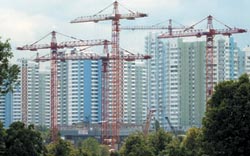
“Next year is ground zero for Russia’s residential real estate. Even before mortgages are generally available the demand for new housing has fed a boom in residential construction. The market will explode when the general population is able to borrow from a bank instead of having to raise all the money for an apartment from friends and family,” says Michael Lange, the chairman of Jones Lang LeSalle, Russia?s biggest real-estate company.
Rising wages means that real-estate markets in the biggest cities are already booming, but mortgage lending is still in its infancy. Some 160 banks are offering house loans but almost all are linked to their captive customers as part of the banks’ payroll operations for big companies.
Although three-quarters of Russians want to move house, according to some estimates, only 10%, about 5 million families, can actually afford to do so.
Despite the burgeoning real-estate business, banks still play virtually no role in house-buying: the government estimates banks extended R10.5 billion ($350 million) of housing-backed credits in 2003, but bank loans still only make up 3% of all money spent on housing. Mortgage credits in America are equivalent to more than half of GDP and the European figure is 30%; Russian mortgages are estimated to amount to just 0.5% of GDP.
Mortgage growth has been fettered by Russia’s tenant-friendly legal regime. For example it is impossible to evict a pregnant women, or one with a small child, under Russian law regardless of how much money she owes the bank, making banks nervous about lending to all but the most obviously safe clients – the rich. Mortgages still only have an average duration of five to eight years, borrowers are required to put up a 25% deposit, and interest rates are a punishing 10%-plus, although the rates are starting to fall as competition intensifies.
The new laws will clear away some of these hurdles and the most important changes are to the civil code that allows banks to evict delinquent borrowers. But they also introduce tax incentives, exempting residential property deals from value-added tax and eliminating the notary stamp duty of 1.5% of a property value for reregistering ownership ? something bankers financing real estate-backed loans have been bitterly complaining about.
There are also measures to encourage the construction of new housing to replace dilapidated stock. Sub-regional authorities will be allowed to levy a 2% tax on property to encourage them to make more lots available for construction. The hope is that the housing stock will increase to 80 million square metres in 2010 from 36.5 million in 2003.
As the main obstacles are cleared away the government is expecting mortgage lending to grow massively. “The mortgage market may grow from the current R10.5 billion to R350 billion in 2003 prices by 2010,” says industry and energy minister Viktor Khristenko. “This is a forecast, but it is realistic from the point of view of measures [the government] is proposing,” he said.
People in the industry believe even this extraordinary figure could be an underestimate. Everyone in Russia was given title to the apartments they lived in during privatization, but as no-one had any money, billions of dollars-worth of real estate have been locked up.
Mortgages should unlock this capital as Russians given good housing cash in on their privatization windfall, while those with jobs but stuck in shoddy housing move up a step on the real-estate ladder.
“The average cost of a 50-square metre apartment in Moscow has already reached about $125,000. The same apartment in the regions costs about $20,000,” says Lange. “If you multiply just the cost of an apartment in the regions by Russia’s 5 million middle-class families who want to move then you get to $100 billion of transactions. And that is not counting the upward pressure from wage increases or increasing number of people in the middle class.”


