 |
| Vladimir Putin |
The arrest of Yukos oil company owner Mikhail Khodorkovsky was a watershed for Russian business. The smart money has abandoned the lead of the former poster boy for improved corporate governance and western style management, and instead is scrambling to join what could be called the Commanding Heights Club chaired by president Vladimir Putin (pictured right). Yukos was credited with sparking a rapid improvement in corporate governance, and other oligarchs followed its example, hoping to see the same 1,000% share price gains.
But the “Khodorkovsky effect” has worn off and now the queue is lining up outside Putin’s club. Those in the club are prepared to put their commercial interests (and those of their shareholders) second to the Kremlin’s wishes. If profits and driving up the share price dominated corporate culture in the 1990s, as Putin’s second term starts it is the Kremlin’s ambitions that are setting boardroom agendas.
“There has been a sea change in the way business is done in Russia and the oligarchs’ lobby group has already signalled that business is willing to shoulder more of the burden,” says Steven Deshevsky, head of research at Aton in Moscow.
Typical club members happily pay the full rate of tax, help realize the Kremlin’s domestic and foreign policy objectives and are willing to do Putin the odd political favour.
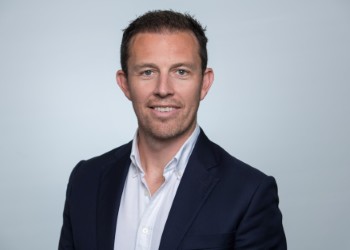
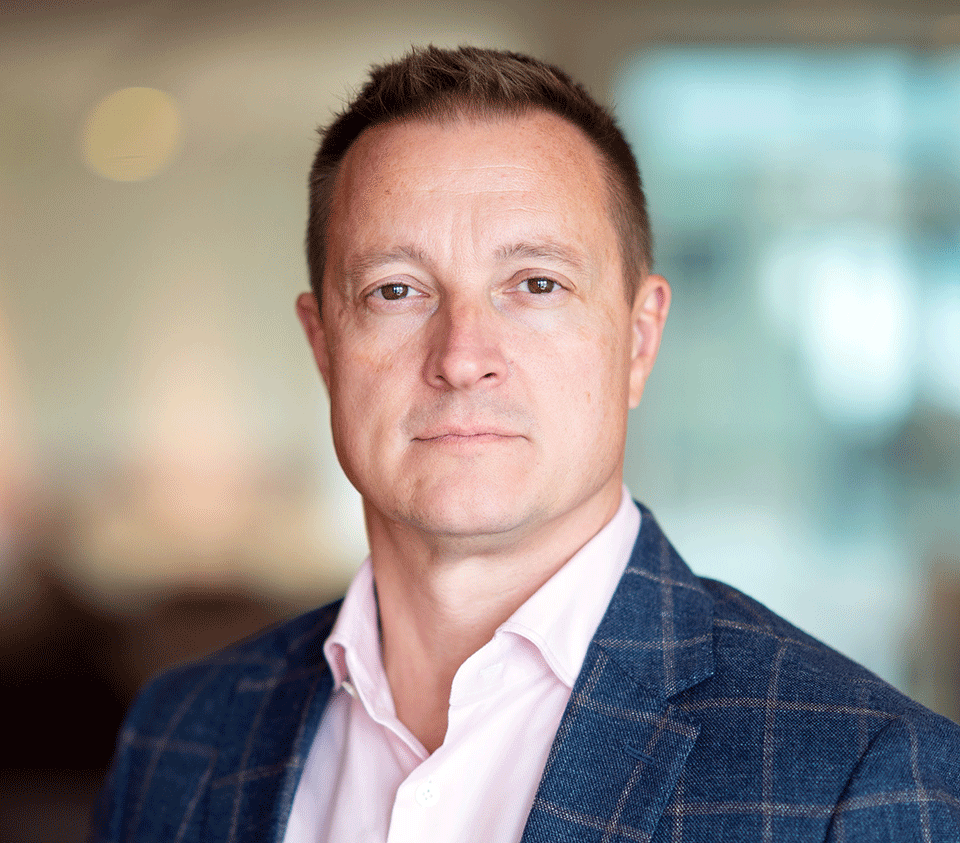
The latest membership application was from LUKoil, Russia’s second largest oil company, last month. Its first vice-president, Leonid Fedun, (pictured above, right) said: “The management has decided to give up all tax optimization methods, including legally permitted ones.”
Among the charges against oil major Yukos are the use of unethical tax optimization schemes, which enabled it to reduce its effective tax rate to 12% to 13% against the headline flat profit tax rate of 24%. It was hit with another $3 billion bill for unpaid taxes in January and accused the government of using the tax rules as blackmail.
The stalwart members of the club are Russia’s state-owned natural monopolies, all shoo-ins for a club card, which are only now being joined by privately owned enterprises.
Analysts are nearly unanimous in their view that since the Yukos coup de grâce, the Kremlin will play a more active role in running the economy by taking control of the commanding heights.
End of the tug of war “The usual tug of war between big business and the government has stopped,” says Deshevsky. “Before, when the government talked about introducing higher oil taxes the oilmen would respond with rhetoric about how taxes were choking investment. Now they are asking the government to take their money. The day of the oligarch is over.”
Roland Nash, chief strategist at Renaissance Capital, says it is not a return to central planning: the Kremlin will not actually dictate to management, which is still expected to make for-profit decisions. The president has conceded that state control doesn’t work and is trying to strike a third way between central planning and the unrestrained capitalism of the 1990s, says Nash.
He continues: “After the crisis the debate was over ‘who lost Russia’ and it was obvious that the oligarchs stole it. If the state now reins them in then this has to be good for the economy.”
It is a delicate balance. The government’s plans for increasing oil taxes are a good example of this mix of market and might.
“If you put Russia on a global scale then the oil companies are under-taxed,” says Eric Kraus, head of strategy at the Sovlink brokerage in Moscow. “The owners of these companies are willing to pay more, not just because they don’t want to share a cell with Khodorkovsky, but also because they all have a lot of skeletons in the cupboard of their own.”
Analysts expect a relatively modest regime. Despite the crackdown on oil wealth, Putin said at Christmas that he didn’t want to “kill the goose that lays the golden eggs”.
“There is probably going to be a windfall tax that kicks in when oil prices go over $25 a barrel. It will be an asymmetric tax which is relatively light below this level, but nearly everything above goes to the government,” says Kraus.
The Kremlin has yet to say how much extra tax it will impose on oil companies, but heavily hinted at $3 billion of additional taxes on the $48 billion average the sector has paid over the past few years.
The market mechanisms are likely to be accompanied by more traditional forms of state control, focusing on the infrastructure rather than new laws. An example is a new consortium, set up at the end of December. State-owned oil company Rosneft and gas monopoly Gazprom teamed up with Kremlin-friendly oil company Surgutneftegas in a troika to develop untapped oil fields in eastern Siberia. The troika was a surprise as Surgutneftegas has made barely any acquisitions to date and has been going it alone until now. Gazprom has already been awarded the right to coordinate oil and gas development in eastern Siberia, an area largely ignored by the Soviet Union, but the consortium represents a significant stepping up of state control. Oilmen believe there are huge untapped reserves in the region, previously the preserve of Yukos, that will determine the future of the Russian oil sector.
Projects such as plans from BP-TNK (created last year after a merger between BP and Tyumen oil company) to develop the massive Kovykta gas field in eastern Siberia and sell the gas to China will now have to be “coordinated” with the troika.
The group got its first asset last month when the licence for the Talakan field, which produces most of western Siberia’s oil and gas and was temporarily under Yukos’s control, was permanently awarded to Surgutneftegas. Now the consortium says it is interested in buying the large Chayandinskoye gas field from the state.