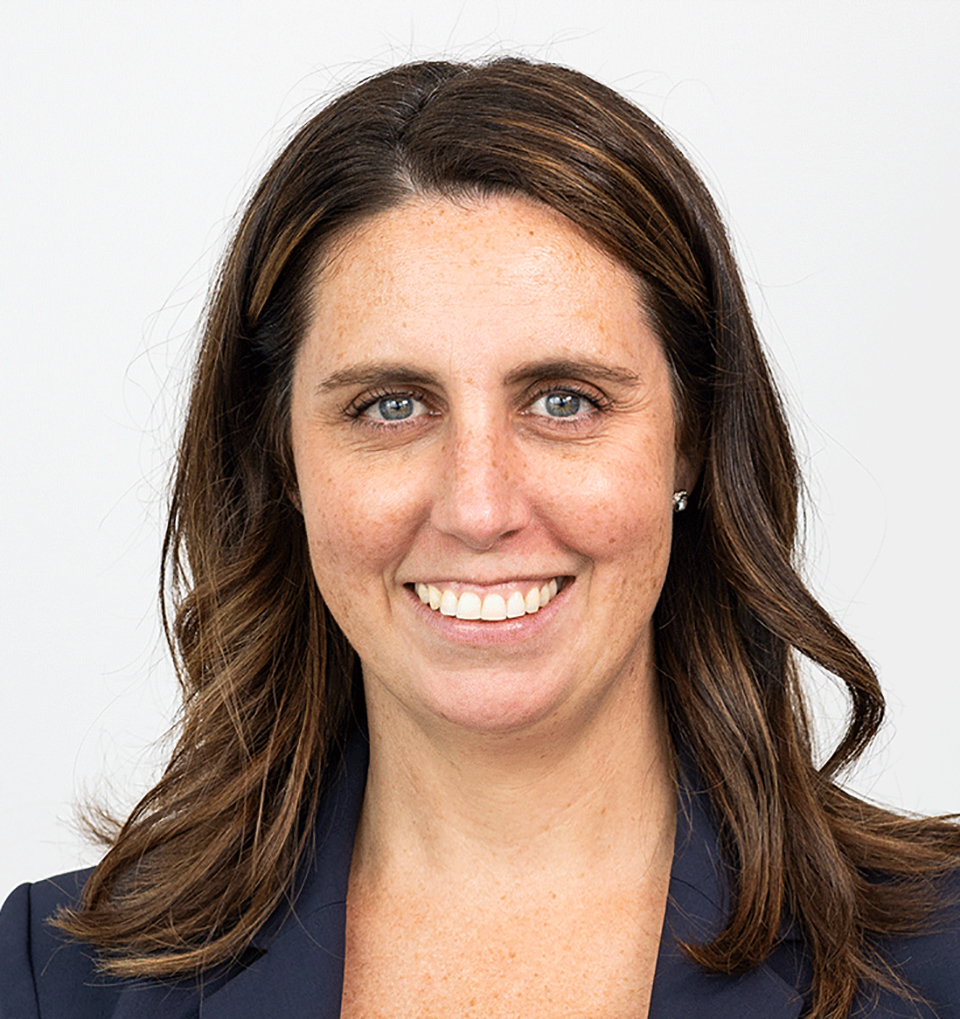
BNP Paribas thinks it has an image problem. But Adrian Boehler, less than two-months into his tenure as global head of institutional sales at the French bank, says he likes what he sees.
The former HSBC and Goldman Sachs man arrived at BNP’s International headquarters in London’s Marylebone late last year and claims to be impressed by the depth and scale of France’s leading bank’s FX offering.
“But that said, what impresses me less is the fact that what we have to offer is too well-kept a secret,” says Boehler.
But that is a problem he has been hired to address.
“My observation is that the sales force does not always appreciate the extent to which they have everything they need,” says Boehler. “They are very proficient at selling parts of the organisation they are familiar with, and the challenge I will be presenting to my global sales force is to make sure they are aware of everything we have from A to Z.”
As a competitor for 17 years, he is in a good position to judge the external perception of BNP. From the outside, he says, the bank is seen primarily as a quantitative or derivative house.
“While it’s true we are very proficient in the quantitative and derivative space, the reality is we are a great deal more than just that,” he says.
Emerging market opportunity
Boehler believes the bank undersells its emerging-market capabilities, something which BNP should use a lot more to get its foot in the door with new FX clients. Indeed, many clients might be not aware that BNP has a large global branch network, with onshore presence in more than 80 countries. That presence was reflected in last year’s Euromoney FX survey, where the bank came fifth in Asia, excluding Japan, and seventh in Latin America – outstripping its global performance of 11th.
“We have a presence in many more countries than is the current external perception,” says Boehler. “It’s up to the salesforce to bang the table about that.”
Boehler is forthright about the direction he wants to take the bank’s FX provision – and that is not as a niche EM FX bank – maintaining it is equipped to be a wholesale FX provider across all products and market segments.
“What we are not is niche, nor should we attempt to be niche, because we have the scale to have far greater ambitions,” he says. “In practical terms, we can afford to have greater and more wholesale ambitions, as a result of our impressive footprint.”
Breaking into the top ten?
Eric Auld, the bank’s head of foreign exchange, appears confident about BNP’s performance in 2011, although stops short of predicting a breakthrough into the top 10 of the Euromoney FX poll lest he “jinx it”.
“We were happy last year with the increase in our volumes,” he says. “You never know what that means in terms of increase in market share because you don’t know to what extent the whole market is increasing volumes. But by looking at that, I generally had the feeling we did a good job and continue to grow.”
In terms of client sectors, BNP has always held a strong position corporate franchise – it ranked fifth in the 2011 Euromoney survey with non-financial corporates – a very strong central bank business, and considers it is competitive in the hedge fund sector. However, with the increased migration to e-trading from voice trading, it has increased its focus on broadening its e-distribution of pricing.
“One thing we did well in 2011 was reaching more and more of our clients through other methods of electronic distribution and that means APIs [application programming interfaces] and multi-dealer platforms,” says Auld.
The bank provides liquidity to hundreds of clients through multi-dealer platforms such as FXall, 360T and Bloomberg, and has invested heavily in developing algorithmic risk-management technology. Auld says the bank has continued to perform well in FX derivatives and options, traditionally a source of strength for the bank.
Room for improvement
However, Boehler concedes that the bank has underperformed in the real money sector, and, outside Asia, is not as competitive with banks as perhaps it should be. In terms of real money, the performance should improve given the long lead time it takes to get clients on board.
“I am confident we can make ourselves relevant to those clients on the basis of what I have seen of our platform – in the broadest sense of the word platform,” he says. “We have all the requisite core ingredients to make ourselves relevant.”
Meanwhile, its lack of a large market share with banks – due to an uncompetitive single-dealer platform – is set to be rectified with the imminent launch of its new trading platform next month. It will replace FX eTrader, which was launched in 2009, based on a white-label agreement, with an external provider.
Auld has high hopes that the new platform will drive volume growth. “It is one of the things that keeps me awake at night with excitement,” he says.
Boehler’s arrival and the launch of the platform have given BNP optimism over the future, but Auld maintains that a lot of the groundwork is already in place to expand the bank’s FX business.
He says the bank’s FX offering is much stronger than when he took up his post in 2008, with BNP bringing in prime brokerage, developing its electronic trading capability and investing in some of the distribution sites.
The challenge for BNP is to get that message across.
“Compared to the platform we had a few years ago, it’s night and day, but what we can do more of is make our clients aware of the investments we have made,” says Auld.