Staley and Barclays: highlights and lowlights
Perhaps it was always going to be like this. Barclays chief executive Jes Staley, who has faced questions over his personal and business judgement since joining the bank from JPMorgan in 2016, has finally stepped down. Just six months after he looked to have seen off the business questions, it is the personal ones that have finished him.
When Credit Suisse fired CEO Tidjane Thiam despite publicly affirming that he was not involved in that bank’s spying scandal and despite its apparent support for the way that he had delivered a financial turnaround, Euromoney raised the question of how Barclays might be compelled to react to anything other than a regulatory exoneration of Staley.
Now we know.
The timing, inevitably, is awful. The bank had been heading into Glasgow’s COP26 climate summit full of messages around its sustainability efforts. Periodically under fire as a big lender to dirty industries, it has been trying to clean itself up, with new metrics and targets – and a whole new business division aimed at capturing the opportunities from green industries.
For the moment at least, all that will now be forgotten. After receiving the preliminary findings on October 29 of an investigation by the UK’s Financial Conduct Authority (FCA), Barclays announced on November 1 that Staley would be stepping down as chief executive.
The FCA and the Prudential Regulatory Authority (PRA) said only that they do not comment on ongoing proceedings.
Professional relationship
The FCA’s investigation was specific in its scope, dealing with the way in which Staley represented to the FCA, via a submission from Barclays, the nature of his relationship with the late Jeffrey Epstein when he had been working in private banking at JPMorgan, where Epstein had been a client.
Epstein was arrested in 2019 and died in jail later that year while awaiting trial on charges of sex trafficking.
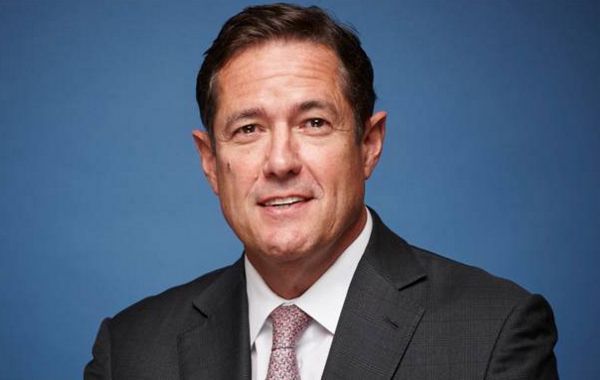
While the preliminary report has not yet been made public, Barclays says that it makes no findings that Staley “saw, or was aware of, any of Mr Epstein’s alleged crimes”.
Staley has always maintained that his relationship with Epstein was a professional one. He has said in the past that the relationship dated back to 2000, when he was given the role of running JPMorgan’s private bank, where Epstein was already a client.
“Obviously I thought I knew him well, and I didn’t,” he said when announcing Barclays’ full-year 2019 earnings on February 13, 2020.
Barclays says that the decision for him to step down was reached by him and the board. It does not offer any comment on whether this was a measure that the FCA had indicated would be needed as part of its ‘fit and proper’ assessments of senior executives. That will only become clear once the findings are published.
It’s also notable that the bank has said that Staley is entitled to 12 months’ notice under his contract, and will therefore continue to receive his fixed pay of £2.4 million in cash and shares, and his annual pension allowance of £120,000 until October 31, 2022.
Succession plan
What next? As is typical in regulatory investigations, there will be a short period of review of the preliminary findings by both sides before any publication, perhaps of one month. At some point there will be a final report.
In the meantime, the succession plan has kicked in. It was already obvious that the two strongest internal candidates were the two co-presidents of Barclays Bank plc, Paul Compton, global head of investment banking, and CS Venkatakrishnan, head of global markets. But Venkatakrishnan’s appointment to his current role one year ago reflected the board’s preference for him to be Staley’s successor, although the bank also considered external possibilities too.
Whatever the precise findings that the FCA has shared with the bank, Barclays has deemed them sufficient to require Staley’s exit this time around
Now Venkatakrishnan has been confirmed as the new CEO. This is not an interim measure but a permanent replacement. Given the importance of Barclays in the UK banking sector, the choice should at least help to assuage fears about knowledge of risk at the very top.
Venkatakrishnan was the bank’s chief risk officer between 2016 and 2020, and he has also served in the bank’s asset management and investment banking divisions. He is well thought of externally, and should be able to convince as a continuation candidate in the areas where that matters.
Barclays’ stock opened down nearly 4% on Monday morning, but at the time of writing, after about an hour of trading, had recovered to be about 1% down from the Friday close. Given the nature of Staley’s exit, there ought to be no special reason to expect any strategic shift from Venkatakrishnan. This was not, after all, a business-driven change.
Under fire
None of that matters much to Staley, who will now be devoting his energies to contesting the conclusions that the FCA has reached.
Ever since joining Barclays, Staley has been under fire from two directions. Shareholder activists, led by Edward Bramson, battered him with questions over the wisdom of maintaining ambitions to be a global investment banking player.
Others, including regulators such as the FCA, found flaws in his behaviour, such as his attempts to interfere with a whistleblowing complaint not long after he had joined the bank.
But even though the bank’s financial results – and not least the pandemic resilience that its investment bank brought to the group as a whole – meant that he could finally see off the challenge to his approach to the business side, the behavioural questions never went away.
The whistleblowing issue, in which Staley was found by the FCA to have attempted to unmask the source of a complaint about another executive, but not in such a way as to make him unfit to continue to lead the bank, had been the biggest embarrassment until now. It had led to him being fined in 2018, not fired.
But once bitten, twice shy. Whatever the precise findings that the FCA has shared with the bank, Barclays has deemed them sufficient to require Staley’s exit this time around.
Even while the regulatory findings are still to be released, it is clear that this is a cautionary tale – and one as old as the hills.
Senior executives can fend off much opposition to their business decisions, particularly while markets stay supportive and the money keeps rolling in.
But the issue of character is a thornier one. Once it attaches itself to someone, the whiff of embarrassment or scandal never truly goes away.
You can fight it all you want, until you can’t.