The Nasdaq and São Paolo IPO of merchant acquirer Getnet Brasil this October is another sign of PagoNxt’s growing importance at Banco Santander. While Santander Brasil previously housed Getnet home-market operations, the $1.3 billion listing serves to shift majority ownership to the new global payments platform. In doing so, it brings PagoNxt closer to a potential IPO of its own.
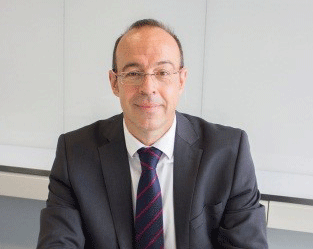
Speaking with Euromoney, PagoNxt chief executive Javier San Félix describes a very different approach to that of banks taking advantage of hot payments valuations and selling out to capital-rich specialists.
Firms such as Nexi and Worldline are increasingly dominant in payments in Europe – largely thanks to buying sub-scale businesses previously owned by banks, much as Paris-listed Amundi and others have done in asset management.
In the early 2010s, Santander looked like it was following that path. But today there is no question that payments are core to the group’s strategy. Indeed, it is San Félix’s job to accelerate Santander’s growth in payments in Europe and Latin America, even in countries where Santander is not present as a large commercial bank, such as in Germany.
Specialist threats
Santander, of course, is not the only bank taking a new approach to payments. The valuations of payments specialists, including fintech players, have dwarfed even those of the big banks.
Other firms, such as Bank of America and JPMorgan, are now investing heavily in keeping payments in-house, with a view that their banks are big enough to compete with the specialists, and that services such as merchant acquiring are vital to keeping and winning wider client relationships, especially among small and medium-sized enterprises.
What makes Santander stand out, though, is the size of its customer base, some four million SMEs.
The autonomy that it has awarded the division is such that a separate PagoNxt listing is a clear possibility.
San Félix, a 13-year Santander insider, says he is “trying to blend the best of both worlds” by leveraging the client reach of the bank, while having enough separation to be able to roll out new technology rapidly, much in the manner of a fintech.
Meanwhile, Banco Santander executive chairman Ana Botín is pinning her reputation to PagoNxt, serving as the year-old company’s chairman and giving it an increasing amount of attention and group investment.
Santander spent millions buying technology and talent as part of the 2020 restructuring of German payments firm Wirecard, and this September PagoNxt bought 70% of Getnet’s Mexican tech partner Mercadotecnia, Ideas y Tecnología (MIT).
Much of inspiration, in fact, comes from Getnet, which Santander bought as a Brazil-focused business in 2014. Getnet has doubled its market share in Brazilian merchant acquiring to about 16% over the last half decade.
In e-commerce, it is a clear leader, with a Brazilian market share of 30%. Getnet has already launched in countries such as Mexico and Argentina, and this summer it launched in Europe, from bases in Madrid and Munich.
“Getnet’s success in Brazil gave us confidence: the experience of building a successful payments business, and the opportunity to leverage a talent pool to build a global platform,” says San Félix, who previously headed Santander’s UK retail and business banking division.
Blueprint
Getnet’s Brazilian business, he adds, has given “a blueprint of how to use our bank network at the same time as opening to third-party clients to increase our distribution reach”.
Much of its success is to do with deploying the bank’s team, for example in corporate banking, to sell Getnet. This has tended to be mutually beneficial.
“Santander customers who also use Getnet tend to be significantly more loyal to the bank,” says San Félix.
But it is also a question of defence, including in Spain, where banks retain a higher market share in payments than in the UK. Payments fintechs are increasingly serious competitors both in Europe and Latin America.
“I lose less sleep over other bank competitors than the Adyens, the Squares, the Klarnas – the specialists bringing disruptive new models to our customers,” says San Félix. “That’s where we need to regain competitiveness.”
I lose less sleep over other bank competitors than the Adyens, the Squares, the Klarnas – the specialists bringing disruptive new models to our customers
Javier San Félix, PagoNxt
When Euromoney speaks to Nexi’s chief executive Paolo Bertoluzzo, he points out that joining forces with firms like his is beneficial precisely because it brings a better ability to pool technology investments and therefore stay ahead of the fintechs.
Yet San Félix makes it clear that PagoNxt is not looking to become a bank-owned version of Nexi in the sense of consolidating legacy payments businesses. Rather, he wants to offer the broader and more technologically advanced but not necessarily cheaper services that he thinks firms like Adyen provide.
That rationale underpins the investments in Wirecard and MIT and shows why PagoNxt is staying away from this year’s auctions of Greek banks’ merchant acquiring arms, for example.
“We see our ourselves much more acquiring or integrating technology teams to complement our capabilities, rather than buying business portfolios,” says San Félix. “There’s the opportunity to combine volumes under a single processing engine.
“But where we see the value is not in the processing, it is in the acceptance layer, in the value-added services that you can bring to the market. You won’t find those services with the traditional players that are open to be consolidated.”