The wave of bank M&A sweeping Europe has been good for healthier banks to date.
However, it has not fixed the deepest problems in the sector: zombie banks, loaded down with legacy problems, whether operational, legal or most commonly – especially after Covid – in their loan books.
Take a look at the list of takeovers that have been agreed or launched. Then take a look at a list of parallel would-be deals that have been abandoned, or which have been widely rumoured, and have so far come to nothing – making fire sales or state-led rescues likely.
Exhibit one: talks between BBVA and Banco Sabadell broke down barely two weeks after they were announced in mid-November, apparently due to price. Contrast this with what happened a couple of months earlier between CaixaBank and Bankia, who agreed a far less anticipated €4.3 billion deal with surprising alacrity.
And the difference between these two deals or would-be deals? The profitability of Bankia’s network may be dire due to its overreliance on mortgages – something CaixaBank should help to fix – but its operational and credit risks are easier to know than those of Sabadell.
Mustier, perhaps, has been a little too dogged in his aversion to M&A
The Spanish state, Bankia’s majority owner, de-risked the firm in the early 2010s. Sabadell, on the other hand, remained fully private. It has a bigger SME book and a far lower capital ratio than Bankia. It also owns an IT-troubled UK challenger bank, TSB. Arranging the sale of TSB would have been a distraction for BBVA.
The same dynamic is present in exhibit two: Crédit Agricole’s announcement almost at the same time of a €737 million bid to acquire Credito Valtellinese (Creval). Many had been hoping for a bid for Banco BPM instead.
A purchase by Crédit Agricole of Banco BPM would have strengthened the Italian top tier. Yet Banco BPM is far bigger and – again – far riskier than Creval. Of the two, Banco BPM’s non-performing loan (NPL) ratio is higher and its capital ratio is lower.
Exhibit three is the one that started it all on the eve of Covid: Intesa Sanpaolo’s €3.5 billion takeover of UBI Banca. UBI had been in talks with a smaller mid-tier lender, BPER Banca. The deal that actually happened was between Italy’s most profitable top-tier bank, Intesa, and arguably its strongest mid-tier bank, UBI.
None of these banks, thankfully, is as troubled as Banca Monte dei Paschi di Siena (MPS), which some hoped UBI would eventually have bought.
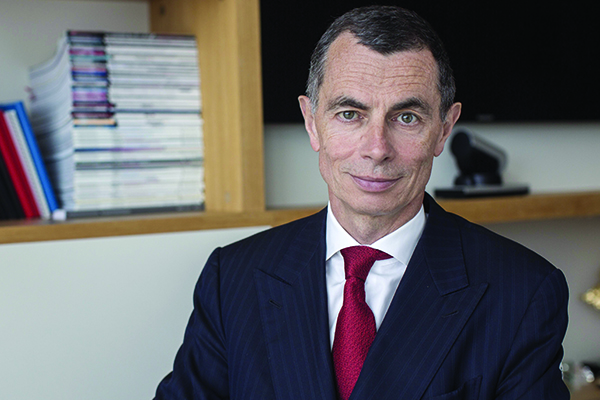
With UBI gone, eyes have turned instead to UniCredit. The news that UniCredit CEO Jean Pierre Mustier is stepping down in April, in the context of rising pressure on him to consider a merger with MPS, underlines how unappealing it is for bank CEOs to buy these less-healthy rivals.
Italy is desperate to find a buyer for MPS. It is committed to selling it by the end of next year, to satisfy EU state-aid requirements. The problem is that there is more than mere balance-sheet risk to deal with.
Litigation over market disclosures between 2008 and 2015 could cost MPS as much as €10 billion, according to Berenberg. If UniCredit got a full indemnity against this, in addition to money to cover the cost of integrating the bank, the deal could cost Italian taxpayers as much as €14 billion.
A package like this would have allowed Mustier to save face in front of investors. It would also be hard to get, which is perhaps what sparked his decision to leave, ahead of the arrival in April of new chairman Pier Carlo Padoan – the finance minister who oversaw MPS’s 2017 nationalization.
Wrong and right
Mustier, perhaps, has been a little too dogged in his aversion to M&A. He was wrong to suggest in an interview with Euromoney in mid 2020 that M&A wouldn’t be increasingly important as a means for European banks to deal with the crisis.
The M&A deals that have been agreed this year will allow the banks to draw valuable synergies, both in terms of cross-selling the bigger firm’s in-house products, and in cutting costs where there are new overlaps in branches and in the corporate centre. The sector will be less competitive, so more profitable.
However, Mustier was right to say that Covid-19 has brought new uncertainties around asset quality, which makes it harder for CEOs to do deals. That is less relevant when it concerns institutions such as Bankia, Creval and UBI, which all had relatively healthy balance sheets going into the crisis.
Now something needs to happen for the weaker banks. The zombies need to be put out of their misery through mergers, but they’re coming second – perhaps it will take their troubles to get so bad that they enter a resolution scenario and are given away, as in the 2017 Banco Santander-Banco Popular deal.
The MPS situation shows that it will be a relatively cheap outcome for the host state if the buyer willingly agrees to take the entire bank and pay for the clean-up, as Santander did.
Alas, some of these banks may need more than that.