Few banks have embedded diversity and inclusion principles as deeply and systematically as BBVA did in 2025. The Spain-headquartered bank stands out not only for the breadth of its initiatives but for the way it connects D&I directly to business performance, governance and culture, with tangible results that demonstrate the return on investment. That coherence – from global strategy to local execution – makes it the world’s best bank for diversity and inclusion.
At BBVA, diversity is treated as a core business objective. The bank formally incorporated diversity and inclusion into its strategic priorities in 2020, supported by clear objectives across all business areas. In 2022, this was reinforced with group-wide diversity guidelines, providing a common framework for action while allowing local teams to tailor initiatives to regional realities.
As Cristina Gabriel, chief diversity, equity and inclusion officer at BBVA, notes: “We have become much stricter on governance – setting out the key targets that every market has to meet, on top of whatever else is locally relevant, so we can increase our global impact.”
That governance focus is visible in the way diversity outcomes are tracked and incentivised. Senior leadership, including the chair and CEO, review promotion data on a quarterly basis to assess progress in female promotions, while executive remuneration is directly linked to diversity outcomes, with 5% of long-term variable pay tied to increasing female representation in management roles.
Incentives tied directly to representation goals underline the bank’s commitment to measurable progress, rather than aspirational rhetoric. The result is an organisation where accountability for inclusion sits at the top, but execution is distributed across geographies and teams.
Turning metrics into action
BBVA’s emphasis on measurement extends well beyond headline targets. The bank has invested in granular analytics to understand how diversity plays out across recruitment and talent processes.
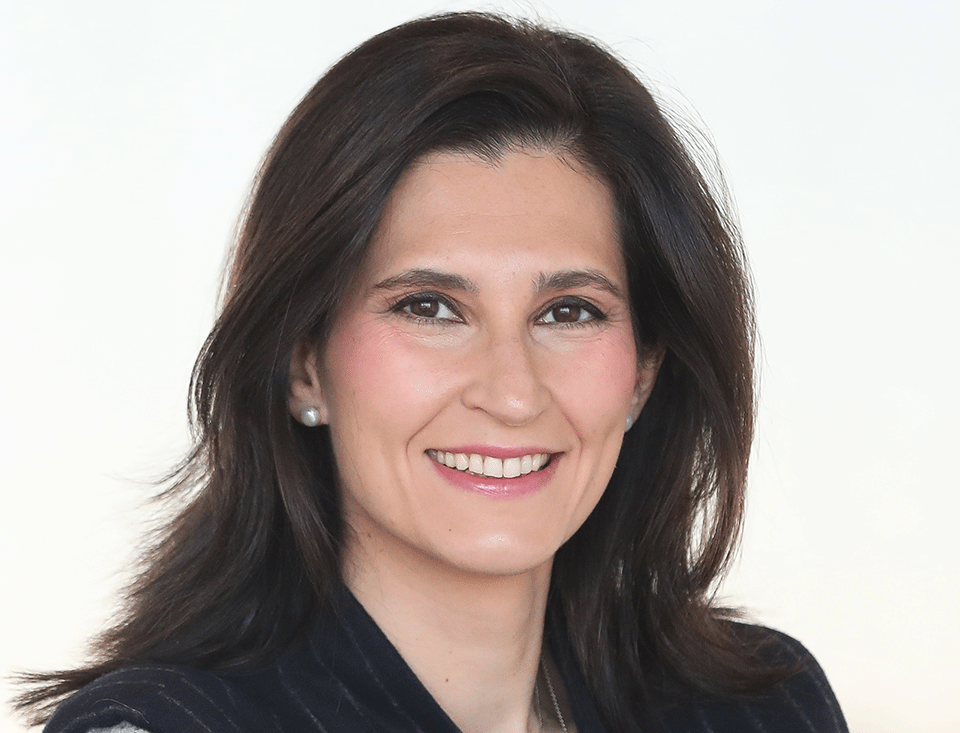
We have become much stricter on governance – setting out the key targets that every market has to meet, on top of whatever else is locally relevant, so we can increase our global impact
Cristina Gabriel
“We now measure recruitment application by application, area by area, on a weekly basis. Having the numbers allows us to have a different conversation with recruitment teams – not just ‘we don’t hire enough women’, but ‘why and what needs to change’,” explains Gabriel.
This shift from outcome-based to process-based measurement has enabled deeper intervention in hiring practices. The introduction of mechanisms such as the Rooney Rule – ensuring a diverse shortlist of candidates – is complemented by broader efforts to develop more inclusive job descriptions, interviews and decision making.
Training programmes across talent acquisition teams and the wider workforce on inclusive hiring practices reinforce these changes, equipping employees to recognise and mitigate unconscious bias. Together, these measures form a feedback loop: data identifies gaps, processes are adjusted and outcomes are monitored continuously.
The approach reflects a wider cultural shift within BBVA. “Left to ourselves, we tend to rate as a good fit someone who looks similar to us in background, experience, skills. That doesn’t help build a strong team. We found that on more than 50% of the occasions having a panel in the interview process changed the initial hiring decision,” says Gabriel.
By formalising diverse interview panels and structured processes, the bank reduces reliance on individual judgement and creates more consistent, equitable outcomes.
Broadening the definition of diversity
While gender diversity is a central pillar, BBVA’s strategy extends across multiple dimensions – including LGBTQI+ inclusion, disability, generational diversity and ethnicity. What distinguishes the bank is not just the scope but the depth of its engagement in each area.
Gender representation remains a flagship metric. BBVA exceeded its target of 35% women in management roles in 2024 and reached 36.1% by the end of 2025, with further targets set for 2026. This progress is supported by structured talent programmes, visible role models and policies designed to improve work-life balance and career progression. At the most senior levels, women now account for 47% of board members (7 of 15 directors) and 25% of the first executive layer, reflecting sustained efforts to build a leadership pipeline.
In parallel, the bank has built a comprehensive LGBTQI+ inclusion framework through initiatives such as the ‘Be Yourself’ platform, which combines policy development, employee engagement and external advocacy. The strategy includes formal equality agreements, transition support protocols and ongoing training and awareness campaigns. BBVA has endorsed the United Nations Standards of Conduct on LGBTQI+ inclusion and chaired the REDI corporate diversity network for three years.
Similarly, BBVA’s work on disability inclusion has moved beyond compliance to capability, focusing on recruitment, workplace adaptation and awareness. Partnerships with specialist organisations and targeted hiring programmes – including dedicated recruitment fairs and accessibility investments – demonstrate a long-term commitment to building inclusive teams.
By 2025, the bank employed 1,169 people with disabilities globally, supported by targeted recruitment initiatives, including employment fairs and long-term agreements such as its partnership with Spain’s ONCE Foundation.
Generational diversity is another area of focus, with initiatives designed to address age-related bias and promote intergenerational collaboration. Its workforce composition broadly mirrors the active population, with millennials representing 36%, Generation X 25%, Generation Z 22% and employees over 50 accounting for 17% of staff.
Across all these dimensions, employee resource groups play a critical role. These communities provide feedback, shape initiatives and ensure that policies reflect lived experience, reinforcing the link between strategy and culture.
BBVA’s strength lies in its ability to connect purpose with performance. By embedding diversity into governance, aligning incentives with outcomes and using data to drive decisions, the bank has created a model that is both scalable and adaptable.
Its approach recognises that inclusion is not a static goal but an ongoing process – one that requires constant measurement, accountability and cultural reinforcement. The result is a more representative workforce, better decision making and, ultimately, a stronger business.
In a sector where many institutions are still defining their approach, BBVA has moved decisively from aspiration to execution. That progress, sustained across geographies and dimensions of diversity, makes it the clear winner of the award for the world’s best bank for diversity and inclusion.