|
|

Credit Suisse chief executive Tidjane Thiam may be a man who is not afraid to wear his heart on his sleeve, but he’s smart enough to know that you need cold hard facts to prove that you are doing your job successfully.
So when, in the third quarter of 2018, he announced the latest set of improving results for the Swiss-based bank, he was delighted to be able to tell his audience that of his 17 strategic objectives, a remarkable 16 were very much on course.
The highlights reel was impressive. For the first nine months of the year, pre-tax income was up more than 50% year on year. Profitability in the core wealth management business had risen 60% compared with 2015. The third quarter was Credit Suisse’s 10th consecutive profitable quarter and the eighth consecutive quarter of year-on-year profit increase. Cost reductions were ahead of schedule, with the bank also set to benefit from buying back contingent capital bonds costing it around SFr700 million ($706 million) a year in interest.
There was one negative – a loss of SFr96 million in the much-reduced global markets division. It was not a great deal in terms of overall group numbers, but it was a reminder that some of the issues that had laid Credit Suisse low still need to be fixed. A less scrupulous management team may, in hindsight, have found a way to post a profit in the division for the quarter, such was the way the loss dominated headlines.
You can understand why Thiam is prone to referring to the past when he talks about Credit Suisse today. The SFr1.1 billion adjusted pre-tax income in wealth management in 3Q18 “is more than we ever made in a year before. Overall, we are back to the levels of profitability the group posted in 2013, even though we are still restructuring, our inventory is down 60% and we’ve halved our Level 3 assets to SFr15 billion – which in 2015 was the same amount as our total equity.”
|
|
|
Tidjane Thiam |
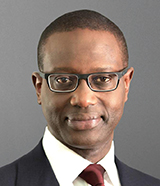
But Thiam knows it is the future, not the past or the present, that will define his success. He has won a lot of battles, but he needs to win the war of making Credit Suisse a best-in-class global franchise. If share prices are a future indicator, the signs aren’t great. Credit Suisse’s stock was down from SFr18 at the start of 2018 to SFr11 in mid December.
Is Thiam worried he is not being given credit for his good work?
“We’re part of the rotation out of European bank stocks, even though we have a thriving Asian business and a US franchise delivering 15% ROTE [return on tangible equity],” he says. “Our price-to-book value has been close to 1x, which is remarkable given we had to destroy SFr15 billion of book value to restructure the bank and we have 60% more shares in circulation today than we did in 2015.”
If a strategic update on December 12 was supposed to reassure investors that the share price would improve, Thiam was once again disappointed. Plans to buy back SFr3 billion of shares were at the lower end of investors’ expectations. A dividend increase of 5% was underwhelming. A group ROTE target of 10% for 2019 looks low compared with peers.
Concerns about revenues in its core Asian business – especially on the markets side – dampened sentiment further.
“The actions taken during the restructuring mean that the bank is now more resilient in the face of market turbulence,” Thiam said at the investor day.
Suspicions rose that Credit Suisse was positioning itself conservatively for a market downturn.
There are some bright spots for the bank. Net new asset growth across wealth and asset management was SFr55 billion in the first nine months of the year.
Is the pace of growth sustainable? Thiam thinks so.
“Around SFr33 billion of this came from wealth management,” he says. “We’re increasing our share of wallet among existing clients: the quality of our relationship managers is better than it has ever been. These are terrific earnings – at a 30 basis point margin, the revenues are SFr150 million and they are recurring.”
Thiam is also putting his hopes on meeting the changing needs of his wealthiest clients.
“When I meet an ultra-rich client, they rarely want to talk about portfolio performance,” he says. “They are more interested in their foundations or philanthropy.”
A little over a year ago Thiam set up an impact advisory finance group to help bring financial solutions to clients wanting to make a positive impact through investment. Thiam says proudly that a town hall meeting to celebrate the division’s first anniversary “was the best attended in the company’s history.”
He’ll be hoping to build on that momentum, as he aims to prove that the new-look Credit Suisse is itself sustainable.
At the moment, the jury is still out.



