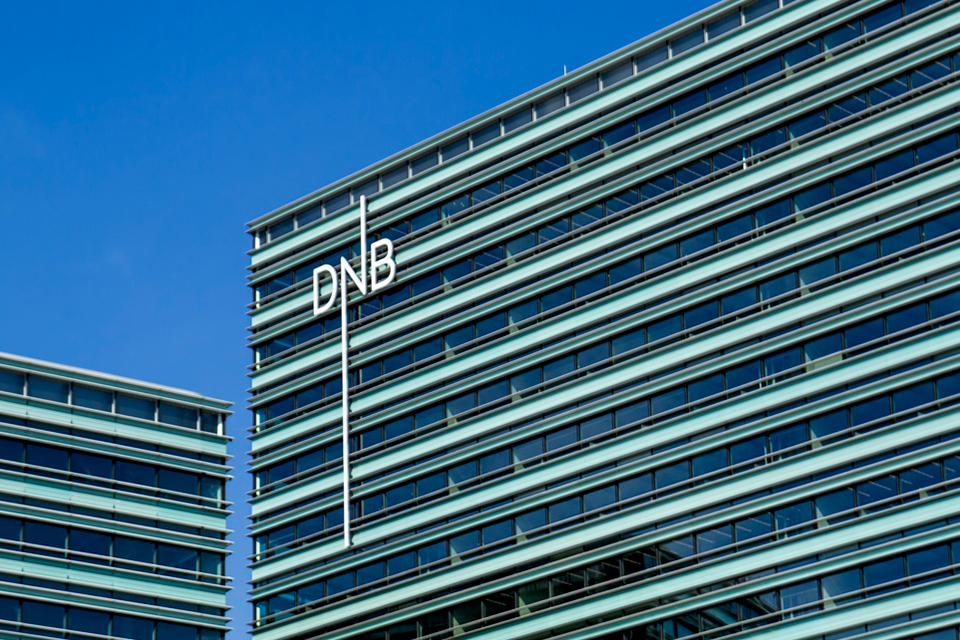
DNB’s latest results underline how the Norwegian lender has powered ahead of its Nordic peers by combining disciplined balance sheet management with selective investments in growth.
Return on equity reached 17.5%, the highest level the lender has seen in two decades and comfortably above both the bank’s own over-13% target and the Nordic average of roughly 15%. This performance can be attributed chiefly to firmer pricing on corporate credit and double-digit fee expansion in investment banking, momentum that has also helped lift net profit 16% to NKr45.8 billion ($4.5 billion).
Net interest income alone added NKr4 billion, thanks to steady volume growth and policy rates that remain elevated, while loan-loss provisions stayed below 10 basis points of loans – far gentler than the spike recorded during the 2020 energy shock.
This financial strength fed directly into capital generation: the common-equity tier 1 ratio stood comfortably above 19%. The cushion has financed a NKr10 billion share buy-back launched in spring 2025 and an 80% dividend payout ratio, yet still leaves headroom for Norway’s forthcoming real estate risk-weight uplift.
Operational efficiency also moved the right way. Cost-to-income has dropped almost five percentage points in two years to a lean 35%, second best in the Nordic universe, as DNB automates back-office routines, with roughly 85% of retail transactions now run through digital self-service channels.
DNB has established a habit of issuing euro-denominated green bonds every nine months, channelling proceeds into renewable energy, green buildings and clean transport
Strategic moves have widened DNB’s Nordic franchise. The bank closed its SKr12 billion ($1.26 billion) acquisition of Carnegie and promptly re-branded the business DNB Carnegie, doubling DNB’s equity capital markets share in Sweden and Finland and bringing 700 specialists in technology and private M&A.
Sustainability financing remained a focus of attention for the bank. DNB has established a habit of issuing euro-denominated green bonds every nine months, channelling proceeds into renewable energy, green buildings and clean transport as it works towards NKr300 billion in sustainable assets by 2030. A recent capital relief securitisation with the European Investment Bank sliced about 30% off risk-weighted assets tied to qualifying green leases, freeing capital for an accelerated rollout of zero-emission vehicle lending.
On the retail side, the lender continued to prioritise investments payments, and data analytics are moving in tandem. The twin launch of the Tæpp near-field-communication wallet and full Apple Pay support has finally given iPhone users a domestic alternative, driving contactless-wallet transactions more than 60% higher year-on-year by May 2025. Additionally, the cloud-based Insight Factory crunched around 1 billion card transactions on average each day to deliver personalised budgeting nudges and local-market intelligence.