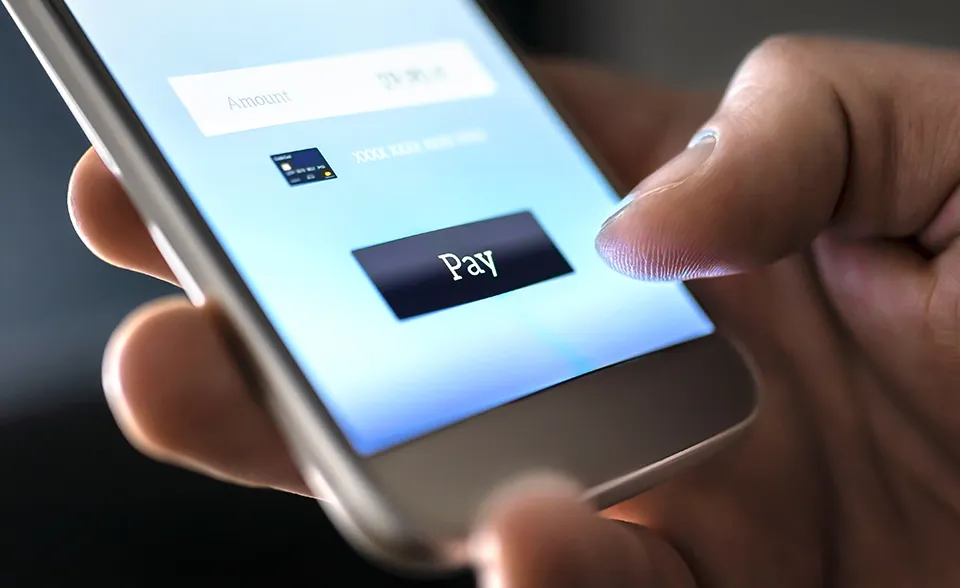
“Enhance credit card acquiring services proposition”, “offer a payment gateway solution”, “offer multicurrency cards”, “enable virtual cards issuance on spot”, “virtual cards with issuance in multiple currencies”, “integration with [TMS/ERP system] for cards solution” were loud and clear demands of corporate treasurers who participated in the Euromoney Cash Management Survey 2024.
The B2B card payments market continues to evolve
Earlier in November, Emirates NBD confirmed that it will be using Mastercard’s virtual card technology to enable travel agencies to streamline travel payments to suppliers. In October, American Express announced a new offering from Boost Payment Solutions to provide commercial virtual card processing services.
In a conversation with Euromoney, Faisal Jafri, regional head of commercial cards – Americas at HSBC, notes that growth in card payment has outweighed other forms of payment in the last five years because it is uniquely positioned to provide enhanced data in a transaction, allowing businesses to control spending and reduce admin from the payment ecosystem. This improved data and reduced admin applies to suppliers as well as buyers, improving the process on both sides of the transaction.
“Card payments will remain competitive by removing friction from the procure-to-pay (P2P) ecosystem and providing both buyers and suppliers flexibility on how to initiate and accept transactions,” Jafri adds.
Both the digital and contactless payments sectors are expanding and demand from micro businesses is increasing with the availability of compact, easy-to-use card-reader devices and service industries taking invoice payments says Melinda Roylett, managing director merchant services at Lloyds Banking Group. “Card payments have embraced innovation with a focus on frictionless payment experiences – particularly for contactless and mobile card payments – and support for digital wallets,” she adds.
Virtual cards – a solution to achieve frictionless
How quickly the world of virtual cards has changed – from Orbiscom pioneering controlled payment number technology and being acquired by Mastercard in 2009, to a world where virtual cards are a standard offering to many banks.
Card payments will remain competitive by removing friction from the procure-to-pay (P2P) ecosystem
Faisal Jafri HSBC

Jafri expects the strongest growth in the card market to come from B2B payments as businesses increasingly understand how they can utilise virtual cards in new payment flows. “Integrating a virtual card solution into an ERP platform used to require technology investment and resources,” he explains. “Now, issuers as well as ERP providers have realised that if we are to increase traction and provide value to our customers, we have to make the process seamless.”
Digital card programme management tools have made it easy to deploy cards and control their usage across an organisation – and with the development of card-to-account payments, new fields of services around corporate expenses can be explored, observes Mikaël Masson, global head of commercial cards at BNP Paribas.
“For B2B spend, the growth is driven by procurement and virtual card solutions as corporations are looking to optimise their procurement processes and working capital,” he says. “To address these needs, businesses are leveraging solutions such as card payment automation, embedded finance, cards for working capital management and new use cases that integrate commercial payments into digital customer journeys.”
“Another major shift is the convergence of card-not-present and card-present virtual card transactions,” says Jafri. “We now have a solution where a business can generate a virtual card via an app, which can be embedded into the user’s mobile wallet.”
A secure and seamless experience – at a cost
Banks and issuers trying to maintain growth and customer satisfaction while reducing fraud exposure are massively assisted by the ability to interrogate the data in their ecosystems and utilise technologies that provide customers with more flexibility in how they transact.
The ECB wants equal opportunity for the customer to choose instant payments or cards… it is a risk for card payments
Laurens Schretlen, ING Wholesale Banking

Jorn Lambert, chief product officer at Mastercard, says the firm is driving payment innovation through initiatives such as replacing familiar card credentials with a proxy account number and encrypting payment information with a unique transaction code for each purchase. This is part of their vision to enable 100% e-commerce tokenization in Europe by end of the decade.
In addition to growth in some countries related to cash displacement, Laurens Schretlen, global head of product management payments & cards at ING Wholesale Banking, refers to businesses extending their payment usage via existing corporate cards programmes to supplier payments.
“Tokenisation of cards, securely storing (and thus prefilling) cards’ details, will further remove user friction and optimise the conversion of online payments,” he says, “Combined with strong customer authentication, these developments also make cards relevant in the e-commerce space where traditionally pay-by-bank is more adopted.”
By offering real-time insights and advanced security measures, card companies can increase the trust consumers have in their payments
Melinda Roylett, Lloyds Banking Group

Schretlen cautions that clients have raised concerns about international cards schemes introducing new fees and services, indicating that other payment options might be looked at with more interest.
“We also see that the ECB wants customers to fully benefit from instant payments at the point of interaction,” he adds. “To make this happen, many conditions have to concur and one of them is technical non-discrimination to the current dominant payments service provided (i.e. cards). The ECB wants equal opportunity for the customer to choose instant payments or cards and while a lot still needs to happen before this is the case, it is a risk for card payments.”
“By offering real-time insights and advanced security measures, card companies can increase the trust consumers have in their payments. Frictionless servicing (such as chargeback or refund processing for both merchants and consumers) can also help user experiences. Reducing cost to serve and transaction costs to merchants will also help support greater adoption,” concludes Roylett.