The M&A advisory rankings for 2023 tell a familiar story in western Europe. JPMorgan and Goldman Sachs rank top both by revenue and by deal value. But Rothschild & Co advised on almost twice as many transactions as either of the bulge bracket pair and it maintained its third place in the revenue league table ahead even of Morgan Stanley.
This should surprise no one. Every year for the last 19 consecutive years Rothschild & Co has advised on more transactions in western Europe than any other investment bank. These include many of the largest, most high-profile and industry-defining M&A assignments, as well as the smaller bread and butter transactions that the global bulge bracket devote fewer senior people to.
Rothschild & Co has the largest number of advisory bankers in the region, with around 900 people spread between its dual headquarters in London and Paris and teams of local specialists in fifteen other offices in western Europe.

They are an adaptable bunch, capable of shifting from M&A advisory to restructuring, where the global bulge bracket firms are less prominent thanks to the conflict of often being principal creditors. It also offers investor advisory on dealing with activists and on environmental, social and governance issues; equity advisory, including that on IPOs, convertibles, block trades, sell-downs and spin-offs; and debt advisory.
On top of this, the firm has more recently beefed up in geopolitical advisory, with a newly formalized group chaired by Lord Sedwill, previously national security adviser to the UK government.
“Macro geopolitical risk is a CEO and board matter and therefore geopolitical advice has become a core part of our integrated service offering to our clients, especially in times of unstable geopolitical landscape. The combination of our intelligence-led geopolitical expertise in tandem with our investor-led expertise – on top of our broad and deep networks – means we have a truly differentiated and cutting-edge offering,” says Philippe Le Bourgeois, chief operating officer of global advisory.
This has proved invaluable to clients especially in terms of the current landscape.
“We had one war at the start of 2022, which unfortunately looks set to continue for some time, and another one in the second half of 2023,” says Le Bourgeois. “We already knew that 2023 would be a challenging period for M&A: we could see that from our pipeline in the last quarter of 2022, in the context of reduced availability and higher cost of debt.”
Rothschild & Co has the largest number of advisory bankers in the region, with around 900 people spread between its dual headquarters in London and Paris
He points out that when companies are earning 5% on their cash, they are getting paid to wait. But that did not stop the firm. “We were able to pivot quickly to financing advisory including equity markets solutions, knowing the re-equitization trade would be a big theme in the context of reduced availability of debt and higher cost of debt.”
This all came together in the €8.1 billion restructuring of Casino, the French food distribution company and retailer that operates 6,900 owned and franchised stores under brands including Casino, Monoprix, Franprix, Spar and Cnova/Cdiscount.
In 2023, cost inflation and the group’s uncompetitive price positioning resulted in a material loss of market share and significant cash burn. That coincided with a looming debt maturity wall of €1.2 billion in 2024 and €1.8 billion in 2025, which the company was unable to refinance or repay.
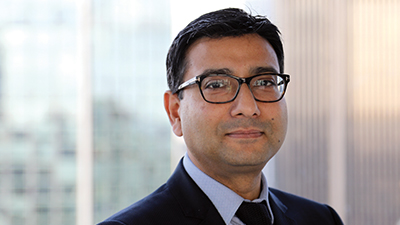
“We have a longstanding relationship with Casino. This was a highly complex transaction, that required considerable creativity, input from several of our teams and the ability to bring convergence between multiple parties. The financial structure was too heavy and the operational challenges, when inflation changed the business dynamic, compounded that,” says Ravi Gupta, global co-head of industrials and co-head of UK, global advisory at Rothschild & Co.
“Most of the leading French banks were involved as well as many debt funds, with some sensing an opportunity. This was the largest French restructuring in recent history and one of the largest ever in Europe based on quantum of equitized debt.”
The restructuring took most of last year, after breathing space was granted by the French government deferring tax and social liabilities and creditors agreeing a standstill.
The resolution agreed with a consortium of investors and creditors that followed involved the equitization of €4.9 billion of debt and a €1.2 billion new capital raise, while Casino’s core relationship banks agreed to provide another €1.2 billion of committed operational financing lines in exchange for an elevation of their secured claims in the reinstated revolving credit facility.
“As well as a massive financial restructuring, there was also an M&A component,” says Gupta. “The consortium now owns a majority equity stake and has sold a number of stores including hypermarkets and supermarkets to other groups.”