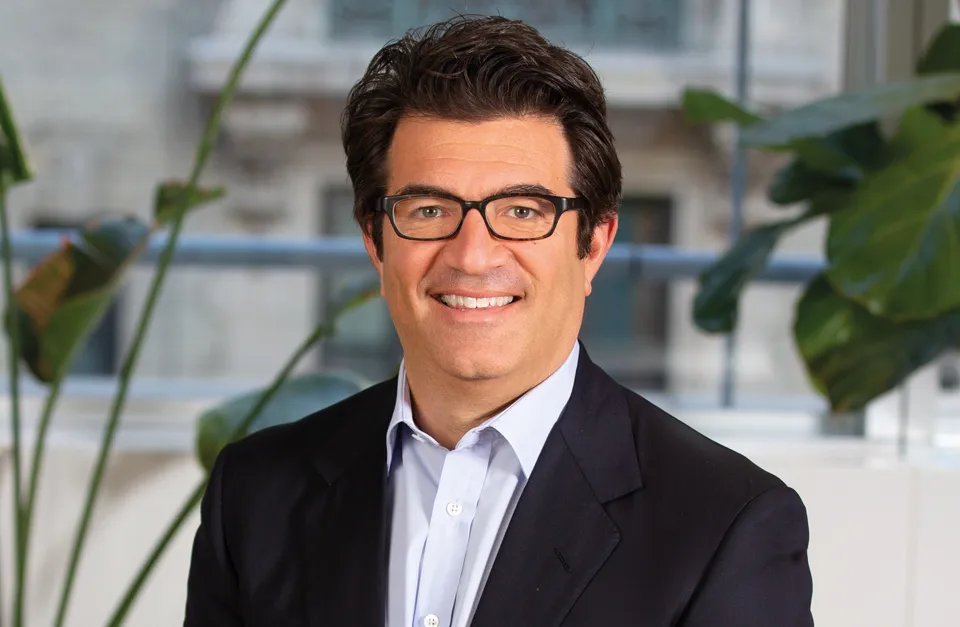

For most global markets franchises, 2023 was a year to be withstood rather than celebrated. But one bank bucked the trend with a performance that puts its rivals firmly on notice that it is now among the leaders in this business. For a remarkable improvement that built on an already impressive progress the previous year, Bank of America is the world’s best bank for markets.
It was not hard to identify the chief challenge for market participants in 2023 – the year started with 10-year US Treasuries at mid-3% yields and peaked in October close to 5%.
For a markets business, that meant catering to a whole range of requirements, whether it was corporates that wanted to hedge rate exposures through debt issuance or asset-liability management exercises, or asset managers and hedge funds active in those secondary markets.
Shortlisted
- Goldman Sachs
- JPMorgan
“It was particularly important to be meaningful to clients in a period where rates were moving upwards,” says Jim DeMare, president of global markets at Bank of America.
And BofA certainly was meaningful – in fact it was the only one of the dozen biggest global markets businesses to increase revenues in 2023.
That in itself marked BofA out for special recognition, but what made the performance all the more pleasing for DeMare and his colleagues is the way it fitted into a broader narrative of steady but substantial improvement in the bank’s markets franchise over the past several years. A lot of that was down to dedicating more capital to the business – an increase of 30% since 2019.
“As we came out of Covid, we realized that we had lost some market share with clients; and part of that was down to financial resources, given how much the tradeable float had grown in fixed income and equities,” says DeMare. “To intermediate and facilitate, we needed more capacity, which we were able to secure.”
Resources are part of the story, but perhaps more important is the accompanying effort across BofA’s markets business to intensify the focus on clients, and in particular identify where a client might do more with the bank than before.
“One of the things we have tried to focus on is expanding the product set to every client, and when you align all those things – the resources, the intensity, the client focus – it gives you runway,” he adds.
DeMare thinks that the bank’s performance is a mix of doing its own job better and outperforming peers. And he sees the absolute rise in revenues as proof of that.
“If the market’s overall revenue was down on a year-on-year basis and we were simply down less, then that would be a nice consolation prize,” he comments. “But we have been able to grow, so I would say that it has been much more positive.”
BofA ranks fourth in both equities and fixed income. Only Goldman Sachs, which ranks top, saw a better year-on-year performance than BofA in 2023. In fixed income, meanwhile, none of the other 11 big firms came anywhere near matching the bank’s 12% revenue increase.
BofA has stayed in fourth place in equities revenues for the last five years. But in 2023 it hit its highest market share over that period, at 11.3%, up from 10.2% in 2019. In fixed income, the bank increased its market share by 200 basis points to 11.5% in 2023.
The result was an overall increase in markets revenues of 7% to $17.6 billion, making it the only bank to grow in 2023. Its market share rose by 1.5 percentage points – nearly three times the next biggest rise – to 11.4%.
It has been an impressive result by any measure. Having lagged its closest rivals in the markets business – Morgan Stanley and Citi – by at least 12% in overall revenues in 2022, the bank practically matched Morgan Stanley in 2023 to move to just a fraction behind its fourth place and join the group of five US franchises that together account for nearly 70% of global wallet.
It was particularly important to be meaningful to clients in a period where rates were moving upwards
Jim DeMare
However, DeMare has the next milestone in mind, which is securing third place. The momentum is certainly with him. In 2020, the gap from BofA to third place stood at about $6 billion. In 2023, the gap to Citi, which was in third in that period, was just $1.1 billion, a narrowing of 69% from the previous year.
How has BofA done it? DeMare credits the bank’s diversified client base, both in terms of segment and geography, for part of the performance.
“We did have some bouts of volatility, but our diversified client base helped, as did our global capability,” he says. “Different clients in different parts of the world wanted to do different things, and that’s a more difficult thing to achieve if you are too regionalized.”
But there have also been more specific improvements. The bank has taken great strides to improve its macro businesses in fixed income, currencies and commodities, which always used to lag credit. In equities, the commitment of more financing resources has over time fed into higher balances and higher trading activity – which has also been helped by a concerted hiring effort.
As clients were navigating the rapid surges in rates, BofA was able to cater to their needs. The bank increased its stock of treasury trading assets by 30% to allow it to better meet clients’ liquidity needs – and it ranked second in electronic treasury trading in 2023, an area where it has made particular investments.
Work to build up the FX franchise also paid off. Markets were relatively calm in 2023, but the bank’s global eFX spot principal volumes grew by 15% year on year, testament to the way in which it has invested in its FX pricing and risk infrastructure. The bank has also moved to where its clients want to go, doing more in frontier markets such as Egypt as lower volatility has made traditional G10 FX less interesting.
DeMare stresses that the work has exemplified the bank’s mantra of disciplined revenue growth, with the markets business growing revenues faster than costs to generate positive operating leverage.
And all without a single day of trading losses.