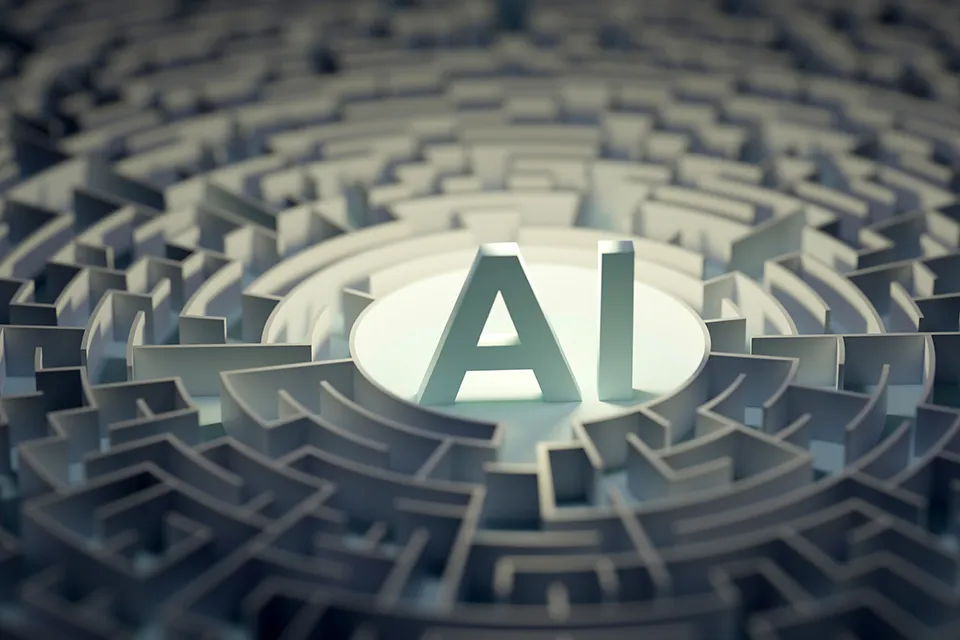
Automation involves rule-based systems executing predefined actions. Artificial intelligence, however, enables machines to learn from data and make decisions autonomously – something that can feel like overkill when it comes to executing simple, repetitive tasks.
According to Eugene Markman, COO of Ion Markets (FX), the financial services industry has started using the term generative artificial intelligence (GenAI) interchangeably with large language models, machine-learning tools and sophisticated automated workflows.
“Marketing AI and automation interchangeably could lead to confusion and misalignment of technological investments and expectations as the distinct functionalities and applications are misrepresented,” he says.
Arjeta Haskaj, head of product strategy trading at Swissquote, also warns that treating automation as if it were AI can lead to inflated expectations regarding the sophistication and adaptability of trading systems.
“Maintaining a balanced investment strategy, allocating resources to both AI research and development and automation programmes, is the way to go,” she suggests. “This diversified approach ensures a more resilient technology implementation and reduces the risks associated with dependence on a single technology solution.”
Careful automation
Unrealistic expectations of the capabilities of automation systems could also lead to an over-reliance on automation and the possibility of increased risk exposure, says David Morrison, senior market analyst at Trade Nation.
“Then there are differences in the way AI and automation are implemented and their impact, which could muddle risk-management strategies, create compliance issues and ultimately lead to regulatory challenges,” he adds. “AI is also incredibly expensive, so firms must be careful how they budget for it and not to bypass easy wins available through thoughtful automation.”
Many businesses are finding it a challenge to include GenAI technology in automated systems in which high levels of reliability are needed
Mark McDonald, HSBC

Mark McDonald, global research head of data science at HSBC, reckons that traditional AI is more suited to current use cases within FX trading operations.
“However, generative AI is where the current hype cycle is most focused, and so there is a risk that it will be used for systems to which traditional artificial intelligence is more suited,” he says.
“Many businesses are finding it a challenge to include GenAI technology in automated systems in which high levels of reliability are needed and – coupled with the challenges of managing model risk – this has prevented it having a large practical impact on FX markets.”
Conflating automation with AI may lead to workflow solutions being perceived as overly complex or out of reach, which could act as a deterrent to adopting technology, while there remains plenty of scope to increase the adoption of automation, argues Nick Saggers, head of financial markets strategy and e-trading at Lloyds Bank.
He thinks the key to generating maximum value is the ability to deliver platforms that enable AI adoption in the context of automated flows in a low-risk manner.
Sam Hunt, CTO at MillTechFX, warns of the danger that AI can be seen as a golden bullet to solve all automation challenges.
“Significant time can be spent trying to train and tune a model, where a traditional code or logic approach may achieve the same outcome faster and cheaper,” he says.
Creative uses
Firms also need to bear in mind that GenAI systems are creative rather than deterministic, which means that the same input will not always produce the same output. For trading systems, there are times where this creativity is valuable, but there will be other times when firms need to have confidence that each step in a process is followed.
“It is important that firms maintain a focus on automation at the same time as exploring AI,” adds Hunt. “Automation programmes can focus on simpler, rule-based tasks which can generate value quickly.”
Vinay Trivedi, COO of SGX FX, warns of overconfidence in AI capabilities leading to undue reliance on algorithms that may lack the adaptability and nuance required for specific FX market conditions.
We could see value generated in faster settlement as we edge towards T+0, along with self-learning algos and business intelligence
Eugene Markman, Ion Markets

Markman at Ion believes AI and automation could be integrated in a number of ways to enhance FX processes and decision-making.
“For example, we could see value generated in faster settlement as we edge towards T+0, along with self-learning algos and business intelligence,” he adds.
For firms looking specifically at AI-driven data-analytics tools that enhance automation, working with a forward-thinking vendor is critical, according to Matthew Hodgson, CEO and founder of Mosaic Smart Data.
“The vendor must work with the bank’s IT team to speed up the data strategy with a thorough implementation analysis, which helps produce benchmarking and a best-practice plan of action,” he says. “The end result is one database for multiple asset classes using best-of-class data models.
“This also helps circumnavigate the issue of data-management teams and quants spending time on cleaning data instead of applying it to generate alpha or learning.”
Stéphane Malrait, global head of market structure and innovation for financial markets at ING, says the use of GenAI in the FX industry is still at the experimental stage.
“The main challenge is to deploy new AI models in a safe and secure way and in line with existing regulations,” he concludes.