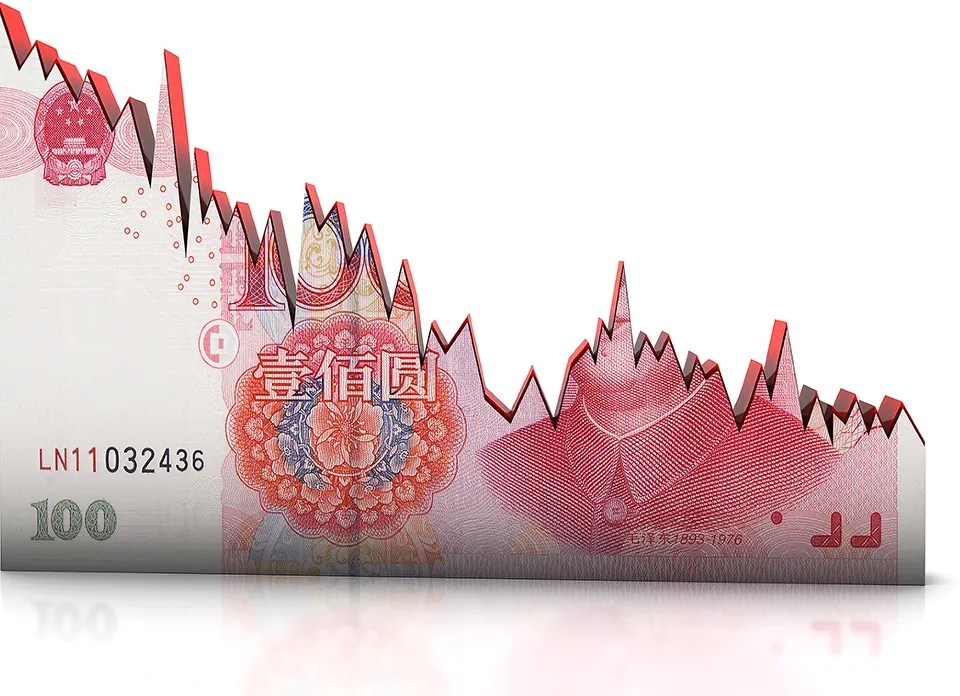
In the wake of the People’s Bank of China (PBoC) raising and then promptly lowering its USD/CNY fixing in March, analysts at ING pointed to a weakening of Asian currencies and speculation that China’s focus on market stabilization might have lessened as factors supporting the idea of the central bank tolerating a weaker renminbi.
But with an assessment of China’s currency policy being as difficult as ever to establish with any certainty, there is little agreement over whether or to what extent the PBoC will entertain letting the renminbi slide.
According to Styliana Charalambous, Europe, Middle East and North Africa market analyst at VT Markets, the performance of other Asian currencies greatly influences China’s strategic decisions regarding the renminbi. Depreciation in neighbouring currencies is seen as creating a more favourable scenario for a controlled depreciation of the renminbi.
“However, the PBoC remains cautious, aiming to avoid a devaluation race that could lead to broader regional economic instability,” she says. “The approach of gradual and controlled depreciation ensures predictable and manageable shifts in the renminbi’s value, thereby reducing the risk of negative economic spill-overs, while preserving investor confidence and financial stability.”
Spill over
There are several Asia-Pacific countries that can now undercut China when it comes to manufacturing and exporting goods. Their competitiveness only increases as their currencies weaken.
“China wants to control this by making sure that the renminbi softens, but gradually,” says David Morrison, senior market analyst at Trade Nation. “However, if things go wrong for the PBoC and it looks like it is losing control, volatility could easily spill out to other currencies in the region and beyond.”
The PBoC [aims] to avoid a devaluation race that could lead to broader regional economic instability
Styliana Charalambous, VT Markets

Gary Thomson, chief operating officer at FXOpen UK, reckons that the likelihood of the PBoC allowing its domestic currency to weaken a lot due to underperformance of other regional currencies is slim.
“China may face numerous problems if the renminbi weakens significantly, including an adverse reaction from other large economies and the loss of confidence from its trading partners, so money might leave the country faster,” he says.
But he also acknowledges that the central bank is caught between a stuttering economy and the knowledge that support measures could lead to even greater problems.
“It is more likely that it will weaken the currency, but at a slow pace, so as not to cause market turmoil,” says Thomson.
A weaker Chinese currency would obviously make exports cheaper and imports – principally commodities and energy – more expensive. But while this sounds like an appropriate strategy to stimulate inflation, the central bank is not under pressure to bring inflation back to a specific target.
“It seems – as before the global financial crisis – that China’s current policies may attract a new series of accusations of exporting deflation,” says FxPro senior analyst Alexander Kuptsikevich.
Ben Laidler, global markets strategist at eToro, goes further, suggesting the Chinese authorities will feel under little pressure to let the currency weaken on the basis that it is already at least 5% undervalued on a real effective exchange rate versus global currencies, according to the Bank for International Settlements (BIS).
Implied forecasting models indicate that the CNY may initiate an upward correction against the dollar over the next month
Mateusz Czyzkowski, XTB

José Torres, senior economist at Interactive Brokers, expects the dollar to weaken on a relative basis as the domestic focus shifts to anticipated US rate cuts and deficit spending – and adds that Chinese currency strength in this forecast is due to the dollar currently being exceptionally strong and likely to weaken.
“Implied forecasting models indicate that the CNY may initiate an upward correction against the dollar over the next month,” says XTB analyst Mateusz Czyzkowski. “Until the US Federal Reserve begins to cut interest rates, the sustainability of this move may be limited though.”
Alexey Efimov, market analyst at Alpari, expects USD/CNY to remain comfortably above the psychologically important 7.10 mark until China’s economic woes meaningfully dissipate and the Fed begins lowering its benchmark rates in earnest.
“However, higher-for-longer US interest rates may hinder the PBoC’s ability to take further monetary action,” he says.
Controlled range
When it comes to the offshore currency, John Kicklighter, global head of content at StoneX, reckons that USD/CNH will keep to a controlled range as the Chinese authorities attempt to reassure foreign investors about local economic stability and the ability to repatriate capital.
“If USD/CNH resumes its climb above 7.30, it is unlikely that this capital shift is being done without a broader economic intent in mind – perhaps an effort to blunt export inflation implications or offset the perceived influence of import tariffs,” he says.
More upside is likely, but policymakers have already shown that they are not willing to let that go too far, according to Nikos Tzabouras, senior market specialist at Tradu, who cautions that devaluation could anger China’s trade partners amid strained Sino-Western relations, while prospects of rate cuts by the Fed could sap the dollar and put downward pressure on the pair.
“USD/CNH is still only on its way to a smooth recovery to multi-year highs set in 2022 and repeated in the last quarter of 2023,” adds FxPro’s Kuptsikevich. “A stronger dollar could accelerate this process, but that is not happening despite the dramatic change in the Fed key rate forecasts for this year.”