It is no surprise that HSBC is Asia’s best bank for sustainable finance for the sixth year in a row. Across its commercial, retail, global banking, markets and securities, capital markets, trade finance and risk management teams, the lender has created an extensive sustainability knowledge base that few of its rivals can match.
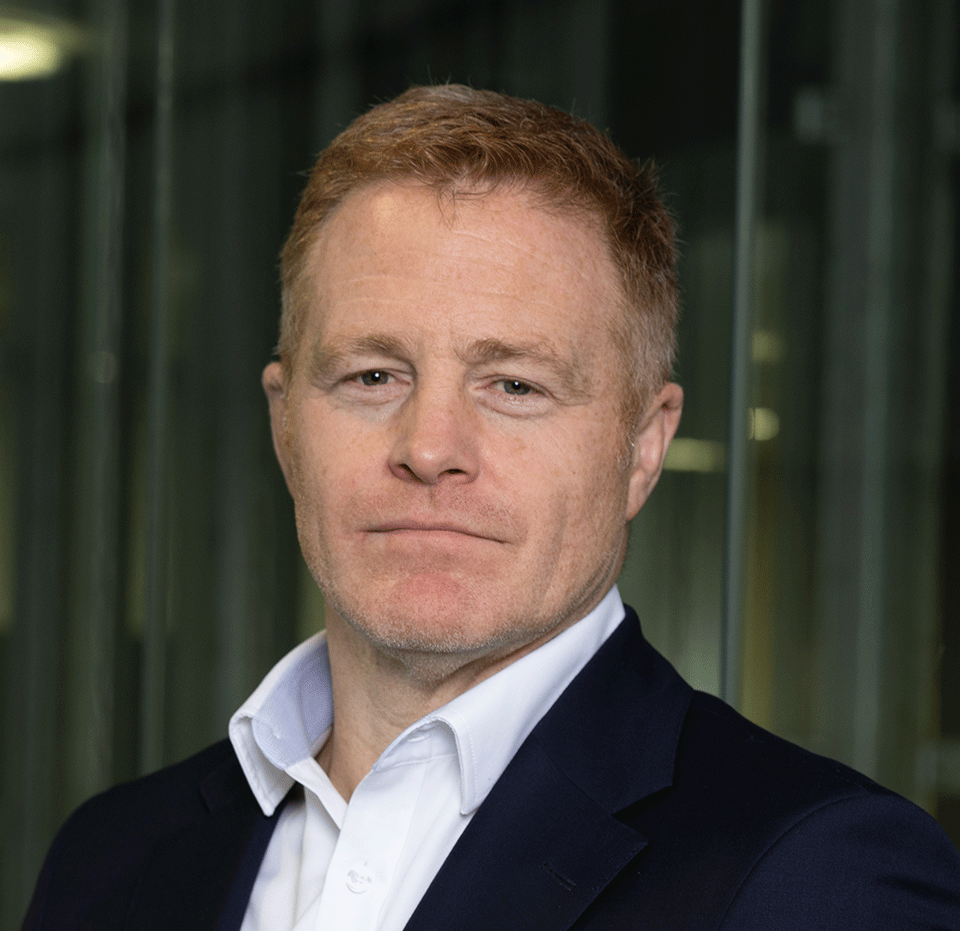
Back in August 2022, the bank appointed Justin Wu from Bloomberg New Energy Finance as its first co-head of climate change Asia Pacific (Apac) as part of the lender’s broader strategy to create a sustainability centre of excellence both in the region and globally.
Naturally, HSBC was present on all the interesting deals in the region in the last 12 months.
It was joint green structuring bank, joint global coordinator and joint bookrunner for Hong Kong’s green bonds worth a total of $5.75 billion, denominated in dollars, euro, and renminbi in January, as well as on the Hong Kong government’s inaugural 365-day tokenized green bond worth HK$800 million ($102 million) in February.
HSBC was also joint global coordinator, joint lead manager and joint bookrunner for Bank of China’s Rmb1 billion ($138 million) two-year sustainability bond, aligned to both the Icma Sustainability Bond Guidelines and the China Green Bond Principles.

In terms of volumes, HSBC is the regional trailblazer.
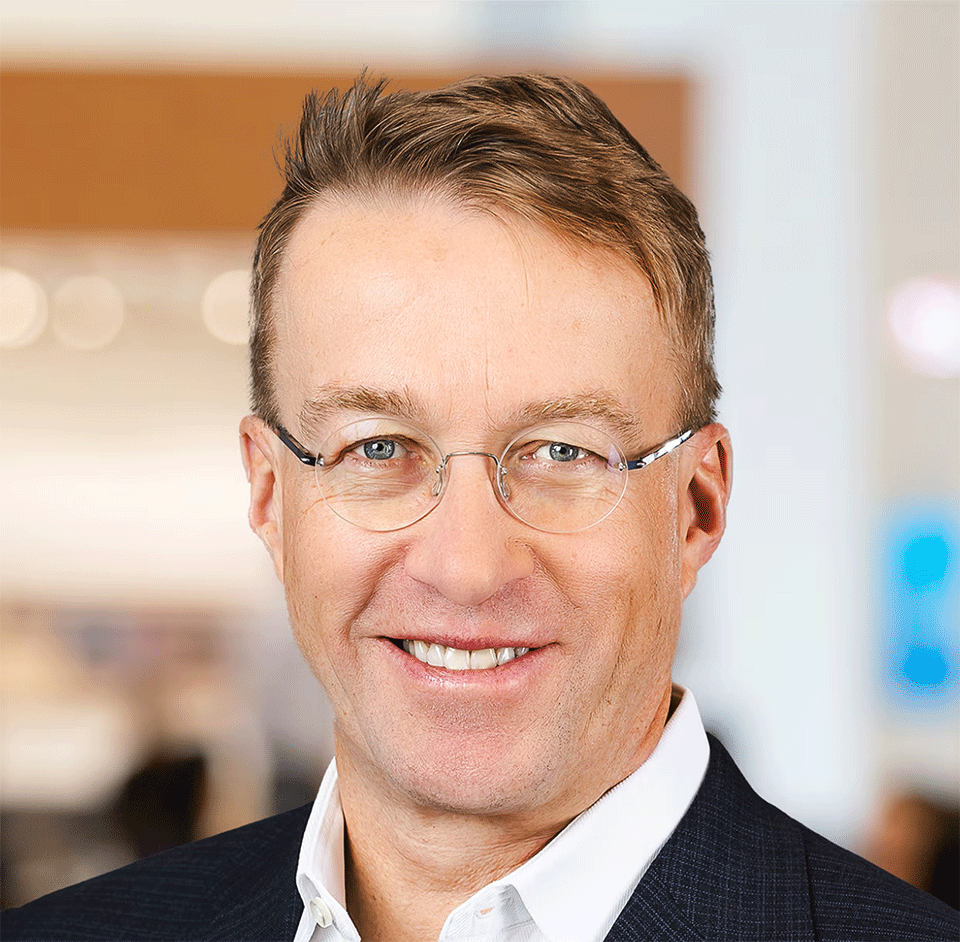
“Twenty-one percent of bonds issued in Apac markets were sustainable during the awards period, but at HSBC 35% of our issuance were sustainable; that is significantly higher,” says Luying Gan, HSBC’s head of sustainable bonds, debt capital markets Asia Pacific.
The bank helped auto maker Mercedes-Benz issue its first green panda bond in November, worth Rmb500 million, and was joint green structuring adviser for the Republic of Indonesia’s record breaking green sukuk.
Despite the rising interest rate environment, which slowed activity in 2022, HSBC still managed to encourage its bigger clients to issue thematic transactions to drive momentum while smaller clients opted for more conventional products.
“There is definitely more investor appetite for these new labels; people understand the market a bit more,” adds Gan.
HSBC also demonstrated a commitment to make sure that environmental, social and governance (ESG) principles are embedded in each step of the transactions it works on.
“Investors are increasingly focused on sustainability in fixed income markets, but we also wanted to drive progress elsewhere,” says Wu.
That means adding ESG performance metrics into evaluations to help clients better disclose their sustainability strategies.
Reaching net zero requires efforts from all sectors and all business sizes – we are keen to support all our clients along the way
Justin Wu
“Sometimes, advancing on ESG is as basic as making sure there is proper diligence and disclosure on both buy and sell side in an M&A deal,” Wu adds.
In Asia, HSBC is setting the pace for the transition. The bank has announced its interim financed emissions reductions targets in eight sectors, updated its energy policy to stop direct funding to new oil and gas fields and launched the HSBC Sustainability Academy in October. Over 43,000 employees in Asia have completed online training so far.
It was also part of the working groups for both Indonesia and Vietnam’s Just Energy Transition Partnerships.
HSBC has also excelled in promoting a sustainability agenda through its commercial banking business. HSBC counts over 8,000 clients in its Asian commercial banking business and has been focusing on the suppliers’ network. For example, it facilitated sustainable supply-chain financing to global apparel company PVH’s Gold & Green suppliers to demonstrate progress against environmental science-based targets.
At the smallest end of the spectrum, HSBC’s rural bank continues to expand its sustainable offerings. In 2022, it had a total outstanding loans balance of Rmb2.44 billion, of which 81% were to small and micro enterprises and 64% to farmers.
“Reaching net zero requires efforts from all sectors and all business sizes – we are keen to support all our clients along the way,” says Wu.