Since the emergence of the Napster file-sharing app in the late 1990s, providers have sought to apply the peer-to-peer (P2P) concept to a range of services. In foreign exchange, this has spawned a number of venues and platforms, at least one of which suggested that the concept could become so successful that the big banks would become mere conduits for P2P services.
If a match is found, information leakage and execution costs are reduced. If no match is found, best-execution processes are improved
Blair Hawthorne, LoopFX

This scenario might not have come to pass, but that hasn’t prevented new entrants hitting the market at irregular intervals with the promise to do things differently. The latest of these is LoopFX, whose founder and chief executive, Blair Hawthorne, has vowed to transform how large trades are executed.
LoopFX’s focus is on large spot trades ($10 million-plus) that are challenging for asset managers and banks.
“Our mission is to provide the means for all large orders to find matches with zero market impact, including orders from banks and by default from the customers of those banks, in a process we call peer-to-peer-to-bank,” says Hawthorne.
All this will be done without changing asset manager workflows or legal agreements, which he describes as a common impediment to wide-scale P2P adoption.
Liquidity and credit
According to Hawthorne, previous P2P initiatives have tried to compete with banks. He says LoopFX has spent a lot of time listening to both sides of the street and recognises that banks also have needs for new venues to manage large trades for their clients.
“If a match is found, information leakage and execution costs are reduced,” he says. “If no match is found, best-execution processes are improved by allowing dealers to trade in full confidence that there was nobody available at that exact time who could have offset that trade.”
As with any startup with new ideas, penetrating an established ecosystem can be extremely challenging
Jay Moore, FX HedgePool
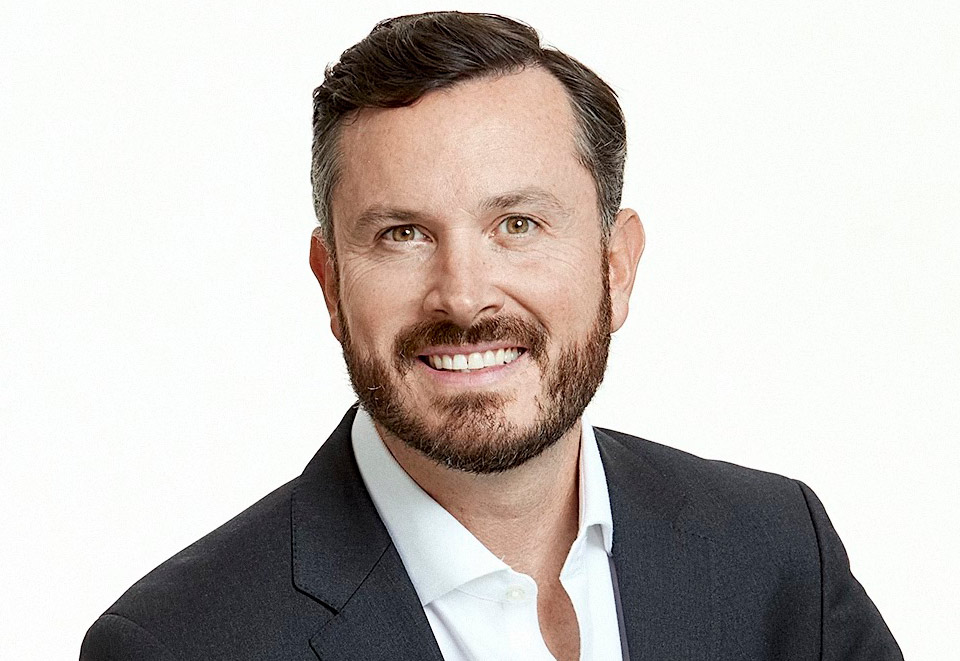
Hawthorn says the venue will go live early in the second half of this year with 20 buy- and sell-side institutions.
It is now almost three years since FX HedgePool entered this space with a focus on the swaps market. Over that time, it has exceeded $4.5 trillion in matched trades and is now positioned to roll out additional instruments, including spot matching capabilities, says founder and chief executive Jay Moore.
The platform has incentivized participation from the sell side by separating liquidity from credit.
“Initially conceived as a necessary development to support the matching of swaps between buy-side firms, this approach allows liquidity and credit to flow freely without dependency on one another,” he says. “The model allows participating banks to lend credit to our members for the booking and settlement of trades in return for fixed charges to appropriately compensate for balance-sheet usage.”
For the banks, this credit marketplace creates a new revenue stream where they can get paid for existing under-utilised credit lines without bearing market risk or the inconsistency of competitively negotiated trades.
This is an important point, given that LoopFX board member Ivan Ritossa has suggested that it is the first venue to develop a means of safely allowing market participants to tap the P2P market in FX without disenfranchising the sell side.
The market is right
Cürex also developed its platform in cooperation with the sell side.
“Our P2P liquidity pool is integrated into the offerings of leading sell-side algo providers as an additional liquidity source, so rather than disenfranchising the sell side, it improves their algo offering,” explains chairman and chief executive Jamie Singleton.
Clients who are price takers do not get hung up on the intricacies of the execution of their trade or order
David Wong, Midpoint

David Wong, chairman of matching platform Midpoint, does not believe that the sell side would be disenfranchised even if P2P providers were (or have been) somehow cannibalising the market and that competition from entrenched players suggested a zero-sum game.
“Even if the sell side wholeheartedly believed that to be true, ultimately the market is always right and customers and market forces will dictate the ebbs and flows,” he says. “Pricing and transparency are the key factors. Clients who are price takers do not get hung up on the intricacies of the execution of their trade or order.”
Moore agrees, adding automated workflows to the list of client considerations.
“As with any startup with new ideas, penetrating an established ecosystem can be extremely challenging,” he says.
A successful P2P platform also requires a fair and transparent mid-point price that can be used for matched executions, and customers need a frictionless trading experience that does not involve changes to trading workflows and that manages credit among the matching pool participants.
Then there is the time factor – buy-side customers generally do not have the ability to wait for a prolonged period to find a match.
Richard Harrison, vice-president of sales at Freemarket, says clients are simply looking for convenience, speed and cost transparency.
“How that is done is not necessarily top of mind with them, but they are looking for process efficiencies and automation that fintechs can solve for,” he says.