|
Best Bank: Ahli United Bank |
|
|
Best Investment Bank: GFH Financial Group |
It was a very strong year for Ahli United Bank (AUB), led by chief excutive Jehad Saud Al-Humaidhi. The Manama-based lender, which has 151 branches and more than 4,000 employees in eight countries, posted a net profit of $607.2 million in 2021 – a year-on-year jump of 34.3%. It followed that up by reporting net profit of $170.9 million in the first three months of 2022 – an annualized increase of 7.1% – thanks to higher net interest income, and trading and investment income.
Return on average equity came in at 14.2% at the end of March 2022, against 13.8% three months earlier, and 10.4% at the end of 2020. Non-performing loans and costs continue to inch down – the bank reported an NPL ratio of 2.4% at the end of 2021, and a cost-to-income ratio of 29.5%, as it continues to recover in the post-pandemic world.
It is tough for any Bahrain lender to compete with Ahli United Bank – it is larger than its peers based on any metric, from profits to assets to deposits. It is also not afraid to innovate.
Take Al-Tajer, for example, its one-stop solution for small and medium-sized enterprises, designed to help them find business partners and apply for loans.

In digital, the bank upgraded its business-to-business platform, making it easier for corporates to track payments in real time, issue fixed deposits and open new sub-accounts. The number of corporate clients onboarded via B2B crossed the 9,000 mark in 2021, against 5,976 the previous year.
Digital Customer Onboarding, another new application, lets customers open an account within minutes using their national ID and without needing to visit a branch. AUB also launched a dedicated new portal that enables corporates to manage their trade finance needs fully online.
Another new initiative, ‘RM Workbench’, makes day-to-day life for the bank’s relationship managers easier, by identifying client-facing sales, investment and growth opportunities much faster.
GFH Financial Group has emerged from a trying time for everyone, in better shape than ever and wins the investment bank award this year. The Bahrain investment house posted a net profit of $84.22 million in 2021, up 86.77% year on year, thanks to strong numbers across investment, commercial banking, real estate and treasury.
Total income rose 23.3% year on year, to $399 million, with assets under management topping the $15 billion mark for the first time. It continued its outperformance into the new year, posting net profit attributable to shareholders of $19.11 million in the first quarter of 2022, up 18.5% on the same period a year ago.
The key for GFH, in a year when capital markets activity was at a domestic premium, was to ensure it was on the deals that mattered. In March 2022, it became the first domestic financial institution to issue a green sukuk, raising $900 million via its infrastructure and sustainability arm, Infracorp, on the London Stock Exchange.
It also launched and seeded a $100 million sukuk fund, as it pushes ahead with plans to tap into a growing appetite for Islamic bonds. The fund contains a portfolio of sovereign, quasi-sovereign and corporate sukuk and sukuk-related securities, issued mostly in and by GCC countries.
GFH, whose operations span private equity, Islamic finance and investment banking, was particularly busy building, shedding and streamlining its own portfolio of assets, notably in the US. In November 2021, it invested in 14 Amazon-leased logistics assets scattered across 11 US states, in a deal valued at more than $2 billion.
It also acquired a portfolio of medical facilities worth around $200 million and joined forces with Jeddah-based Wafra International to buy a portfolio of US-based logistics assets leased to FedEx and General Mills.
Closer to home, the group’s healthcare investment platform, Healian, acquired a 60% stake in MSH, the largest provider of multi-speciality healthcare services in the United Arab Emirates, in a deal worth more than $100 million.

|
Best Bank: Commercial International Bank |
||
|
Best Investment Bank: First Abu Dhabi Bank |
||
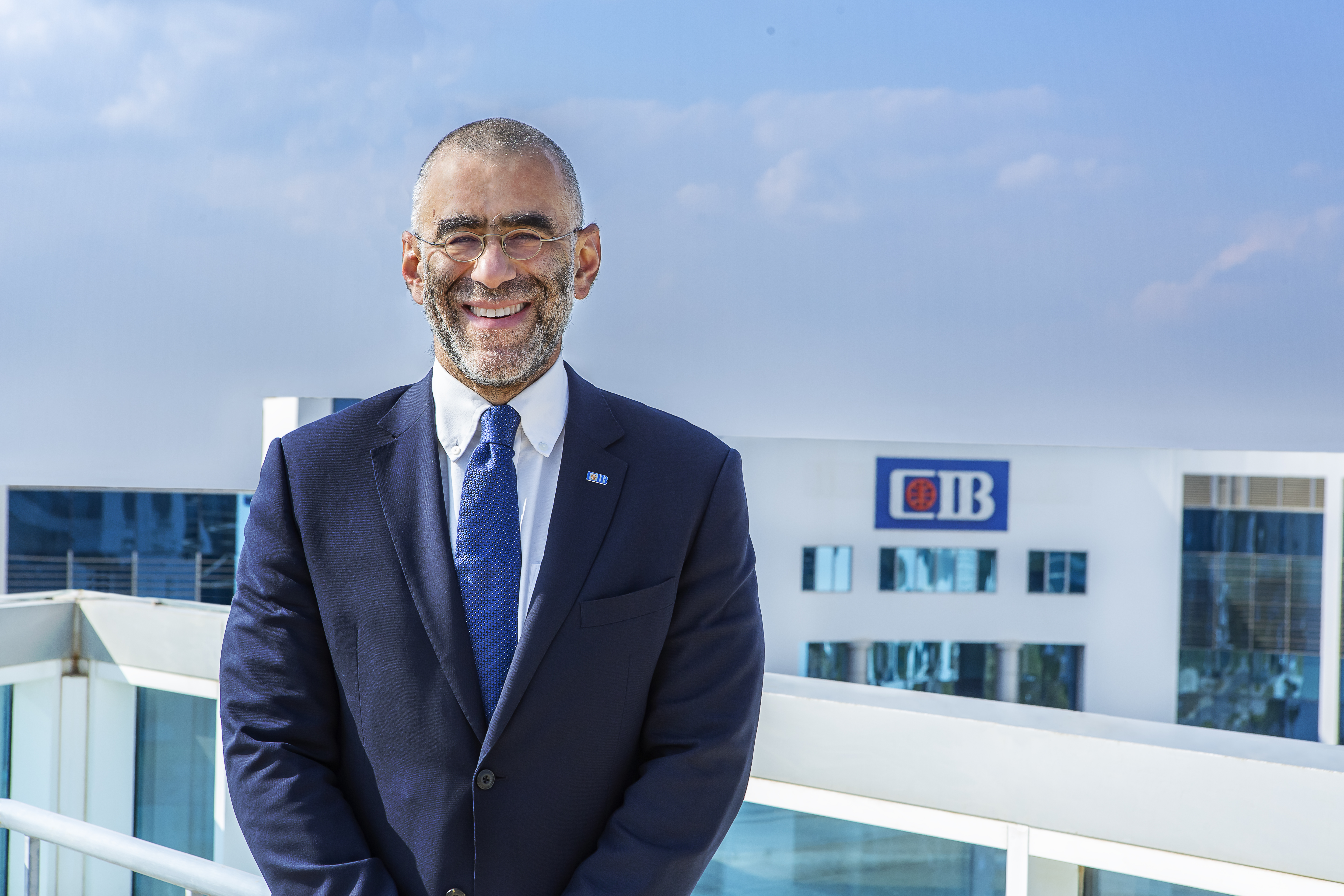
Once again, Commercial International Bank (CIB) walks away with an award it has made its own in recent years. Under chief executive and managing director Hussein Abaza, Egypt’s largest lender by revenues, income, deposits and assets, posted net income of E£13.42 billion ($721 million) in 2021, up 30% year on year, with revenues rising 4% to E£26.75 billion. Return on average equity jumped by 2.5 percentage points, to 21.7%, with return on assets of 2.88%, and a net interest margin of 5.67%.
CIB’s strength across the financial spectrum, allied to its willingness to innovate, was on show. Its roster of online banking customers passed the one-million mark for the first time last year, while the bank also unveiled Bedaya Business, a digital account that lets corporates, from multinationals to micro-sized small and medium-sized enterprises, carry out most transactions fully online.
CIB bolstered its status as the leading domestic payments services provider, with a 28% share of point-of-sale payments at the end of 2022, and a 21% share of all e-commerce transactions.
Diversity is key to the bank’s strategy. In 2021, lending to women-owned businesses jumped 63% year on year, with the number of female customers up 186%. A new initiative, part of its Women in Business programme, saw the bank unveil higher approved lending limits and relaxed its risk criteria, in order to promote and support female entrepreneurs.
Two other key events took place during the awards period. In June, the Financial Regulatory Authority approved CIB’s request to become the first Egyptian lender to issue a green bond in the local market. CIB printed $100 million in five-year non-callable fixed rate bonds, with the proceeds earmarked for a portfolio of green loans for corporate customers and SMEs.
The other notable event of the year occurred when Mayfair CIB, bought by Commercial International Bank in 2020, broke even for the first time. The Kenya-based lender posted a small net profit. It was welcome news for CIB, which plans to become a bigger player in key sub-Saharan African markets.
First Abu Dhabi Bank’s success in the investment bank category may raise eyebrows. It need not. The Abu Dhabi-based lender’s performance across investment banking justifies the receipt of this award.
Once again, FAB ruled the roost in loans, completing six corporate loans worth a total of $2.19 billion, according to data from Dealogic. It ranked joint third in debt capital markets, jostling for position with JPMorgan and Citi, and squeezed into the top-10 league table in terms of completed M&A.
The key deal of the year in DCM was a jumbo $3 billion Eurobond by the sovereign. Three times oversubscribed, with total bids of $9 billion from more than 300 global investors, it included the sale of $1.125 billion in six-year notes and the same amount in 12-year notes. FAB co-managed the September 2021 print, underlining the growing clout of regional institutional investors.
FAB was also a co-bookrunner on the $131 million April 2021 IPO of Taleem Management Services. Shares in the education management firm jumped 6.8% on the first day of trading on the Egyptian Exchange, in a sale oversubscribed by around 30 times.
In the loans market, First Abu Dhabi Bank was there when it mattered on the big trades. It was joint coordinator, mandated lead arranger and bookrunner on Afreximbank’s $1.2 billion three-year syndicated term loan facility. Raised in December 2021, the loan was 2.3 times oversubscribed, with the proceeds used to refinance existing facilities and for general corporate purposes.
And in June 2021, National Bank of Egypt finalised a $1 billion loan from a select group of banks, including FAB. The Cairo-based lender set out to raise $750 million but decided to upsize the facility thanks to strong demand.

|
Best Bank: Bank Leumi |
||
|
Best Investment Bank: Goldman Sachs |
||
It was a strong year for Bank Leumi, which posted a net profit for 2021 of NIS6 billion ($1.8 billion), more than any other domestic financial institution. It started 2022 well, too, with net income in the first quarter up 23.2% year on year, to NIS1.6 billion, and net interest income up 26.1%, to NIS2.9 billion. The bank posted return on equity at the end of March of 15.6%, against 14.2% a year ago.
The Tel Aviv-based lender – which boasts around 30% of the local banking market and whose headquarters will move further south in 2023, to the city of Lod – is well funded and capitalized too. It boasted a common equity tier-1 capital ratio of 10.78% at the end of the first quarter of 2022, with a capital adequacy ratio of 13.54%.
The bank is a leading domestic digital innovator. In November 2021, it invested $8 million in technologies, via its investment banking arm, Leumi Partners. A software delivery specialist headquartered in New York and with offices in Europe, Israel and Asia, GigaSpaces was chosen by the bank to power faster deployment of several of its digital applications.
In early 2022, the bank also launched ‘Leumi 1’, a retail platform designed to make the consumer banking experience more streamlined and customer friendly. Retail clients will be able to schedule a personal meeting with bankers at any branch across the country, online, via mobile or using the bank’s call centre. Leumi AB, the asset-based lending subsidiary of Bank Leumi UK, also unveiled a new operating platform to enable corporates to transform their local invoice discounting and asset-based lending business.
Goldman Sachs is the standout winner of the award for best investment bank in Israel this year. The Wall Street firm ranked first in onshore equity capital markets, completing 10 equity offerings worth a total of $1.38 billion, according to data from Dealogic – leaving rivals trailing in its wake.
The bank led the $1.88 billion IPO of Playtika Holding – the largest Israeli listing ever – and the $1.4 billion June 2021 listing of SentinelOne, a cybersecurity company with offices in the US, Israel and Tokyo. In June 2021, cloud computing software firm Monday.com went public in the US after raising $574 million, in an offering led by Goldman.
In January this year, Goldman said it would embark on a hiring spree in the country, doubling its local staff to around 30 people, including five investment bankers, plus asset managers and private wealth managers. The bank’s Israel head of investment banking, Jonathan Penkin, sees profits to be made in capital markets and in wealth management, as sovereign ties improve with the rest of the Middle East.
Goldman ranked third in the debt capital markets, and topped the M&A league table, completing seven deals worth a total of $14.5 billion. Key deals include the $11.1 billion merger of Tel Aviv-based mobile ad-tech platform ironSource with Thoma Bravo Advantage, a blank-cheque company backed by US private equity. Goldman advised ironSource on the merger and the firm’s ensuing June 2021 listing on the New York Stock Exchange.

|
Best Bank: Arab Bank |
||
Arab Bank has one of the largest networks of any Middle Eastern lender, with more than 600 branches spanning five continents. It is also one of the region’s best-run financial institutions, a digital innovator that does a great job of banking corporates large and small.
The bank is underpinned by its philanthropic endeavours, and it is also extremely financially well run. Headquartered in Amman, it posted a 61.4% rise in net profits in the full year 2021, to $314.5 million, with net operating income up 8% to $1.11 billion. In the first quarter of 2022, the bank reported a net profit of $166 million, up 29.4% against the same period a year ago.

Led by chief executive Randa Sadik, Arab Bank is also one of the region’s great strategists and innovators. During the awards period, it launched ‘Baeti’, part of its Arabi Mobile app that acts as a financial planning service for retail customers. ‘OpenSooq’ lets customers browse houses, then, if necessary, links them to a property agent. It also launched ‘Arabi Etadawul’, a collaboration with its investment banking arm, AB Invest, which enables customers to open foreign brokerage accounts via Arabi Mobile.
Arab Bank never forgets its smaller customers. ArabiConnect provides its small and medium-sized enterprise customers with a single banking tool that acts as a gateway to manage all accounts and transactions, and spans services ranging from account management to cash management. Over the past year, it also expanded the reach of ‘MobiCash’, a mobile payment service, to more SMEs, enabling them to credit payments via QR codes or wirelessly through mobile notifications.
Another key moment during the awards period, was the launch of ‘Reflect’, the country’s first neobank. The new offering targets millennials aged between 18 and 35 and bolsters Arab Bank’s position as Jordan’s most digitally innovative big lender.

|
Best Bank: Kuwait Finance House |
||
|
Best Investment Bank: HSBC |
||
Kuwait Finance House had a stellar year in 2021, posting a net profit attributable to shareholders of KD$243.4 million ($795 million), up 64% year on year, thanks to stable funding and operating costs. Total operating income rose 1.9% year on year, to KD$811 million, with return on equity and assets rising by 5.14 percentage points and 0.54% respectively, to 12.77% and 1.44%.
The bank’s outperformance continued into the new year, with chairman Hamad Abdulmohsen Al-Marzouq announcing net profit of KD$69.5 million for the first quarter 2022, up 39% from the same period a year ago. KFH posted net financing income of KD$159 million in the first three months, with the capital adequacy ratio inching up to 17.77%.
In March 2022, Fitch Ratings affirmed its long-term issuer default rating at ‘A’ with a stable outlook, and tipped profitability to continue to improve, bolstered by higher profits, a strong economy and stable impairment charges.
KFH bolstered its position as leading local and regional provider of digital financial services. It became the first domestic lender to roll out an electronic signature service for all personal finance transactions and launched Kuwait’s first AI-supported robo-banking service. It added new features to KFH Xpress, a cross-border money transfer platform, and became the first Middle East lender to launch a mobile wallet based on Mastercard’s digital enablement service for merchants.
KFH Capital was busy too. The investment banking team helped First Abu Dhabi Bank to sell $500 million in senior unsecured Islamic bonds in February 2022. And it was a bookrunner on Warba Bank’s $250 million perpetual tier-1 sukuk, printed in December 2021. KFH was involved in a host of other deals during the awards period, including a $1 billion five-year sukuk, printed by Dubai Islamic Bank in June 2021.
A steady flow of deals kept HSBC’s investment banking team busy during the awards period in Kuwait. In June 2021, the UK-headquartered lender acted as export credit agency coordinator, mandated lead arranger, lender and agent on Kuwait Petroleum Corporation’s $1 billion, multi-tiered, ECA-covered financing facility. It marked KPC’s inaugural facility under its current financing programme.
Another notable deal was National Bank of Kuwait’s five-year, $1 billion 144a/RegS bond, printed in September 2021. HSBC was joint lead manager and bookrunner on the first ever callable senior unsecured print by a Middle East-based financial institution, and the lender’s largest public debt offering. A geographically diversified book peaked at $1.9 billion, with orders from more than 80 accounts, 90% of them international.
As well as Kuwait’s best investment bank, HSBC is also the Middle East’s best bank for sustainable finance this year. It was sole ESG structuring bank on Burgan Bank’s sustainability financing framework – making Burgan the first Kuwait lender to establish such a structure. HSBC was also voted the country’s number-one bank for cash management in this magazine’s cash management survey for the 11th year in a row.
Other landmark deals abound. HSBC acted as joint lead manager and bookrunner on Warba Bank’s $250 million RegS-only, senior tier-1 sukuk, completed in November 2021. The deal, which was four times over-subscribed, marked Warba Bank’s second tier-1 capital offering, and its third transaction in debt capital markets.
It also acted as joint global coordinator, joint lead manager and joint bookrunner on Ahli United Bank’s $600 million additional tier-1 sukuk, and joint lead manager and bookrunner on Equate’s $700 million senior bond, completed in April 2021. The seven-year print was guaranteed by Equate Petrochemical and Kuwait Olefins.

|
Best Bank: Bank Muscat |
||
|
Best Investment Bank: HSBC |
||
Bank Muscat, easily the largest domestic lender as measured by assets, profits and market share in the Sultanate, walks off with the award for best bank in Oman yet again.
The Muscat-based lender, under chief executive Sheikh Waleed Khamis Al Hashar, posted a net profit of OR189.6 million ($493 million) in 2021, up 16.1% year on year. Net interest income from conventional banking and Islamic finance rose slightly – up 4.2% on an annualized basis, to OR322.1 million. One of the best-capitalized banks in the region posted a capital adequacy ratio of 21.3% at the end of 2021.

This year started well, too. The bank saw first-quarter 2022 net profit rise 2.4% year on year to RO48.3 million, despite lower net interest income and higher operating expenses, while customer deposits increased 4.8% to RO8.8 billion.
Bank Muscat is far and away the country’s most systemically important financial institution, as well as being innovative and far-sighted. Its number of digital retail customers crossed the 1.3 million mark for the first time during the awards period, and its Meethaq banking platform, which spans personal, corporate, wholesale and Islamic banking, also crossed a milestone, welcoming its 100,000th customer into the fold. The bank also unveiled its first-ever private-banking service.
In November 2021, Bank Muscat signed a memorandum of understanding with Saudi Export-Import Bank, with the aim of funding and boosting bilateral trade between the two countries. Bank Muscat is the only Omani lender permitted to operate in the Kingdom, thanks to its branch in Riyadh, and a full corporate banking licence.
Its investment banking team was kept busy. Key deals during the 12-month period include: a $1.75 billion, nine-year sukuk for the government of Oman, which attracted more than $11 billion in orders; a $67 million, term-loan facility for workplace operator Renaissance Duqm Accommodation; and a $1.5 billion, revolver supplier-financing facility for the finance ministry. During the awards period, the bank helped clients raise $4.7 billion.
Once more, HSBC is named the best investment bank in Oman. The UK-headquartered lender, which has around 850 staff located in the Sultanate, ranked first in the debt capital markets league tables in the awards period, according to Dealogic, and second in M&A.
A key deal in the 12 months to the end of March 2022, was a $750 million 144a/RegS bond offering from national petroleum investment company OQ, completed in April 2021. HSBC was joint global coordinator, joint lead manager and bookrunner on a deal that was more than six times over-subscribed, with 90% of orders allocated to accounts outside the region. It also marked the lowest coupon achieved by an Omani corporate since 2015.
HSBC was integral to the inaugural offering, marketing the deal and explaining to regional and global investors – notably UK- and Asia-based accounts – the importance of OQ, its status as a pivotal national corporate and its de-leveraging plans.
Another landmark transaction was a $1.75 billion, nine-year senior unsecured sukuk, printed by the government in June 2021. HSBC was joint global coordinator, joint lead manager and bookrunner on the fourth consecutive sovereign mandate won by the lender in under 12 months.
That deal attracted robust demand from regional and Asia-based accounts, peaking at $11.5 billion. It marked the country’s first sovereign sukuk in three years and, at the time, the first sukuk issuance in the GCC region in the calendar year 2021.
HSBC’s strength in sustainability was also clear to see. It was sole ESG coordinator, sole bookrunner and joint mandated lead arranger on National Energy Services Reunited’s $860 million dual-currency sustainability-linked facilities, signed in November 2021. The triple-tranche deal marked the first ever sustainability-linked loan in the Middle East’s oilfield sector.

|
Best Bank: Qatar Islamic Bank |
||
|
Best Investment Bank: JPMorgan |
||
Founded in 1982, Qatar Islamic Bank is a financial institution on the rise. The country’s largest Islamic bank has over 170,000 retail customers and more than 3,000 business clients, served via 31 branches dotted around the country.
QIB posted net profit attributable to shareholders of QR3.56 billion ($978 million) in 2021, up 16% year on year. Net interest income rose 7.4% over the period, to QR4.99 billion. It posted returns on equity and assets at the end of 2021 of, respectively, 17.6% and 1.9%.
The current year also started strongly. Qatar Islamic Bank posted net profit attributable to shareholders of QR855 million in the first quarter of 2022, up 14% year on year.
Total income for the three-month period came in at QR2.812 billion. It posted a cost-to-income ratio of 16.8% at the end of March, with its non-performing loans static at 1.5% of total lending.
In June 2021, QIB launched an updated version of its mobile banking app, boasting more than 100 new features, and a new mobile app catering to corporate clients. Two other notable features unveiled during the awards period were: an app-based brokerage service that lets customers trade stocks listed on the Qatar Stock Exchange; and a first-of-its-kind ‘discreet mode’ feature that enables QIB customers to conceal account details while using the app in public.
The bank also deserves kudos for publishing its inaugural sustainability report, in line with the country’s National Vision 2030 plan, and its National Environment and Climate Change Strategy, the latter unveiled in October 2021. The report comprises five pillars crucial to its long-term development: sustainable finance, responsible banking, governance, ethics and risk management.
In a strong all-round year for the Middle East’s capital markets, Qatar served up surprisingly thin gruel. But when the big deals did come to market, JPMorgan was there. The US bank ranked joint first in the M&A tables during the awards period, completing deals worth $2.62 billion, according to data from Dealogic. In debt capital markets, it completed three transactions worth a total of $1.9 billion.
The most notable DCM deal of the year was a $12.5 billion sale of bonds by Qatar Petroleum. The state-run energy firm finalised the deal in July 2021; at the time, it was the largest emerging-market print of the year, and it also marked the firm’s first dollar-denominated print since 2006. JPMorgan was a global coordinator on an offering that drew around $40 billion in orders, with global investors attracted by the allure of a rare sale by a genuine, blue-chip, Qatari state-linked corporate.
The bank was present, too, on Dukhan Bank’s sale of $500 million, additional tier-1 Islamic bonds, completed the same month. JPMorgan was a co-arranger of a print that received more than $2.25 billion in orders.
In M&A, JPMorgan was a financial adviser to Al Khalij Commercial Bank on its merger with Masraf Al Rayan. The two lenders finalised the $2.23 billion merger in November 2021 and began trading as a single financial entity under the name Masraf Al Rayan, creating an Islamic banking powerhouse.

|
Best Bank: Al Rajhi Bank |
||
|
Best Investment Bank: HSBC |
||
Al Rajhi Bank is emerging from the pandemic in fine shape. The Kingdom’s financial leader posted net profit of SR14.75 billion ($3.93 billion) in 2021, up 39.2% year on year. Return on average shareholders’ equity came in at a very healthy 23.9%, with return on average assets at 2.7%. Net financing and investment income came in at SR20.4 billion, up 21% over the previous year, with total assets jumping 33%, to SR624 billion.
Al Rajhi Bank began the new year well. It posted a 24% year-on-year rise in net profit in the first three months, to SR4.13 billion, with assets up 28.4%, deposits rising 20.6% and operating income rising 17% from the same period a year ago.
The bank has also received approval from shareholders to increase its capital stock by 60%, to $10.66 billion, and to distribute a cash dividend of SR1.4 per share for the full year, pushing its share price to an all-time high. And in January 2022, the lender completed the sale of SR6.5 billion-worth of perpetual tier-1 sukuk bonds via a private placement.
The bank saw the number of digital customers jump sharply, to 14 million at the end of 2021, against 7.9 million a year earlier, with 96% of new-to-bank customers onboarded fully digitally. The Riyadh-based lender also introduced a raft of new or augmented digital services during the awards period, including digital promissory notes, online mortgage applications, QR-code automation, and end-to-end opening of current accounts for retail and small and medium-sized enterprise customers.
The bank unveiled a new e-business platform for startups and business customers, an AI-powered engine that processes unstructured data, and a digital service that allows retail and corporate clients to book an in-branch appointment via their desktop or mobile phone.
HSBC stood head and shoulders above the pack in the investment bank category this year. It ranked first in debt capital markets during the awards period, completing 14 deals worth $6.38 billion, for a 17.67% share of the market, according to data from Dealogic.
Landmark deals abound. In March 2022, HSBC helped the Kingdom complete an early purchase of bonds and sukuk, and to issue SR26.24 billion- ($7 billion) worth of new sukuk. A month earlier, it helped Riyad Bank price a $750 million, additional tier-1, sustainability RegS sukuk. Strong demand led the issuance size to be increased from $500 million; it was the first sukuk to be admitted and listed on the London Stock Exchange’s Sustainable Bond Market. HSBC was joint global coordinator and joint sustainability structuring agent.
Another notable deal was Saudi National Bank’s five-year, $750 million sustainable sukuk, printed in January 2022. It marked the lender’s inaugural public debt issuance, following last year’s merger of National Commercial Bank and Samba Financial Group.
HSBC ranked second in Saudi Arabia equity capital markets, completing six deals, worth a total of $2.05 billion. The highlight was probably the $1.36 billion IPO of retail pharmacy chain Nahdi Medical. HSBC acted as joint financial adviser, joint global coordinator and bookrunner on the Kingdom’s largest ever private-sector IPO.
The deal was 59 times over-subscribed, with 90% support from institutional investors and books covered within a day of the start of book-building, despite volatile market conditions. HSBC led the way in preparing the company’s equity story, positioning it in the market, and engaging with investors.
The UK lender was also financial adviser and lead manager on Jahez International’s SR1.78 billion IPO, completed in January 2022. It marked the first onshore primary listing in the technology space, with HSBC securing the country’s inaugural cornerstone investment and Hassana Investment buying a 4.9% stake as part of the offering.

|
Best Bank: First Abu Dhabi Bank |
||
|
Best Investment Bank: Citi |
||
First Abu Dhabi Bank wins the award for best bank in the United Arab Emirates, and rightly so. FAB has had an exemplary year.
Its financials alone make the case for this award. It posted group-wide net profit of Dh12.5 billion ($3.4 billion) in 2021, up 19% year on year. Revenues rose 17% on an annualized basis, to Dh21.7 billion, with assets topping the Dh1 trillion mark for the first time.
If last year was a robust canter, 2022 has become a full-on gallop. First-quarter net profit jumped 107% year on year, to Dh5.1 billion, making it the best three-month period in the bank’s history. Total income hit Dh7.3 billion, boosted by a buoyant domestic economy, a strong business pipeline and growing consumer confidence.
FAB is constantly bolting new services onto its digital platform. It recently launched a new online marketplace – FAB Rewards Shop – that lets customers earn and redeem points with more than 100 premium brands. It signed a cooperation agreement with Ajman to support new payment channels and services available via the Emirate’s AjmanPay application. And in February, neobank Wio secured in-principle approval from the central bank of the UAE, to launch a retail facing digital platform. Wio, which is 10% owned by FAB, has total invested capital of Dh2.3 billion.
In capital markets, FAB was co-bookrunner on Abu Dhabi National Oil Company’s $1.2 billion sale of exchangeable bonds in May 2021 and helped Adnoc raise $445 million via an accelerated book-build the same month. It was joint global coordinator and mandated lead arranger on Abu Dhabi Development Holding’s $4.5 billion revolver, in December 2021.
Citi was the standout investment bank this year in UAE. It ranked first in equity capital markets, completing five deals, worth a total of $1.58 billion, for a near-30% share of the market. In DCM, it completed 11 deals, worth $2.81 billion together, and advised on five completed M&A transactions, with a total value of $3.89 billion.
The US bank worked on a raft of big-ticket UAE stock offerings in the awards period. Books on Fertiglobe’s $795 million IPO were covered within two hours of launch in October 2021. It marked the first-ever chemicals IPO in the country, and the largest initial stock sale in the sector in the region for 15 years. Citi delivered anchor orders from tier-one international investors and sovereign wealth funds during the book-building period.
Another key issuance was Adnoc Distribution’s $1.2 billion exchangeable bond and $445 million secondary equity offering, completed in May 2021. Books on the exchangeable bond were closed within 45 minutes of launch, with Citi acting as sole global coordinator and bookrunner on the print and as joint global coordinator on the follow-on.
Hamza Girach, head of Middle East investment banking at Citi, called the double-header an “unprecedented” deal that “signals a new way of monetising government assets. The issuer took advantage of low rates and a very hot and active exchangeable bond market. Kudos to Adnoc for having the guts to do it.”
In DCM, the US bank was lead global coordinator on Sweihan PV Power’s $700.8 million, benchmark green project bond, completed in January 2022. The sale was 2.3 times over-subscribed, with orders drawn from a diverse array of investors, including dedicated green funds.
In M&A, Citi advised the Sixth of October for Development and Investment, one of Egypt’s largest real-estate developers, on the sale of an 85.52% stake, for $387 million, to a consortium of two Abu Dhabi-based corporates: Aldar Properties and ADQ.