
The North American capital markets witnessed unprecedented levels of activity over the awards period and Morgan Stanley has demonstrated an impressive ability to come up with differentiated advice and solid execution across all its financing businesses.
The first three quarters saw clients move beyond the initial need to fortify the balance sheet post-Covid. The US bank therefore spent most of last year helping established companies to think about growing, whether it was raising $3.4 billion for real estate investment trust VICI Properties, or $2.5 billion for Culligan International, or $18.3 billion across four separate deals for Thermo Fisher Scientific.
Markets were in overdrive and open to whatever plans clients had. The best advice was stay on offence and to think about plans for the next five years as opposed to just the next trade.
But everything changed in the last quarter as volatility and uncertainty increased following the outbreak of war in Europe and concerns over inflation and monetary tightening. This is where the value of good advice really shows.
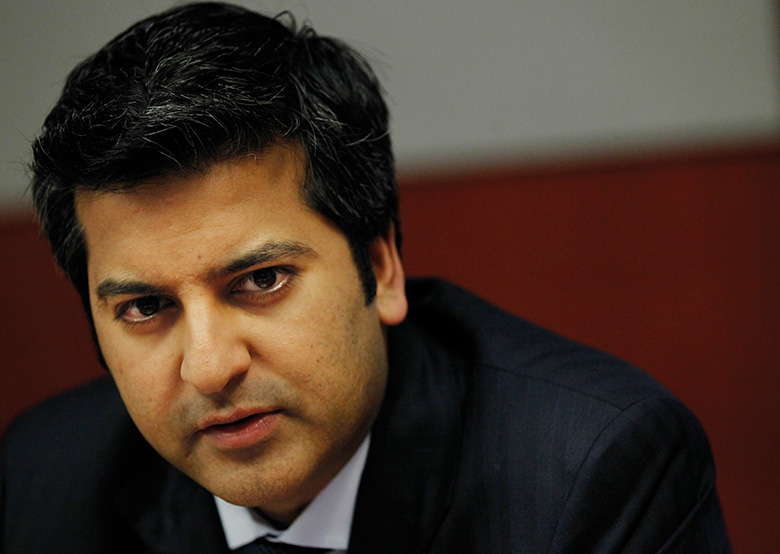
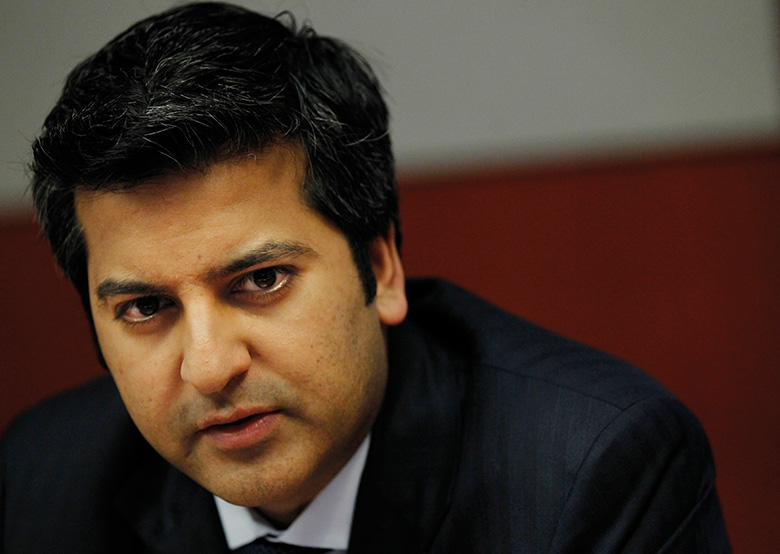
“We cannot predict markets, but we can optimize for giving the right advice to companies at the appropriate time,” says Mo Assomull, head of global capital markets at Morgan Stanley. “We saw volatility in the last quarter, but I wouldn’t say we dramatically changed our advice. We were still telling clients to think long term, fortify balance sheets, while being tactical around opportunities.”
Executing in choppy markets is where any financing house really shows its mettle. Morgan Stanley demonstrated this last September with the VICI deal, which saw the market trade down 2.2% during the marketing period but priced at a file-to-offer discount of 7.1%. Going to market with $3.4 billion in one shot under these conditions was a challenge.
“In this market, the premium for good execution has never been higher,” Assomull explains. “This changes the way we think about things. We recently priced the first large IPO since TPG in the US, for Bausch + Lomb. It was not easy. We launched it at a lower price range than we would have three months prior and advised of the risk that even with the new range the market would test lower. We wanted to make sure we found a level that real money buyers came in at good size. The stock trades around issue right now [early June], which is the hallmark of good execution. You couldn’t do that with 10 deals on the road.”
Good execution is often the product of many years of work. The $2.6 billion Global Foundries deal in October last year saw the bank act for a first-time issuer that was not well known in the market. A concurrent private placement showed early indications of interest and the IPO was the culmination of a multi-year strategic partnership with this client.
We cannot predict markets, but we can optimize for giving the right advice to companies at the appropriate time
Mo Assomull
The Endeavour deal was also the result of a long relationship – the entertainment firm had tried to go to market in 2019 but failed. Morgan Stanley had stayed with it and gave good advice, which culminated in the bank being left lead on the eventual $511 million IPO and $1.8 billion private placement in October last year.
“We have now seen in a tough way that many clients don’t have access to capital markets right now, but many also do,” says Assomull. “What is interesting is being able to advise clients to be more tactical in the short term while being strategic in the long term.
“This time last year there were 550 IPOs that had priced globally through early May. This year to date there has been 77, but the pipeline is still there; we are still pitching for mandates, the pipeline continues to build but to wait. It reminds me of early 2020.”