
Ecobank Transnational brands itself as a pan-African lender – and such it is. Founded in 1985, it now serves millions of customers across 33 sub-Saharan African markets. And with so many multinational banks having made their excuses and departed, it is now arguably more important and integral to the region’s smaller businesses than ever before.
The Togo-headquartered bank was busy over the past year. In June and July 2021, it organized, in alliance with the African Union Development Agency, a ‘training for financing’ programme targeting micro-sized enterprises in eight markets including Niger, Rwanda and Chad. Around 3,000 micro, small and medium-sized enterprises completed four modules and 15 training sessions, covering topics ranging from risk management to business compliance and leadership. All graduating businesses got the opportunity to apply for financing in the form of working-capital support.
Ecobank is working with leading multilaterals. In November 2021, it secured a €100 million nine-year credit facility from the European Investment Bank to financially support African businesses in sectors hardest hit by the pandemic. It also secured a $50 million trade finance facility from British International Investment – formerly CDC Group and the development finance arm of the UK government – to provide systemic liquidity and trade-finance support to African banks and businesses in underserved markets.
It also collaborated with the African Development Bank and the Green Climate Fund to focus on financial access and capacity building for 400 smaller women-led agribusinesses.

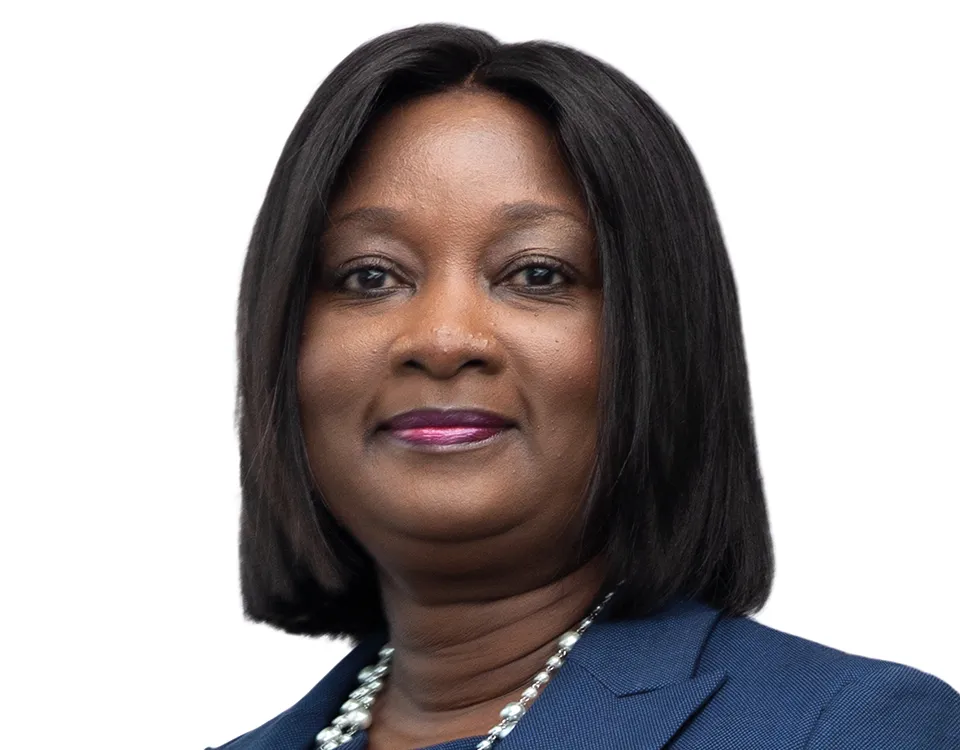
“Our mission at Ecobank is to be the bank of choice for SMEs across our African footprint,” says Josephine Anan-Ankomah, group executive for commercial banking at Ecobank.
“We are expanding access to finance through deposit mobilization initiatives that help us increase our lending capacity, as well as through strong risk-sharing partnerships with development finance institutions, enabling us to improve access to finance for viable SMEs across Africa,” she adds.
Last year, Ecobank launched Ellevate, a new platform that extends capital and non-financial support to African businesses that are formed, managed and owned by women, particularly those with a higher share of female board members.
This support is crucial to fair and equitable development. In 2018, the African Development Bank put the annual financing gap for women-led businesses across the continent at $42 billion. At the end of 2021, the bank had onboarded 13,000 new customers under the Ellevate umbrella, extended loans worth $87 million and attracted deposits of $187 million.
To help small companies survive and thrive in the post-Covid world, Ecobank partnered with Microsoft and several of its divisions, including LinkedIn and GitHub, to launch its Global Skilling Initiative in the summer of 2021. This is designed to equip business owners and employees with digital skills.
We are expanding access to finance through deposit mobilization initiatives that help us increase our lending capacity
Josephine Anan-Ankomah
More than 50,000 businesses took part in the initiative over the following five months. And in partnership with Google, Ecobank is providing 500,000 SME customers with free internet access via the US technology firm’s Google My Business platform.
Ecobank also introduced an enhanced current-account service boasting a bundle of digital solutions. Customers opening a business account are automatically onboarded onto its Omni Lite, EcobankPay, POS and Google My Business services.
It is clearly working. In 2021, Ecobank acquired 107,000 new SME customers, taking the total to more than 1.1 million. Its OmniLite platform processed $4.9 billion in online payments in 2021, 24% more than the year before. The number of merchants onboarded via EcobankPay, the bank’s digital payment collections platform, grew by 55% over the 12-month period to around 400,000.
And in the fourth quarter of 2021, the bank expanded its product offering to commercial banking customers by unveiling bancassurance, partnering with insurance firms to provide a one-stop solution to smaller enterprises. It also rolled out pre-paid cards, allowing business clients to load funds for online purchases and payments to suppliers.