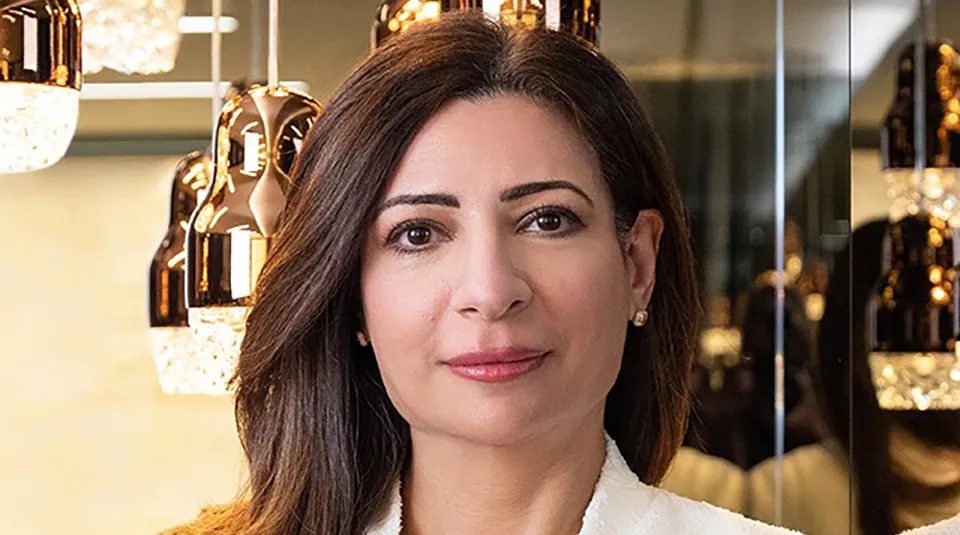

It has been a busy few years for First Abu Dhabi Bank (FAB). A change at the top of the institution last year saw Hana Al Rostamani ascend to the position of group chief executive, the first woman to lead the bank.
The UAE’s largest bank posted net profit of Dh12.54 billion ($3.41 billion) in 2021, up 18.9% year on year. Total assets topped Dh1 trillion for the first time, with return on tangible equity rising 2.1 percentage points to 15.1%, the cost-to-income ratio declining to 26.4% and total revenues up 16.7% to Dh21.68 billion.
The outperformance continued into the current year. The bank posted net profit of Dh5.1 billion in the first three months of 2022, up 107% on the same period a year ago. That marks the best quarterly performance in earning terms in its history. Against its chief rivals, FAB posted better earnings, a lower rate of soured loans and a higher RoE.
“Our record performance in 2021 was built on robust foundations in terms of liquidity, funding and capital, underlined by the reaffirmation of our AA- credit rating and stable outlook from S&P, which reflect our strong balance sheet fundamentals and risk profile,” says Al Rostamani.
FAB’s strengths run wide and deep. Always active in regional capital markets, it completed 26 debt capital markets deals in the awards period, worth a total of $4.05 billion, according to data from Dealogic. Key deals include Abu Dhabi National Oil Company’s (Adnoc) $1.195 billion exchangeable bond in May 2021 and its $445 million accelerated bookbuild, completed the same month, with FAB acting as joint global coordinator.

No one can compete with FAB on the financing front. As mandated lead arranger, the bank completed 33 loans worth a total of $6.6 billion during the awards period and it was bookrunner on 24 loans, worth a combined $8.74 billion. In both cases, it left the competition in its wake.
Standout deals in financing include a $4.5 billion revolver for Abu Dhabi Development Holding; a $3 billion green loan and murabaha facility for Egypt’s finance ministry; and Gulf International Bank’s $625 million sustainability-linked loan facility. FAB secured the role of mandated lead arranger on all three. It was also the only bank in the region to make into the top-five list of bookrunners across Middle East bonds and sukuk.
FAB boasts the largest regional direct custody network, spanning seven markets including Egypt, Bahrain, the UAE and Saudi Arabia, and it has just re-engineered its core custody platform using artificial intelligence and robotic process automation.
The bank describes last year as a “transformative” one for sustainable finance. In 2021 FAB unveiled its new group-wide environmental, social and governance (ESG) strategy, created the role of chief sustainability officer and appointed Shargiil Bashir to lead the division.
Our record performance in 2021 was built on robust foundations in terms of liquidity, funding and capital
Hana Al Rostamani
In October, it was the first bank in the Middle East to join the global Net-Zero Banking Alliance, committing itself to achieving net zero on emissions, across operations and investment by 2050. This, said Al Rostamani at the time, “charts a compelling pathway to a carbon-neutral future, presenting the potential to drive significant economic growth, inspire new innovations and deliver positive change for generations to come.”
ESG-themed capital market transactions over the 12-month awards period abound. In October 2021, Etihad Airways raised a $1.2 billion sustainability-linked loan facility, with FAB acting as joint ESG structuring bank and joint ESG coordinating bank. Other standout deals were mall operator Majid Al Futtaim’s $1.5 billion sustainability-linked loan facility and a Dh1.99 billion senior secured green term loan for Etihad Rail.