
For a time after its IPO in August, six-year-old branchless KakaoBank was the largest financial institution in South Korea by market capitalization. That didn’t last through the global tech stock collapse – and was always a little absurd – but the $2.2 billion IPO, which is still trading above its issue price, is a reminder of just how far this institution has come.
Pretty much uniquely in the high-promise, low-proof world of Asian digital finance, KakaoBank is profitable, and has been so since 2019, just two years after launch. It turned a W256.9 billion ($205 million) operating profit in 2021, up 110% year on year, having already reached 18 million customers out of a national population of 52 million.
A KakaoBank results statement is unusual because it actually looks like a bank, with quantifiable metrics rather than gaping holes where the profit or return numbers should be. So, it can tell you what its return on equity, deposits and capital adequacy are, because these things exist.

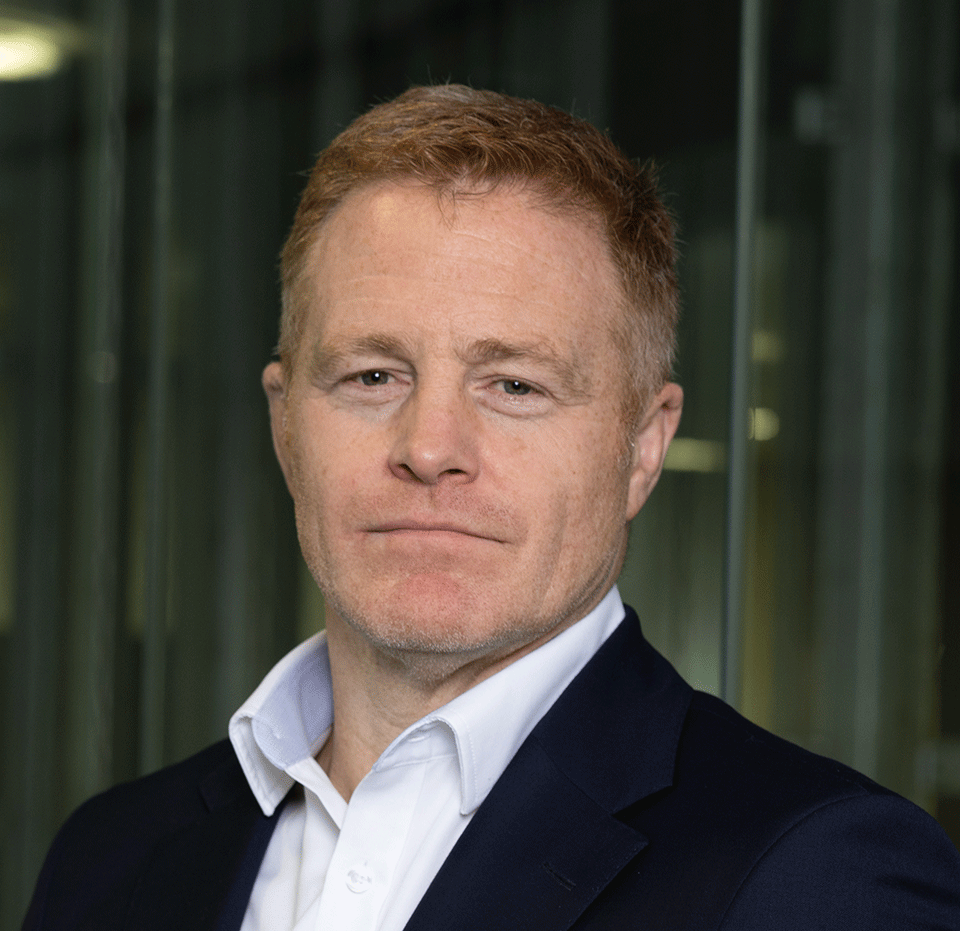
Moreover, chief executive Yun Ho-young, also known by his English name Daniel, has a plan. As he told Euromoney in March, having harvested the low-hanging fruit of wallet balances, it is now building a platform for higher-fee products, some home-grown, others in partnership.
Once known for its colourful characters and gimmicks, you can now get a mortgage through KakaoBank, or a housing deposit loan, or foreign securities.
“If we believe that we are the one who can develop the best service, we develop it ourselves,” says Yun. “But when it comes to credit cards or securities accounts, we cannot create much differentiation from existing services. So we deliver the services of other financial institutions.”
I believe innovation is about changing the long-term habits of many people
Yun Ho-young
That discipline of not trying to do everything is going to be useful as KakaoBank builds on its ferocious early success and seeks to mature. But doing things differently is always going to be part of its DNA.
“I believe innovation is about changing the long-term habits of many people,” Yun says. “In the banking industry, that habit has always been face-to-face services, lagging behind the change in other parts of our lives which have already become mobile-based.”