
Covid-19 and the war in Ukraine have reinforced the importance of public-sector clients to global banks. It is a familiar pattern at times of crisis. Societies turn to their governments when financial markets get choppy.
In 2022, many states face the challenge of resolving the inflationary after-effects of Covid support measures, the effects on inflation of supply-chain problems linked to the pandemic and higher energy prices due to the war in Ukraine.
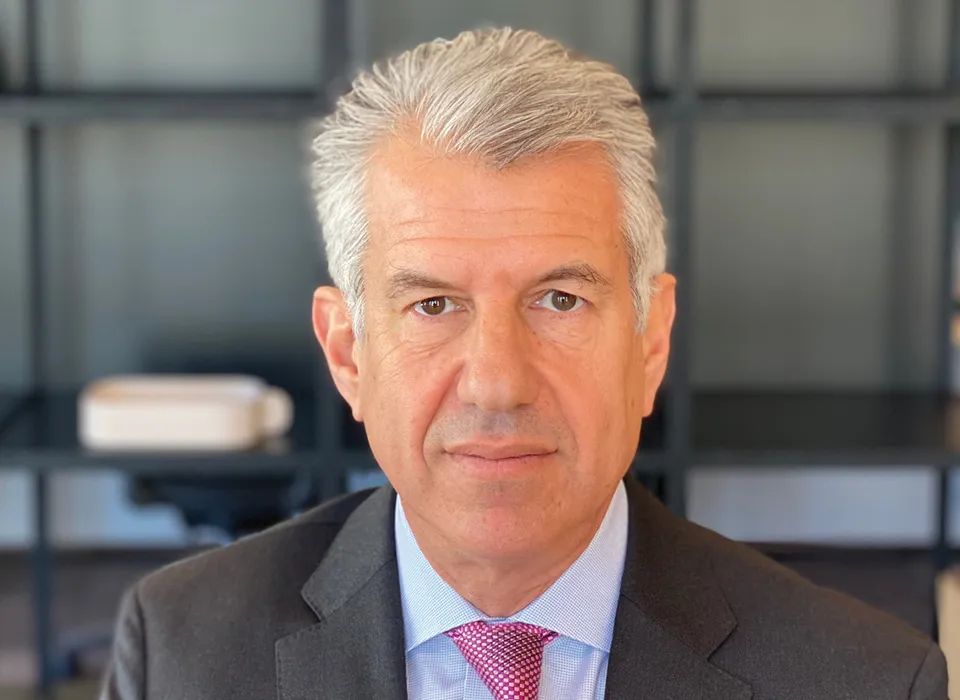
“For the past 10 years, policymakers – at least in the developed world – have complained about the lack of any inflation. Now we have some,” says Daniel Zelikow, global head of public sector at JPMorgan.
Shortlisted
- Deutsche Bank
- BNP Paribas
For poorer countries, the most serious impact of this war is on the price of food. According to the United Nations, about 400 million people worldwide depend on Ukrainian grain exports, which Russia’s invasion has effectively halted. And the World Bank warns that higher food prices this year risk pushing 100 million more people into poverty.
Hedging against the worst effects of price swings in oil, wheat and other commodities is one of the most important services that banks provide to the public sector.
“We have an important role in helping net exporters lock in their export proceeds or to help importers defend against the increased fiscal costs that would arise from subsidies they have built into their budgets – often to promote food security for their populations,” says Zelikow. “We’ve long used commodities markets to help those countries.”
However, JPMorgan’s public-sector franchise goes far beyond access to commodities markets. It is a multi-billion dollar business in terms of revenue and counts as its clients 116 central banks, 85 governments, 26 sovereign wealth funds, 49 multilateral institutions and more than 100 national policy-related financial institutions. The firm’s sovereign advisory franchise, for example, counts 15 clients, including five G20 countries.

Between April 2021 and March 2022, JPMorgan extended its lead at the top of the global bookrunner league table for sovereign, supranational and agency (SSA) clients, according to Dealogic. It raised $111 billion for these clients, with 336 deals. Its SSA market share of 7.3% was well ahead of the next biggest bank, Citi, which had a 6% share.
European banks are the next biggest players in the global SSA market, but JPMorgan was also by far the biggest bookrunner for SSA clients in euros, according to Dealogic – well ahead of BNP Paribas, the next largest. JPMorgan has helped numerous European sovereigns secure ultra-long financing while rates were low, including 100-year bonds for Ireland and North Rhine-Westphalia, and 50-year bonds for Italy, Spain, Belgium and Austria.
In the emerging markets, JPMorgan’s deals included a $500 million private placement for South African electricity parastatal Eskom, acting as sole initial purchaser and bookrunner, and leading a local-currency syndication. And the bank has been pushing in frontier markets, working on deals from Mongolia to the Maldives. It provided a $500 million-equivalent local currency financing to an African central bank that had recently gone through a Eurobond default.
For sovereign wealth funds, JPMorgan has continued to buy and sell assets, offering financing against their existing positions and helping them hedge currency and equity-market risks. For example, it did the structuring, underwriting and bridge financing for Mubadala’s $1.8 billion acquisition of Brazil’s RLAM refinery.
In privatization, JPMorgan acted on the R$11.5 billion ($2.2 billion) divestment of Vale debentures held by the Brazilian federal government and national development bank. It was lead coordinator and sole financial adviser to Aegea on a R$7.8 billion bridge financing related to its acquisition of water and sanitation assets in Rio de Janiero.
Export credit agencies are vital when financing conditions are tough. Recent export-financing deals arranged by JPMorgan include an €842 million financing backed by UK Export Finance and the Multilateral Investment Guarantee Agency (Miga) for Serbia’s Morava road corridor; a $54.1 million Export Development Canada-backed loan for a Dominican Republic water sanitation project; and a $400 million Miga-backed facility for Colombia’s Bancoldex for short-term working capital loans for micro, small and medium-sized enterprises.
For the past 10 years, policymakers – at least in the developed world – have complained about the lack of any inflation. Now we have some”
Daniel Zelikow
JPMorgan has a target to finance and facilitate more than $2.5 trillion of funding for sustainable development by 2030, and a large chunk of that will be in developing countries. The bank’s Development Finance Institution (DFI) will play a big role in reaching the target.
In 2021, in its second year of operation, the DFI acted as development finance structuring agent on 20 transactions, including a $500 million bond for Georgian Railways, attracting anchor investments from the Asian Development Bank and the European Bank for Reconstruction and Development.
According to Zelikow, the key priority for the DFI now is to turn development finance into a tradable asset class capable of attracting more institutional money.
“We’re now reaching out to peer institutions, as well as big institutional investors, and some of the largest development finance institutions in the public sector,” he says.
“The idea is to coalesce around standards so that we can systematize what development finance means and what we’re referring to when we use that term.”