
The financial institutions group (FIG) has a long history at Goldman Sachs. It is the investment bank’s longest standing industry vertical.
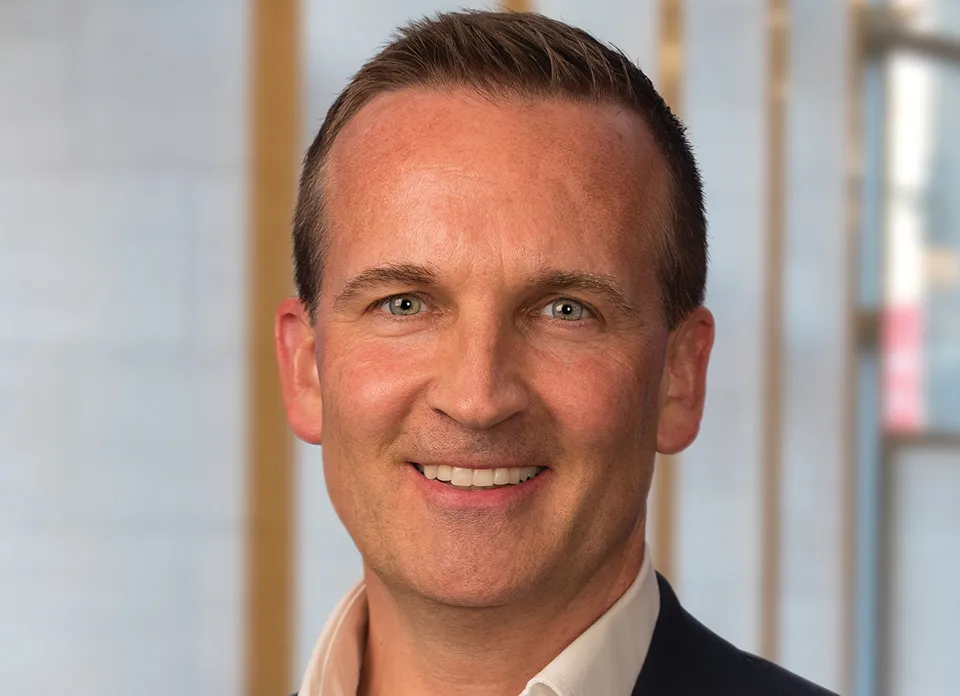
More recently, the franchise has developed by investing more effort in asset management, especially alternatives and financial technology. This ties in with Pete Lyon’s dual mandate since 2019 as global head of FIG and global head of the financial and strategic investors group. It has also gone hand in hand with the wider development at Goldman of its cross-markets group, targeting mid-market transactions, including those from financial institutions.
Pushing harder in alternatives, fintech and mid-caps has gone against FIG’s sometimes staid reputation – that of being about traditional banks and insurance companies – into a division that is expanding relatively rapidly from a revenue perspective within Goldman’s investment bank.
Shortlisted
- Morgan Stanley
- UBS
“People don’t realize the breadth, the depth and the growth opportunities in what is often thought of as ‘old school FIG’,” says Pat Fels, Goldman’s head of FIG in the Americas. “This didn’t happen by accident. We’ve invested in new areas of client coverage, moving talented people internally and tactically hiring people from outside the firm.”
Dirk Lievens, head of FIG in Europe, offers a similar message: “We’re much more balanced today between the FIG sub-sectors – fintech, asset management, insurance and banks.”
Recent evidence for how large Goldman’s alternatives franchise has grown includes its work on EQT’s acquisition of Baring Private Equity Asia; the formation of Blue Owl Capital from Owl Rock, DyalCapital Partners and Altimar; Ares’ acquisition of Landmark; Franklin Templeton’s acquisition of Lexington Partners; and CVC’s secondaries partnership with Glendower Capital.
“Even we didn’t appreciate how quickly alternative asset management would grow when we put it adjacent to FIG three years ago,” says Lyon. “This has proven to be hugely synergistic. The growth in the alternatives business has been spectacular.”
The past two years has been something of a coming of age for fintech too. The IPO of Brazil’s Nubank at a $44 billion market cap, on which Goldman was joint global coordinator, was a landmark. Square’s $29 billion acquisition of Afterpay was one of the biggest ever M&A deals in Australia.
It was the culmination of a long relationship between Goldman and Afterpay.
The latter is far from the only fintech firm Goldman has worked with as its valuation ballooned. Sweden’s Klarna, also in the buy-now-pay-later market, is another example of how attention to smaller clients has helped drive longer-term revenue growth from fintech and asset management clients.
“Thematically we knew we needed to be in the lower end of the market, whether it was in fintech or in alternatives,” comments Lyon.
Lyon was previously Goldman’s global head of technology, media and telecoms (TMT). The US firm is notable for how it has kept coverage of fintech within FIG rather than TMT.
Fintech clients and their investors in private funding rounds appreciate the attendant understanding of FIG-specific issues such as relations with financial supervisors, Lievens explains. This is because many fintech companies have licences as banks or payment companies and sometimes have balance sheets to manage.
“Fintech has been a great platform for us to grow from,” says Lievens. “These are people with a tech mindset, but they’re FIG bankers and they know what the issues are.”
We see this huge confluence of tailwinds that we’re investing behind as a franchise here in FIG around the world
Pete Lyon
Goldman has not neglected more traditional FIG deals, however. Examples include US Bancorp’s $8 billion acquisition of MUFG Union Bank; BMO’s $16.3 billion acquisition of Bank of the West from BNP Paribas; Huntington’s $6 billion acquisition of TCF; and Piraeus Bank’s €1.38 billion capital increase.
Having risen in the debt capital markets league tables during the awards period, Goldman is the only bank with a top-three position for financial institutions in M&A, equity and DCM, according to Dealogic.
This success is in part because fintech and alternatives are no longer the small, niche areas they once were. They have become mainstays of Goldman’s FIG business. Lyon expects that to continue, especially as the boundaries with traditional players are blurring. An example of this is when insurance companies partner with alternative asset managers to create investment vehicles, such as Blackstone’s acquisition of a 9.9% stake in AIG’s Life & Retirement business, alongside a long-term asset management agreement, advised by Goldman.
In Lyon’s view, even as interest rates rise, structural factors remain. The growth in alternatives goes in tandem with the shift to electronic marketplaces and passive stock management. And in fintech it is about much deeper shifts in how consumers use financial services – even if in the short term some fintech firms will have to turn to M&A rather than IPOs, retrench or raise capital privately at lower valuations.
“Once the world has digested what is going on with monetary policy around the world,” Lyon says, “I think the public markets will open back up to fund the growth of these fintech businesses and we’ll also see them continue to be funded in the private markets.
“We see this huge confluence of tailwinds that we’re investing behind as a franchise here in FIG around the world.”