
All of us feel like we have changed a lot since 2020; but probably not as much as Goldman Sachs does. Insiders see the firm’s 2020 investor day as transformational, one in which it revealed a new transparency and client-centricity. Two pandemic-disrupted years on, the results of that strategy in a period of record-breaking capital markets activity have been extraordinary: revenues at the bank have shot up from $37 billion to over $59 billion.
This translated into both record revenues and profits from investment banking in 2021. And while all its leading competitors also did well, Goldman took a bigger share of the largest slices of a growing pie.
Shortlisted
- JPMorgan
- Morgan Stanley
With combined advisory, underwriting and lending revenues of $14.9 billion and operating expenses of just $6.7 billion, the investment banking division reported a remarkable full-year return on average common equity of 65% for 2021.
While we always take great care in our deliberations for each category we consider, the winner of the award for the world’s best investment bank this year was the quickest and easiest decision we made.
What corporations wanted to do in the boom matched perfectly with Goldman’s strengths.
“When you look at that financial performance, debt capital markets did well, but the extraordinary levels of activity in mergers and acquisitions and in equity capital markets were the real drivers,” says John Waldron, president and chief operating officer. “And those are hallmark strengths of this firm.”
So it should have excelled. But the fact that it did so was not inevitable. The 12 months to the end of the first quarter of 2022 show that it has been getting the big calls right.
For the best part of six years now, Goldman has been hiring bankers to deal with mid-market corporate clients – some of them publicly quoted, many privately owned by families or private equity sponsors.
“We have broadened the aperture of clients we cover and expanded our footprint by upwards of 30%,” says Waldron.
When clients start to transact, that shows where you really are. Those years of investment, from 2016 to 2020, paid big dividends in 2021
John Waldron
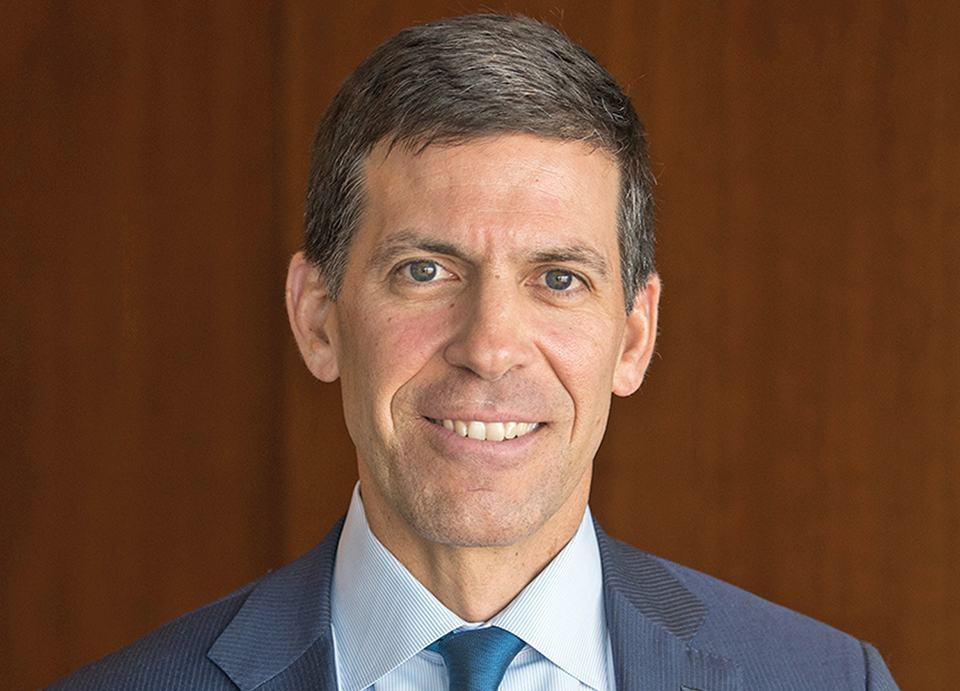
But it takes time to build relationships. And in the quieter years for M&A at the start of this buildup, rivals tried to tell bankers departing for Goldman that their stays might be short if they didn’t soon bring in revenue.
“When clients start to transact, that shows where you really are,” says Waldron. “Those years of investment, from 2016 to 2020, paid big dividends in 2021.”
It was a year of record M&A volume, dominated by large numbers of mid-size deals rather than by mega transactions worth $20 billion or more. Goldman did around 600 deals worth $500 million and over, an all-time record. The firm now has 12,000 corporate clients – a third more than it did at the 2020 investor day – a reflection of the progress it has made expanding its coverage into the $1 billion to $5 billion area.
And another, even longer-term investment has also paid off.
Technology was the busiest sector in capital raising and in M&A.
“We have ploughed enormous investment, resources and intellectual capital into technology,” says Waldron. “Partly because we saw so much capital raising coming in that industry but also because among non-technology industries there has been so much investment in software and technology capabilities. Technology expertise is essential to covering most other sectors effectively. It permeates every part of our business.”
The boutique M&A tech specialist firms from the dot com era have long since been absorbed into the bulge bracket. Morgan Stanley and Goldman have competed to dominate Silicon Valley for the past 20 years.
There was a time while Waldron was running banking when it looked as though Morgan Stanley had moved decisively ahead. This was the Facebook IPO era – and there were franchise transactions that Goldman participated in but not as prominently as it would like or had been used to.
“We made very significant investments, starting 10 years ago and so long before One Goldman Sachs, to address that,” Waldron says. “Those have paid off handsomely.”
Big announcements include advising Microsoft this year on its $69 billion agreed deal for Activision Blizzard, the first big metaverse M&A deal.
Goldman advised Slack Technologies on its $28 billion sale to Salesforce completed last year, having previously advised Slack on its direct listing and convertible capital raising. It has also worked for Salesforce on other large-scale M&A transactions.
“I am convinced that we are the first call for strategic advice for the technology industry and for other industries looking at strategic transactions to make themselves more tech-centric,” says Waldron.
And technology is not the only sector where Goldman has benefited from well-judged investments.
“We have done a good job pouring resources into healthcare and life sciences, where a lot of growth in the economy is coming from,” adds Waldron. “I believe we have the leading franchise and did a good job capturing the movement of capital into bio-pharma.”
And Goldman has also taken care to build a leading private equity franchise, spotting the extraordinary growth in assets under management and the sheer weight of private equity in the M&A fee pool. This may have reached its heaviest point in 2021.
But looking ahead, as markets now turn, valuations fall and confidence is hit, Goldman may continue to benefit from strength in coverage of private equity and in defence against activists.
New ethos
Private equity is a client segment that touches every division of the investment bank: from global banking and asset management to global markets and wealth management.
The firm has astutely tapped into this sector – one in which it is estimated that there are 7,000 funds looking to raise roughly $1.2 trillion – in recognition that the risk that was taken out of the financial system after 2007 has resurfaced in this part of the market.
The network effect
The leadership of Goldman Sachs, the top firm in M&A advisory, is now such that it has to be prepared for the possibility that two clients each want advice on acquiring or merging with each other or get into a contest for the same target.
Investment bankers never educate clients about their own industries. Rather, companies want their judgements to help them secure whatever strategic deals they need to get done. Sometimes that comes down to asking if the firm’s bankers know the other side and what their thinking might be.
This suits Goldman perfectly. For decades, back to its time as a private partnership, a core organizing principle of the firm has been to make sure its senior people maintain a network of contacts with business leaders and other decision makers around the world and talk to them frequently.
But even Goldman can’t work for two sides on the same transaction.
“We spend significant time carefully managing conflicts, given our significant market share in M&A,” says Stephan Feldgoise, co-head of global M&A.
To the outside world, the structure of the M&A business inside Goldman can look confusing. The days of a central M&A group are long gone. Like other firms, the bank runs a matrix of industry groups, which were originally built around M&A bankers specializing in certain sectors, as well as geographic management that extends to US cities as well as to countries outside the US.
Rather than flying bankers in from New York, it bases them in San Francisco, Dallas, Seattle, Chicago and other cities.
The firm has specialist coverage bankers. There are also more centralized teams to deal with financing, activism defence (a group now also with its own environmental, social and governance specialists) and structured M&A. And then there is the actual M&A group. The same senior bankers can wear different hats.
“There are companies where I am the coverage person and there are companies where I am the M&A execution person,” says Feldgoise. “You need a system that can flex for different situations. It is fine to have three partners working on a single account, as long as they are each contributing something different. You need the right culture and the right organizational structure to get the right resources and the best outcome for the client.”
“Regulation and prudent risk management have made the global banking system less risky coming out of the 2008 global financial crisis,” points out Jim Esposito, co-head of the investment banking division at Goldman with Dan Dees. “With that said, risk doesn’t disappear – it simply finds a new home. Risk is now more broadly dispersed finding a new home in the shadow banking system.”
His firm has been all too ready to take that risk on, from fund financing and merger advisory fees to work on credit funds and direct lending. It is betting that these clients, unlike, say hedge funds, will invest through the cycle, and some of their best investments are often made in the worst markets.
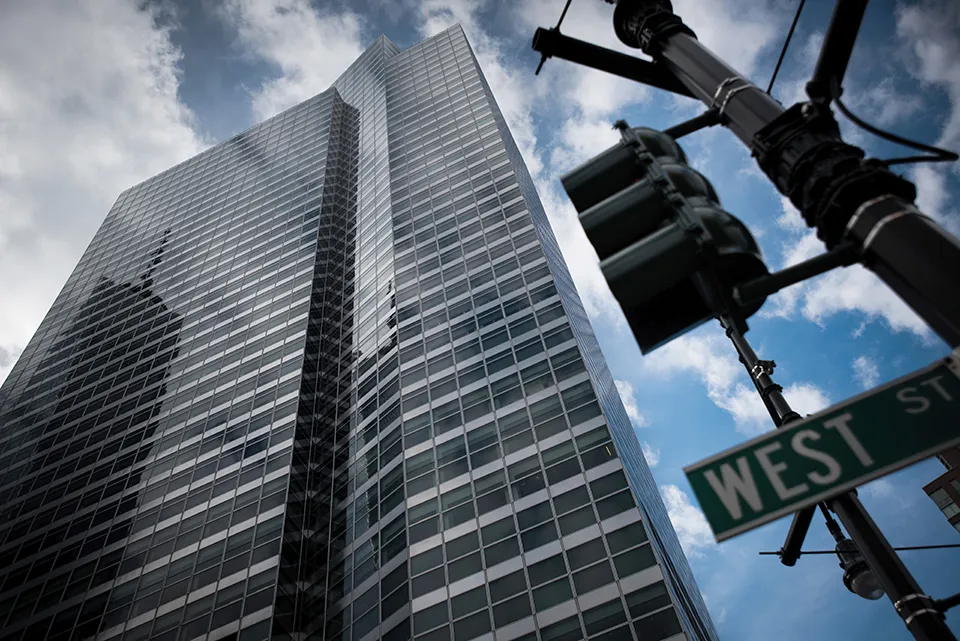
Euromoney meets Esposito at Goldman’s new London headquarters, which opened in late 2019 just before the pandemic hit. The building is very reminiscent of the bank’s 200 West Street location in New York, with lots of space and wood and a huge auditorium with a retractable floor. The roof is designed around protected sight lines of nearby St Paul’s Cathedral and care is taken to make sure that the plants there do not grow too high.
Recently back from Davos, Esposito is keen to lay out the firm’s new ethos under chief executive David Solomon.
“Our investor day in January of 2020 was a seminal moment for David’s new leadership team,” he says. “David’s clearly articulated view was that we needed to open up Goldman Sachs more to the outside world. External constituents deserved a richer understanding of our business strategy and how we were holding ourselves accountable executing upon specific KPIs [key performance indicators] to deliver higher returning results to shareholders.”
He emphasizes the importance of private equity in the firm’s growth.
“Across investment banking and global markets – call this our ‘corporate investment bank’ – we’re collaborating to grow various forms of financing opportunities,” he says. “A good example of this is working together to finance the fast-growing private equity industry.
“Private equity firms require a diverse set of financing needs from raising debt at the general partner level to financing specific portfolios of assets. Private equity is an important and growing client segment for us. Revenues from this client segment are up materially over the past 10 years.”
It is a good example of how Goldman bankers now work across the firm. Peter Lyon, previously Goldman’s head of technology, media and telecoms, has had a dual mandate since 2019 as global head of the financial institutions group (FIG) and global head of the financial and strategic investors group in the investment bank.
This has recently been broadened to enable him to play a One Goldman Sachs role for coverage of private equity sponsors firm wide.
The ethos of client service … is ingrained from the minute you join this firm, from the staff who work in the lobby all the way up to David Solomon
Stephan Feldgoise
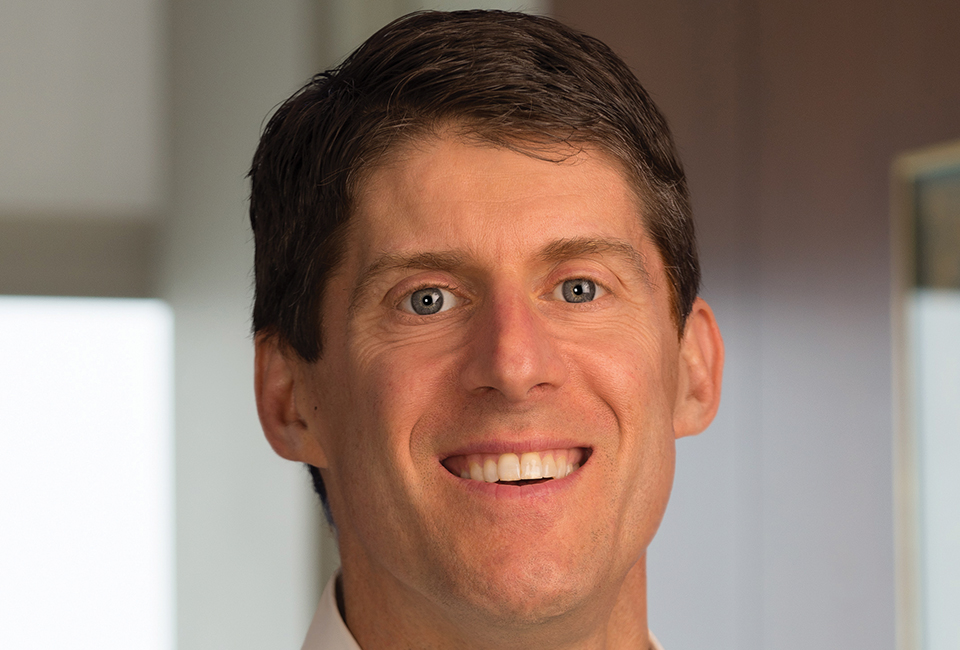
“Even we didn’t appreciate how quickly alternative asset management would grow when we put it adjacent to FIG three years ago,” Lyon tells Euromoney. “This has proven to be hugely synergistic. The growth in the alternatives business has been spectacular.”
Even with rates now rising in 75 basis point increments, private equity remains a driver of M&A for the rest of 2022. Bankers say private equity may target lower returns than in the past and absorb higher financing costs, especially if they can buy assets at good valuations.
Some activists have taken the private equity route and moved beyond acquiring sizeable stakes in conglomerates and agitating for breakups or disposals, instead buying companies outright.
“Companies still see scale as beneficial especially in certain verticals, but there is a continuing tension between diversification and specialization,” says Stephan Feldgoise, co-head of global M&A at Goldman. “Some companies that are aware of valuation differences between divisions have decided not to split themselves up. Even though activists rarely suggest something a board has not already considered, they are constantly monitoring companies that are candidates for spinoffs or breakups.”
Client centricity
The firm’s bankers all talk about One Goldman Sachs now, an approach that puts clients at the centre of the firm.
Isn’t that where they should always have been?
“The ethos of client service, from a cultural, organizational and historical perspective, is ingrained from the minute you join this firm, from the staff who work in the lobby all the way up to David Solomon,” Feldgoise tells Euromoney.
While the firm would probably insist that investment banking has always been a long-term relationship business, it would be difficult to characterize Goldman’s traders under previous leadership as anything other than examples of a short-term, transactional mentality. However, client centricity is now the watchword for everyone.
Perhaps the firm is rediscovering an earlier culture.
“I believe that we have always put client service first, but we have sharpened our focus and invested heavily in One Goldman Sachs, which is now the core operating strategy,” says Waldron.
Euromoney still isn’t quite sure what it means.
“One Goldman Sachs is an architecture that puts clients at the centre of the firm and wraps all our capabilities around them,” Waldron says. “We always had lots of capabilities, but perhaps were not best in class at harnessing those capabilities and delivering them to clients.”
It is a more difficult environment, but it is the new normal
Vivek Bantwal
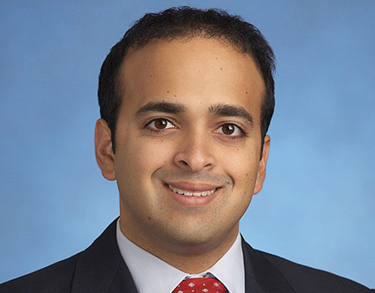
Investments in One Goldman Sachs are not simple financial investments like those in technology or new businesses.
“It’s a heavy cultural investment, an investment in people and philosophy, as well as in incentives,” says Waldron. “The reason we believed One Goldman Sachs would work is that this firm has a unique culture of partnership and teamwork, and we needed to revive that culture which needs constant nurturing lest some individuals lose sight of it.
“We all eat off one plate. And our relationships with clients have benefited from the enhancements of One Goldman Sachs,” he adds.
However, this is still a firm that hustles for business.
“We want our clients to wake up each morning, and whether they are dealing with a major strategic issue or a minor transaction, for their first thought to be: ‘I want to speak to my advisers at Goldman Sachs,’” says Feldgoise.
Why should they?
The firm has long aimed to maintain relationships with key decision makers around the world – political leaders, business leaders and financial leaders – and even if they are not clients, to ensure that someone from Goldman speaks to them frequently.
It is the Goldman network effect. And from covering several hundred key people back in the firm’s days as a private partnership, it now extends to thousands of influential individuals and their institutions.
“I’ve worked on transactions where the client says: ‘We really need to know what a business leader in country Y thinks,’” says Feldgoise. “And the reaction when you say that Goldman has someone who knows that person shows you how powerful the network is.”
He adds: “It is a whole ecosystem that takes investment and constant work to develop, and a culture of collaboration to deliver it to clients. And it’s what distinguishes this firm. It is very valuable – and clients hire GS partly because of this.”
League tables say which firms do most M&A deals by numbers and value of transactions, and Goldman tops these. But analysis of reported financials also suggests that clients pay it more than other firms.
In the last four full quarters, Goldman earned $5.7 billion from advisory, 26% more than JPMorgan with $4.5 billion, 42% more than Morgan Stanley’s $4 billion and almost double fourth-placed Evercore’s $2.9 billion.
“Clients would not hire us and compensate us more if they were not getting value,” says Feldgoise.
A lot of the spade work for One Goldman Sachs was done when Waldron ran the investment banking division and Solomon was president. Now they have both moved one step up and are taking the idea to the whole firm.
“The first thing we promised to do at the investor day in January 2020 – which now seems a lifetime ago – was to strengthen and grow our core franchises,” says Waldron. “And we have done that in investment banking. But we are also growing our wallet share in global markets – and in part that comes from bringing better incentive mechanisms from the investment banking division over to global markets.”

TxB success
The firm’s then new leadership made other promises at that 2020 investor day that it has started to fulfil, such as making the firm more efficient, reducing the cost-to-income ratio and cutting annual run-rate expenses by $1.3 billion. It is on target and may exceed that.
Perhaps more attention has focused on its ambitions to diversify the firm by building a digital consumer bank, expanding in wealth and asset management, boosting alternatives and, most remarkably, by building a payments and transaction services offering for corporate clients.
“Unlike investment banking and global markets, which are dominated by a handful of leading firms, alternatives and wealth management are much more fragmented and offer greater opportunity to capture market share,” Waldron says.
To be successful at transaction banking you need cutting-edge technology paired with a global corporate franchise
Jim Esposito
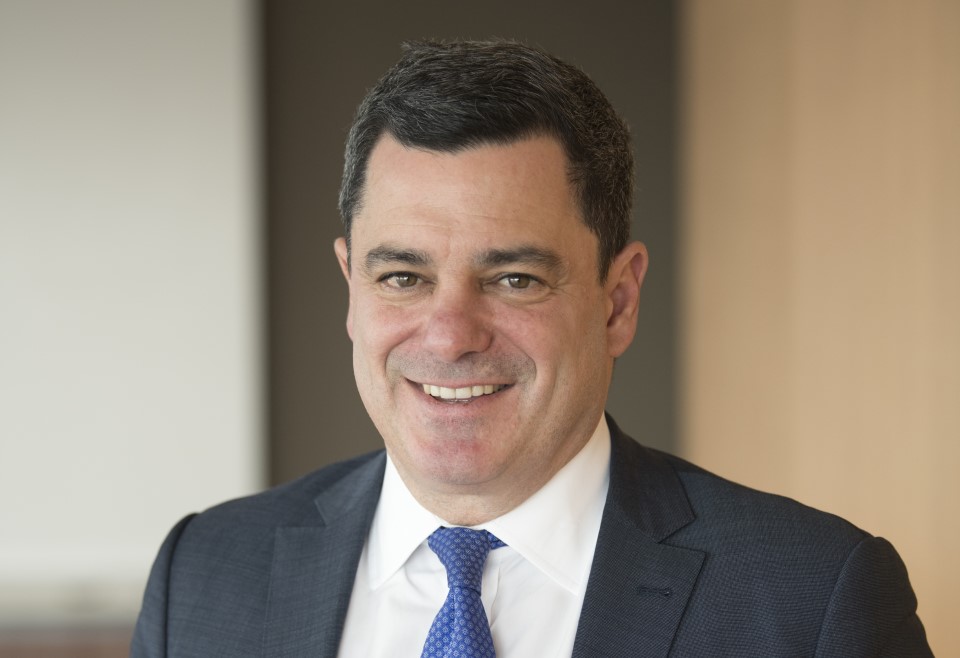
But it is the transaction bank, or TxB as it is called inside Goldman, that is now held up as the great success story.
“We love the financial characteristics of that business and how important it is to our corporate clients,” says Waldron. “We have built a great, modern technology platform that is already gaining a lot of traction and which we can now scale.”
After the development of consumer banking under the Marcus brand, it probably should have been less of a surprise than it was when Goldman announced its move into the previously staid and unexciting world of transaction banking.
The opportunity had always been there – this business has long represented a far larger corporate wallet than investment banking has – but technology has made the difference.
Goldman aims to use it to leapfrog the competition – its hires of Marco Argenti from Amazon Web Services as co-chief information officer and Atte Lahtiranta from Verizon Media Group as chief technology officer in September 2019 were a clear statement of intent.
“There are certain areas where being a large, systemically important bank offers competitive advantages against nimble fintech startups,” points out Esposito. “Our transaction banking business is the perfect example of this point. Here we’re pairing our world-class and innovative tech stack with the deep corporate relationships we enjoy globally.
“Maybe a disruptor sitting in Silicon Valley or Tel Aviv could replicate the technology over time, but then they would lack the 153-year history we have building and supporting corporate clients.
“To be successful at transaction banking, you need cutting-edge technology paired with a global corporate franchise.”
That is certainly true, and scale has always been the differentiator in transaction services. The market is dominated by big universal firms that have a far larger client list than Goldman, mostly because of that mid-market wallet that the firm is now chasing.
One way the bank plans catch up is through key partnerships, such as the one it announced on June 30 with capital markets technology firm Derivative Path that will give it access to a large roster of US regional banks and credit unions as potential FX clients.
Derivative Path will use Goldman for all FX and rate pricing. The US firm inked a similar partnership with Fiserv in 2021, which gave it access to 12,000 potential mid-market transaction services clients.
Difficult environment
Euromoney was conducting interviews for this story as markets were selling off in alarm at persistently high inflation and increasingly aggressive rate rises. Waldron describes the situation as the most dynamic he has seen in his career.
It seems that dynamic is code for volatile.
“The global financial crisis was dynamic, but that stemmed from a single large financial shock in sub-prime that then bled through the system,” Waldron says. “What’s different now is the extraordinary cocktail of shocks – the pandemic, the massive fiscal and monetary stimulus beyond anything we’ve ever seen, supply-side shutdowns, inflation, the war.”
Waldron may not deal in weather metaphors, but he does believe in cycles.
“It is not a foregone conclusion, but there is a good possibility we will have a recession,” he says. “However, if it is a shallow recession, with consumer and corporate balance sheets quite strong going into it, that may be quite healthy. We probably need to wring some of the excesses out of the system and reset. It doesn’t have to be calamitous.”
This is the moment when clients know that they really need the depth of our bench
Beth Hammack
Just how painful that process proves to be will dictate what the investment banking business – both at Goldman and elsewhere – looks like this time next year.
Bankers across the street are at pains to tell Euromoney that things are different this time. This is not going to be a repeat of 2008 as the leverage of that era has never returned. Esposito reinforces this point.
“If credit markets were to completely shut like in 2008, I think that this poses less of an existential risk to the global banking system,” he says. “There is materially less credit exposure especially in hung LBOs [leveraged buyouts] and more buyers of credit products today compared to the global financial crisis.”
There are options open to clients – such as the private credit markets – that simply weren’t there then in the same way that they are now. And will private equity and debt markets take marks to market through the cycle in the same way as public markets do? Probably not.
Nevertheless, unwinding a decade of fiscal accommodation is going to entail more than a temporary pause in activity. The US Federal Reserve has a very narrow landing zone, and that has implications for investment banking activity.
“It is a more difficult environment, but it is the new normal,” points out Vivek Bantwal, co-head of the global financing group at Goldman. “When the IPO market comes back, that doesn’t mean multiples are coming back to where they were last November.”
Bantwal runs the group together with co-head Beth Hammack, following Susie Scher’s appointment as its chairman in February last year.
“Volatility is the challenge,” he continues. “It doesn’t matter what the market level is, it just needs to be stable. You just can’t have 500-point swings. It is helpful that the Fed has been very transparent, and everyone knows that it is headed to 3%. We are starting to see some signs that inflation is coming down and that some steam is coming out of the balloon.”
Clients have raised so much cash that the most immediate problem for firms such as Goldman is the psychology of the down round – people’s first instinct is to wait. Swedish buy-now-pay-later firm Klarna, which is advised by Goldman, is likely to see a substantially lower valuation than the $46 billion it achieved last year for its upcoming $600 million fundraise.
Such down rounds can be encouragement for other chief executives to sit on their hands if they can.
Unsurprisingly, Bantwal argues that things aren’t that simple.
“Companies have raised a lot of cash but need to ask what their margins are doing,” he says. “You might be cash positive, but are you free cash-flow positive?”
This is where the best firms need to excel at good advice in difficult times, something that Hammack says Goldman is in a position to do.
“This is the moment when clients know that they really need the depth of our bench,” she says. “We are strategic partners – giving advice, thinking holistically and looking around corners.”
The key attribute here is flexibility. As markets change, so must solutions. A tech company in hyper-growth mode that was going to do a secondary offering may now be best advised to pivot to a loan. Bantwal sees a swift recalibration of strategy happening across many sectors.
“There has been a really noticeable shift in the energy sector,” he explains. “We just did a large deal for an LNG [liquefied natural gas] export facility. We did the first deal in 2019, which is now up and running. The model assumed certain conditions which have now changed, so they have pulled the second project forward and it is now producing cargos a year earlier than originally planned.”
Ambidextrous staff
All firms extol the virtues of holistic advice and emphasize how much different teams all work together to come up with the best solutions. Goldman has long had a culture of moving people around to expose them to as many parts of the firm as possible, for example, between business and control functions.
New employees are moved to a different part of the business in year three and then again in year six with a view that extensive experience will develop broader expertise.
“Our people are ambidextrous,” says Hammack. “They like being stretched.”
Over the last 12 months, Goldman has excelled in a banner year for investment banking. The quarters ahead may be tougher, but issuers will still raise capital, acquirers will bid for targets, deals will still need to be done.
Feldgoise says that coming out of Covid there has been a rebalancing of risk and a disruption of the decision-making process that was common inside boardrooms.
“Now companies that have spent 20 years cutting cost out of their supply chains may be building scale and moving production closer to consumers and focusing on how to build the strongest fortress around their business,” he says. “That has driven significant corporate M&A.”
Can Goldman keep outperforming? The broader firm may face some challenges ahead from its growing exposure to unsecured consumer finance. Transaction banking and the Marcus consumer businesses are big strategic shifts that are perhaps not yet fully bedded in and certainly not yet reflected in its share price.
But Goldman has been through many cycles before and is far better equipped than most to deal with them.
“All big banks are somewhat GDP dependent, and we don’t want to see it go negative,” Waldron says. “But if it does, as long as we keep clients at the centre of the firm, even if the environment is less helpful, our value proposition is still good. It may even go up.
“Clients need us to help them.”
The TxB transformation
It was a bold declaration in January 2020 for a firm renowned for advising corporations on M&A and capital raising that by 2024 it aims to bring in $750 million of annual revenue from managing their bank accounts and payments and to hold $100 billion of their deposits.
This is basic banking.
Yes, transaction banking is a big fee pool. Companies spend about $150 billion a year on it. But the biggest commercial banks, with thousands of staff dedicated to the business, are already pulling in billions of dollars a year in revenues and innovating rapidly.
Stephen Scherr, then head of consumer and commercial banking at Goldman Sachs and later its chief financial officer, had to spend months in 2017 and 2018 convincing Hari Moorthy, who had been a managing director on the engineering side of the firm but then left for JPMorgan, to return and build a transaction banking business.
“Stephen Scherr wanted my advice on it,” Moorthy now recalls of those first few conversations. “They didn’t know what to call it and I didn’t believe they would do it.”
But as they continued, he came to see it as a once-in-a-lifetime opportunity.
Moorthy returned in May 2018 and found that his first job was to convince Goldman’s board to invest in building the new service over the next three years.
As he tells Euromoney the story, he points to a stack of paper about two feet high in the meeting room. It is, he explains, a print-out of the charges that Goldman used to receive from just one of the 60 odd banks that collectively managed some $45 billion of the company’s cash across 8,000 bank accounts.
“Before we launched transaction banking to our corporate clients in June 2020, we knew we needed a powerful and credible client to vouch for it,” Moorthy tells Euromoney. “So, we found the toughest customer in the world, Goldman Sachs treasury.”
For the new business to fly it would have to make a big difference to this first customer.
In 2019, “we saved the firm something like $3 billion in intraday liquidity and between $50 million and $100 million in annual costs,” says Moorthy.
Customer service
Even today, the business still doesn’t have a name. The firm says it wants to provide a customer service rather than build a product brand. Goldman insiders simply call transaction banking TxB. But it pulled in $226 million in revenue in 2021 and reached over $50 billion in deposits.
Its future growth will be self-financing. TxB now has 375 corporate clients, many of them the large companies that Goldman’s investment bankers have served for years. And it has announced partnerships with American Express, Fiserv, Visa and Stripe that will extend the service to more corporations, all the way down to small and medium-sized entities.
These are not the mid-size corporates the investment bankers do $500 million deals for. These are pizza shops.
What on earth made Goldman think it could make a go of this?
“We spoke to 200 corporate treasurers and CFOs between mid 2019 and mid 2020 about their pain points and heard three things consistently,” says Moorthy. “It takes weeks if not months to open bank accounts and maintaining them is expensive. It takes a long time to send payments, also weeks sometimes if they are cross border and there is no real-time tracking. And those thousands of pages in bills from banks make it almost impossible to calculate how much companies are paying for transaction services and whether they have been billed multiple times for the same payments.”
On a clean technology slate, Goldman set out to build the digital payments and transaction banking platform of the future: entirely public cloud-based, delivered via application programming interface, with self-authentication allowing accounts to be opened in minutes, real-time visibility on accounts and payments at any given moment and bills reduced to two pages.
It sounds radical. It gives management confidence it can deliver the ambitions laid out in 2020 as part of the strategy to diversify Goldman and make it less dependent on volatile and episodic capital markets revenues. It may even exceed those targets.
But aren’t the incumbent payment banks also innovating in similar ways? Sources at other banks in transaction services complain that in years past they played second fiddle to the more glamorous investment bankers, while their clients, the corporate treasurers, also made do with second-rate technology because the operating businesses commandeered innovation spending.
Payments transformed
But all that has changed. As new technology transformed payments, the valuation of payment fintechs soared. And when Covid hit, suddenly corporate boards, chief executives and chief financial officers all wanted the answer to one burning question: where is our money, right now?
Of transaction banking, Moorthy says: “While the fee pool is very big, the largest bank commands no more than 7% market share, so there is room for a new, highly resilient and efficient platform.
“Roughly 99.5% of payments go through our system with no human intervention and are processed in seconds. Every client that has started working with us is doing more and more with us.
“One thing they are finding is that while some incumbent banks can transact payments in real time, their ledgering and bookkeeping is still end-of-day batch processing. And so clients cannot be sure of their balances.
“We can show clients everything in real time down to exactly where in the process any payment is. Clients didn’t even know that was possible.”
TxB expanded from the US to the UK in June 2021 and has plans to launch in 36 countries in Europe and Asia, including Japan. It will next look to use its insights into customers’ cash flows to pave the way for short-term working capital loans. And it is extending the service to small businesses through partnerships like Stripe.
TxB has a natural way into many large corporations through the firm’s investment bankers that cover CFOs for strategic transactions.
“For some clients that have, say, six large banks providing transaction banking services, we ask for the chance to prove what we can do as their seventh,” Moorthy says. “But there are some now for whom we are the lead and even the only transaction bank.”
Might the day ever come when Goldman wins investment banking business from a client that is first a customer of TxB?
“What makes you think that hasn’t already happened?” Moorthy replies.
…
Goldman’s growing global footprint
It may be the ultimate Wall Street firm, but Goldman Sachs is devoting much of its resources to its global businesses. It had another banner year in China, securing approval from the country’s securities regulator to take full control of its onshore securities business, spanning investment banking, research, equities and fixed income.
The business has been renamed Goldman Sachs (China) – a move seen as a big step forward for the bank in Asia’s largest economy.

Goldman completed six M&A deals in China during the awards period, worth a total of $8.73 billion, according to Dealogic. It also completed more onshore equity capital market deals than any of its international peers: 52 in all, worth a total of $17.4 billion – impressive in a year that saw China’s property sector unravel and its economy lose momentum.
Across Asia Pacific more broadly, Goldman was at the very top table in both ECM and advisory. It tends to be said that it the bank is over-reliant on Greater China at the expense of the rest of Asia, but this is not the case. Iain Drayton, co-head of the investment banking division Asia ex Japan, leads a diverse and powerful business.
In South Korea, for example, Goldman is among the leaders, working on four separate billion-dollar-plus ECM deals in our review period, including a $10.7 billion IPO for LG Energy that was the country’s largest-ever listing.
Goldman is now the best investment bank in Australia – no mean feat given the competitive environment there – and advised Afterpay on its $29 billion sale to Square, the largest-ever Australian M&A transaction, as well as key deals for BHP, Sydney Aviation Alliance and KKR.
In Japan, it worked on Hitachi Metals’ $7.5 billion acquisition by a Bain-led consortium, an important and influential deal as Japan’s conglomerates continue to streamline. It also handled key ECM and convertible deals for Japan Post Holdings, Nippon Steel and others.
And if south and southeast Asia are supposed to be the weak points in the franchise, nobody told Goldman, which was lead left on Sea’s $6.9 billion convertible and follow-on; the NYSE float of TDCX; the Paytm $2.5 billion IPO in India (which was, admittedly, a dog of a deal in the aftermarket); and a $2.4 billion rights issue offering for Bharti Airtel.
In advisory, the bank advised on the pivotal merger of Indonesia’s Gojek and Tokopedia into GoTo, and a special purpose acquisition company merger leading to a Nasdaq listing for India’s ReNew Power.
Africa
In Africa, the bank’s heavy investment in a few core markets has paid off. In South Africa, it has added a foreign exchange and fixed income capability, having joined forces with Investec to provide domestic equity trading services in 2019.
It played a role in all key Africa-related M&A last year, completing six deals in Africa ex-Egypt worth $42 billion all together, for a 74.8% share of the market. Notable deals include the $39.8 billion share swap finalized by Cape Town-based Naspers and Amsterdam-based Prosus in August 2021 and Nordic insurance group Sampo’s purchase of the remaining 30% stake it did not already own in UK insurer Hastings from South Africa’s Rand Merchant Investment.
Goldman was a bookrunner on two of the continent’s largest equity capital markets deals last year, for Pepkor and DisChem Pharmacies, and was also present on many of the big DCM deals of the year, including the $4 billion multi-tranche Eurobond sale completed by the Federal Republic of Nigeria in September 2021.
Latin America
Latin America tells a different story. Goldman is one of the global investment banks that invested heavily to build its Latin American presence as commodity bull-runs lead to optimistic deal flow projections, only to pull back when those projections disappointed.
Goldman is not the only firm guilty of this charge, but it is the example the locals tend to cite when emphasizing the longevity of their own commitment to their home markets.
However, it is far too early to characterize the firm’s recent dip in performance as a prelude to another withdrawal from Latin America. Its results for the past 12 months in this region are disappointing compared with the high-water marks of 2019 and 2020 when the bank won Euromoney’s awards for Latin America’s best bank for advisory and best bank for financing respectively.
Nevertheless, Goldman is still a serious competitor in advisory; this year it chalked up key mandates, including acting as exclusive financial adviser to Mexico’s KIO Networks on its sale to I Squared Capital and to EDP on its sale of operational transmission assets in Brazil.
It is particularly strong in Argentina and acted in some of the country’s most transformative M&A transactions over the past year. It was exclusive financial adviser to AT&T on its sale of Vrio Corp and to Insud Pharma on its sale of a 55% stake in its biotech arm, mAbxience, to Fresenius.
The fact that Goldman has remained committed to Argentina, despite the country continuing to disappoint, suggests that this time the US firm is in Latin America for the long haul.