Covid gave us two versions of China. The first, visible to the world through 2020 and the first quarter of 2021, was peak efficiency China.
After coronavirus broke out in China, Beijing then showed how it should be tackled: close borders – external and, if necessary, internal – and test for the virus big and often. It skirted recession by cranking up its factories and stoking its export machine.
Jump to:
That was followed by a different China; one not seen in decades. This one came into view in summer 2021 and surprised just about everyone, from banks and investors to foreign governments.
This version is a confident yet strangely insecure China, one less inclined to seek external compliments but more thin-skinned about outside criticism. A place where regulators unveil new schemes to make foreign capital feel at home, even as the ruling Party cracks down on sector after sector, forcing global investors to ask if onshore assets and securities are still investible.
And that’s just for starters. Power outages, once thought a thing of the past, are back. Growth is slowing. A huge slow-moving debt crisis at property firm Evergrande threatens to undermine the whole, overleveraged sector.
The upshot is a country, which looked in better shape than any other big economy 12 months ago, that seems set to end 2021 in a surprisingly fragile state.
“Two or three years ago, going big in China was a no brainer,” JPMorgan’s chief financial officer Jeremy Barnum tells Euromoney. “Now, the risk/return calculus for banks has been complicated by what we regard as short-term trends such as de-globalization, changes to trade patterns and perhaps a reduced role for US multinationals in China, as well as a return of listings to the domestic markets.”
Barnum says it is “important to take a long-term view on investing in China, which is why we were delighted to gain approval earlier this year to take full ownership of a securities venture, following similar approvals in futures and fund management initiatives in the country last year.”
This has been the case since the country opened up to the world, then turned its attention to sucking in ever more corporate and institutional capital.
“In China there is often less clarity on the risks,” notes Sharon Yeshaya, CFO at Morgan Stanley. “That’s why this firm takes a long-term strategic approach to China and not a strategy just for today and tomorrow. We are more overweight the US, but continue to grow in China.”
But 2021 offered the world a stark reminder of how fast things can change in the People’s Republic as its economy develops.
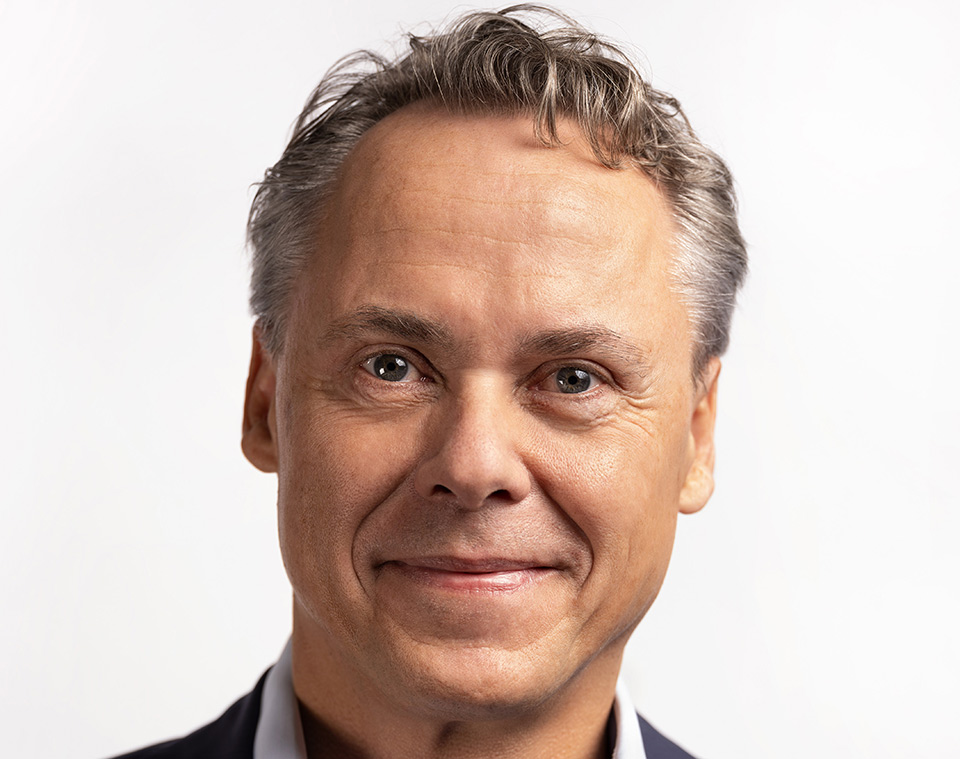
UBS chief executive Ralph Hamers notes that: “Current uncertainty in the markets is a natural part of China’s development as it shifts to more sustainable and deeper financial markets.”
Common prosperity
China is now one of the world’s most unequal societies. The richest 20% of people earn more than 10 times as much as the poorest 20%. And while extreme poverty has fallen sharply, over 600 million people live on less than Rmb12,000 ($1,880) a year.
The primary aim of president Xi Jinping’s ‘common prosperity’ plan is to reduce inequality by transferring more money from the hands of the rich few to the poor many. Think of it as modern Marxism but designed with people and investors in mind.
Current uncertainty in the markets is a natural part of China’s development
Ralph Hamers, UBS
The government hopes for any number of knock-on effects: a less bloated property sector; more corporate and financial innovation; and more affordable rents, healthcare and education.
It can be argued that the Party saw the second year of the Covid era as a narrow window of opportunity to tackle many of its systemic problems. It cracked down on ed-tech, to cut the rising cost of private education, and online gaming. The next year will likely see the state take on the gig economy, to ensure companies do not take excess profit at the expense of staff.
That’s good for the self-employed but bad for private firms that offer, say, ride-hailing or food-delivery services, and their investors.
Foreign shareholders will need to ask themselves some searching questions. For instance, which industries will thrive in 2020s China and which will not? More than ever, they need to weigh up the risks, listen to what the state is saying, and think and act long term by putting money to work in sectors the Party wants to promote.
Supply chains
When Covid hit, some predicted a wave of de-globalization, with multinationals fearful of overdependence on production in one country, transferring assets and factories from mainland China to the likes of southeast Asia, Mexico and Poland.
It seemed a logical call, but mass near-shoring hasn’t happened. If anything, global supply chains, whether based on the flow of commodities, capital or finished goods, are more dependent on China than ever before.
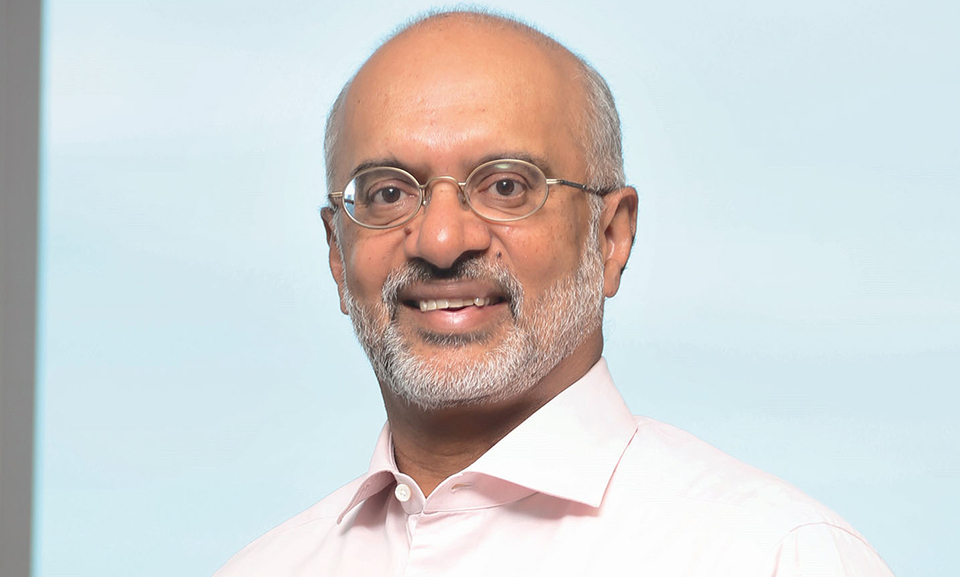
“People have been talking about moving supply chains away from China for two years,” says DBS’s chief executive Piyush Gupta. “Well, guess what, nobody has been able to move much of a supply chain out of China. The tech supply chain would take anybody five to 10 years to shift parts of it out; it’s not an easy thing to do.”
People have been talking about moving supply chains away from China for two years
Piyush Gupta, DBS
There’s good reason for this. China spent 40 years transforming itself into an enormous goods production machine. Until recently, firms could easily hire semi-skilled labour on competitive wages. It has world-class highway and rail networks, so no one worries about goods getting from source to factory to port on time.
Multinationals will shift out some production – as salaries rise and the economy moves up market, they will have to. But it’s hard to see any single market replacing it.
Even countries that historically don’t see eye to eye with China, such as India, are inextricably embedded in its supply chain dynamics.
“When you look under the hood and look at the trade flows [between China and India], month after month they continue to expand,” says Gupta. “It’s not that easy to bifurcate away from China.”
That is true even of the US. Washington may bark at Beijing, which snarls back, but China has never been more important to US multinationals, banks and institutional investors – and both sides know it.
“Despite the differences between the US and China, there is still a lot of cross-border activity that is going on,” says Andy Halford, Standard Chartered’s chief financial officer.
In the last week of November, carmaker Tesla said it would invest Rmb1.2 billion to upgrade its Shanghai plant and hire 4,000 new staff.
Macro outlook
What of the macro economy? In its latest World Economic Outlook, the IMF said China’s economy would grow 8% in 2021 and then slow to 5.6% in 2022 and 4.9% in 2026.
Such predictions of course rely on nothing going wrong. Apart from a sharp spike in Covid cases, possibly from the Omicron variant, the biggest threat to stability likely stems from an over-leveraged property sector.
In its China 2022-23 Outlook, published on November 9, UBS tips real estate to continue to struggle, with sales and new starts falling 10% in 2022 and investment declining 5%. The Swiss bank said that will hit the finances of highly indebted local governments – which is itself a big cause for concern – and consumer spending.
But the key drivers of China’s super-powered rise are still active. UBS expects exports to grow 10% year on year in 2022 as supply-chain disruption relents. It expects domestic consumption to recover “more strongly” as domestic Covid restrictions ease and infrastructure investment rebounds.
Heading further on into 2023, it sees the property sector stabilizing as government measures to wring toxic debts out of the system begin to kick in.
Strategies
For global lenders, it has never been more important to get China right. Strategy matters and, more than ever, no two are like.
Credit Suisse is strong across multiple business lines, including investment banking and capital markets. It has two onshore joint ventures: Credit Suisse Securities (China), which it owns 51%; and ICBC Credit Suisse Asset Management, with assets under management at the end of 2020 of Rmb1.4 trillion.
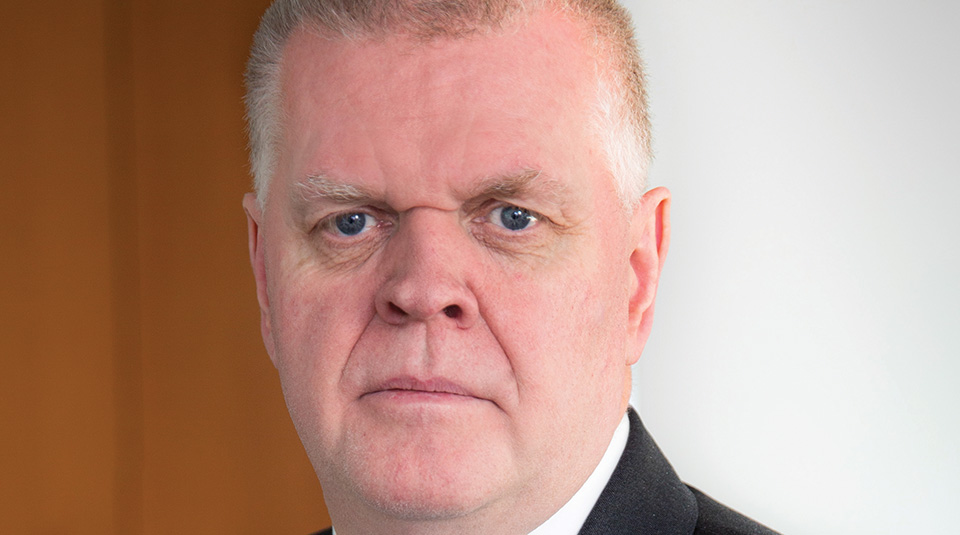
Our investment this time around is to bring investment and insurance products to the clients
Noel Quinn, HSBC
But it is in private banking and wealth management that the Swiss bank stands to benefit most. Chief executive Thomas Gottstein points to “significant opportunities… including growth in ultra-high net-worth and the expanding middle class”.
HSBC chief executive Noel Quinn says the bank is: “Investing differently today than we’ve done in the past. Our investment historically in greater China was in retail banking, with branch network expansion and building a card business and growing mortgages.
“Our investment this time around is to bring investment and insurance products to the clients that we currently bank and attract new clients.”
He adds: “It’s a very different type of investment programme. It’s not about building card processing or mortgage processing or loans or opening bank accounts. It’s about taking our capabilities in China and taking it into the wealth management space. And that’s not wealth management just for the super-rich, that’s wealth management for the mass affluent as they start to go through economic development.”
HSBC is present in more than 60 mainland cities. In 2021, Quinn pledged to invest an additional $6 billion in Asia, half of which is allocated to greater China.
It certainly stands to profit from Wealth Management Connect, a cross-border scheme launched in September after a year of testing.
The plan will let the 86 million residents of the Greater Bay Area, a region spanning Hong Kong and Guangdong, buy wealth management products issued by banks on the other side of the border. It’s a huge boon to global lenders and a boost to Hong Kong’s status as the leading hub for offshore renminbi.
Surprises
There are so many imponderables for China heading into 2022. Will Xi seek a third term as leader at the National Party Congress in November, setting him up to be the first president for life since Mao Zedong?
Does that in turn mean borders will stay closed, or at best only partially reopen, to allow easier transit to Hong Kong?
Will it be the first country to fully launch a central bank digital currency? (You can put fiat and virtual money on that.) What of the stalled Belt and Road Initiative?
There are more real estate demons to exorcise, and the market can expect a few surprises. There could be a big, splashy push to hit net zero on carbon emissions before 2060, a ramping up of tensions with Taiwan, or a relaxing of rules to let foreign firms sell shares onshore.
2021 may be the last year for a long time that China posts a growth rate north of 6%. The surprise is that it may not mind. A few years ago, GDP in the 5% to 6% range would have sparked real concern. But if, as Hamers says, a slower rate of economic output results in a “higher quality and more sustainable” economy and it lets China avoid the kind of stagnation Japan has suffered since 1991, Beijing will gladly take it.
The pressure to de-list
When China Telecom (now China Mobile) went public in 1997, raising $4.2 billion, it chose to sell shares in New York. Over time, US listings became a favourite of big tech, culminating in Alibaba’s blockbuster IPO in 2014, which raised $25 billion and valued the firm at $169.4 billion.
Some in China still favour a New York listing. But that option may be taken off the table in 2022. Under presidents Donald Trump and Joe Biden, US authorities have systematically stiffened rules on US-listed mainland firms.
In 2021, it was Beijing’s time to turn the screw.
The action began in June. At first glance, the New York IPO of ride-hailing giant Didi Global looked nothing out of the ordinary.
But within days of it pricing 316.8 million American depositary shares at $14 apiece, all hell broke loose. The Cyberspace Administration of China (CAC), a then little-known regulator, had urged Didi to delay the sale until it figured out what, if any, sensitive data the firm held, including on mainland citizens, before it left the country.
Didi pushed ahead anyway and the state bit back. All the company’s apps were removed from mainland stores and new user registrations were suspended. Seven government departments, including the feared ministry of state security, launched investigations into the firm.
On December 3, after days of speculation, Didi said it would de-list in New York and instead set out plans to go public in Hong Kong within the next three months. An exit from the New York stock exchange should be completed by June 2022.
These are deep waters, with serious ramifications for global investors.
Is the hit on Didi a one-off? Or will all US-listed Chinese stocks be encouraged, coerced or ordered to re-list in Hong Kong, Shanghai or Shenzhen?
Perhaps this is just a lull. Perhaps as 2022 progresses, another wave of exciting young Chinese firms will apply to list in New York and be embraced by investors.
Right now, that doesn’t seem likely. LianBio’s November 1 Nasdaq listing was the first by a Chinese firm in five months.
Structurally, the biotech firm is a classic US-China hybrid. It was founded by a US private equity firm, is incorporated in the Cayman Islands and has dual headquarters in Shanghai and New Jersey. Revenues – although it has yet to make any – will be generated in China.
That it does not hold data on individuals – meaning it is less likely to be scrutinized by the CAC – should be a draw for US investors. Yet after raising $325 million, LianBio’s shares tumbled 14% on day one. (The Nasdaq, in comparison, rose slightly that day.)
By November 26, its shares were trading just under the offer price of $16. But big questions now hover over every such hybrid: what if Beijing orders them all to scrap their listings and come home?
That may well happen. Some New York de-listings are inevitable. Those firms will then list in Hong Kong or Shanghai. And unlisted firms will likely first choose to list in Hong Kong. The government could also formalize legislation requiring approval to list anywhere in the world outside China.
Bankers say the pipeline for Hong Kong IPOs is building nicely after a torrid second half of 2021. Firms that wanted to list in New York, including interior design app Kujiale and social networking platform Soul, are now weighing up share sales in Hong Kong, reports suggest.