SC Lowy: Evergrande brings investment opportunity for the right names

As more Chinese high-yield names default in the real-estate sector, one of the region’s leading distressed debt investors shares his views on the state of the market – and the investment opportunities that come with it.

The contagion from Evergrande is getting worse. On Tuesday, Sinic Holdings became the latest name to default on offshore bonds, following Evergrande and Fantasia Holdings.

The latest in a continuing series of downgrades from the rating agencies has afflicted Modern Land, which conducted a consent solicitation to avoid default in October, and China Aoyuan.

But are opportunities appearing amid the ordure? Euromoney asked SC Lowy founder and chief investment officer Soo Cheon Lee what Asia’s most prominent home-grown high-yield and distressed asset manager makes of what he is seeing.

Clearly, there has been an evolution in recent weeks and what at first looked like a containable one-off event has spread.

The billion-dollar question is how or when developers are going to repay their offshore bonds

Soo Cheon Lee, SC Lowy
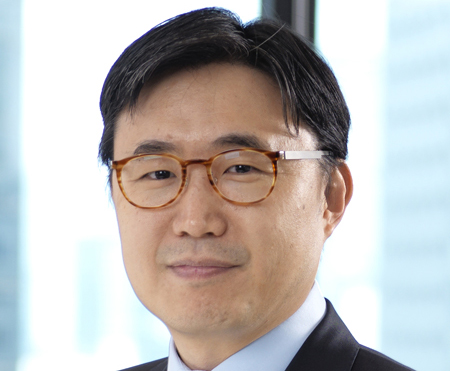
Soo-Cheon-Lee-SC-Lowy-450.jpg

“When Evergrande started gapping down, there was some impact for the rest of the Chinese property developers, but quickly we saw some differentiation between Evergrande and the others,” Lee says. “You can’t just ignore one of the largest developers defaulting, but still, the other developers with bonds in the offshore markets stabilized.”

But when Fantasia defaulted – with $200 million maturing at the end of September, but supposedly a billion dollars of cash on the balance sheet – “that was a total shock to the market”.

Today, anything that has defaulted is trading at between 20 and 30 cents on the dollar. Issuers that have a high proportion of their funding offshore are trading between 40 to 70 cents, although other considerations – such as landbank and offshore assets – also come into the mix. Those with less offshore liability are trading at between 60 and 80 cents on the dollar, and the best developers, like Shimao Group Holdings, between 80 and par.

The disparity in the trading ranges reflects the impact of the effective closure of offshore markets to this whole sector.

“Clearly, the offshore dollar bond market is closed right now,” says Lee. “We never say never, but it is very difficult to issue any offshore dollar bond. Maybe that will change over the next six months, but who knows? It may not.

“That has huge ramifications for a lot of developers. Some have a bigger pro rata of offshore bonds and some less; some have 10% of their financial debt issued offshore, some have 60%. The impact has been more punitive to those companies who focus a lot on offshore bonds.”

And that is a problem that is going to get progressively worse the longer the markets remain closed. Many borrowers have never been in this position before.

“The billion-dollar question is how or when developers are going to repay their offshore bonds,” Lee says. “For years, many issuers have been going to market, paying 1% more and keeping offshore debt rolling over, but suddenly, overnight, that market pretty much shut.”

The fact that single-B and double-B minus names are trading between 40 and 60 cents on the dollar indicates to Lee that there is worry in the market about those names’ ability to refinance. “It shouldn’t trade on this level,” he says. “Clearly, there is a concern.

“Even the good names like Shimao and Agile, which are considered investment grade, would have to increase their interest-rate substantially. I don’t know if they want to do that.”

Government thinking

SC Lowy has always been, and remains, a house that starts out with a bottom-up analysis of individual credits. But one challenge in reading this market is that so much of the influence is macro, and one cannot make an investment without first trying to get inside the head of the government and assess what it wants to happen.

“The bigger issue the government is trying to solve is inequality,” says Lee. “They don’t want speculation on property leading to unaffordability. In the long run, this is a good thing overall as there is a lot of borrowing speculation taking place.

“But the government is not trying to kill the developer. The government is trying to not encourage speculation on property.”

That is the overall sector. But how about leverage obtained offshore? Does the Chinese state have a different view on that? It is worth remembering that, in the case of Evergrande, although the developer’s offshore debts of $20 billion were significant, they represented a modest part of the overall $300 billion of liabilities.

“Does the government want to kill the offshore market, with $200 billion to $250 billion outstanding, as a funding source? Probably not,” says Lee.

“We see this as more cyclical. Developers have to recover one day, because China needs to offer affordable housing, and unless huge government housing development takes place, they have to rely on the developers.

“I think it’s going to be a one-year issue, maybe two, but the question is: how do you bridge that one year?”

The weaker guys – I don’t think they are going to be liquidating or dying, but there will be a lot of M&A

Soo Cheon Lee

From an investor’s point of view, this is the crucial point: who can survive all of this in the strongest possible shape?

“As an investor, we try to identify who will be strongest,” Lee says. “There will be consolidation taking place. The weaker guys – I don’t think they are going to be liquidating or dying, but there will be a lot of M&A, with them being taken over by the larger guys.

“Even though pre-sale is going to be tough for at least six to nine months because a lot of end-buyers have taken the attitude of let’s wait and see, we have tried to identify those developers who are survivors for the long term, and also where the underlying bond is trading versus risk and reward.”

Wading into the debt of companies that are either in restructuring or heading for it is a still bolder move: potentially more lucrative, but also riskier. In any such event, offshore holders come a long way down the pecking order.

“There is still always a risk on offshore bonds that it is structurally subordinated to onshore,” Lee says.

“In the case of Evergrande, clearly the priority will be that onshore home-buyers have their projects completed, because the last thing the government wants is social unrest and people unhappy.”

Uncomfortable situation

Not every developer looks like Evergrande, but whichever issuer one looks at, there needs to be an acceptance that onshore problems are dealt with first. “If there is any kind of restructuring, offshore bondholders may need to give a couple of years of grace period for developers to resolve their onshore issues,” says Lee.

And that is an uncomfortable situation for an investor. “The downside is, as a lender, you don’t like the company that you invest in going through a restructuring,” he says. “But the flipside is, if they have a proper restructuring done and the cycle of easing policy kicks in, maybe they can survive. That’s the risk and return profile we consider.”

SC Lowy is a global banking and asset management group headquartered in Hong Kong, but is probably best-known for its distressed asset and high-yield expertise. So, is it in?

“We have been very active players in Asian high yield for sure,” Lee says. “Six months ago, when Chinese high yield was trading close to par, we were focused on trading, making a market. Today, with many names trading between 40 to 70 cents on the dollar, we are very interested.”

Like many in the market, Lee is struck by the stark disconnect between Chinese real-estate high-yield issuers and other high-yield borrowers in Asia.

“I think it’s very interesting that while China property traded down so much for the last two months, India and Indonesia high-yield bonds are still trading really tight,” he says.” It has corrected by just a few points.

“You see people taking China cash out and putting it somewhere like Indian and Indonesian names, or even Chinese non-property names. That money didn’t go out of Asia.”