You’ve heard of Grab, GoJek, Paytm, Ant – e-commerce companies that have moved into financial services to shake up the established order of Asia’s largest economies and population centres. Now attention is turning to their equivalents in frontier markets. The latest to capture the mood – and international investment capital – can be found in Bangladesh.
ShopUp calls itself a full-stack e-commerce platform for “neighbourhood mom and pop shops”. What this means is that it serves Bangladesh stores in three ways: through an e-commerce app linking wholesale distributors and retailers; through logistical support in getting goods where they need to be; and through embedded financial services, with a buy-now, pay-later model.
If you look at Bangladesh, it’s the fastest-growing economy in Asia right now
Afeef Zaman, ShopUp
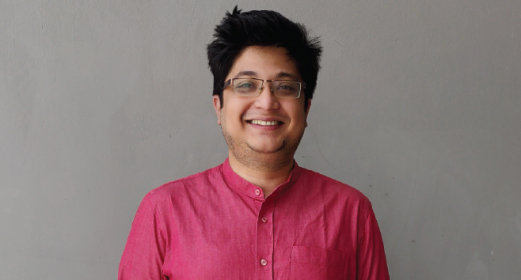
This is an important role in any country, but far more so in a place like Bangladesh. “If you look at Bangladesh, it’s the fastest-growing economy in Asia right now,” says Afeef Zaman, ShopUp’s founder and chief executive. “But if you zoom in a little bit, 98% of the entire country’s consumption happens through these small neighbourhood mom and pop shops.
“E-commerce is fairly new, and modern trade like supermarkets have not taken off yet, so almost all of everyone’s purchases is happening through these small shops. They are a very important part of the economic journey of the country.
“But the weird thing is, they have not grown at all. They have been exactly the same size for 20 years.”
The reasons for this stasis also create the business case for ShopUp. An average retailer might serve around 300 customers in their community, and have to manage about 50 suppliers in order to do so: a complex and inefficient ecosystem for modest rewards. The app helps to centralize and simplify this process, which in turn frees up capital ordinarily stuck with suppliers.
The logistics challenge is harder the more remote the area the shop works in: if a place is expensive for a supplier to reach, that is going to be reflected in the cost the retailer pays. This is unless the store owners themselves go to get the goods, in which case they have to shut up their shop in the meantime and lose revenue. Zaman says that out of 4.5 million retailers in Bangladesh, only 1.2-1.3 million are covered by direct distribution because of logistical challenges.
And then there’s financial services. Around 27.5% of SMEs have access to formal financing from banks and other established lenders, according to data from the World Bank Group and Policy Research Institute, but 70% of those retailers have to sell on credit to their customers. “That means these small sellers are in this very tight liquidity trap,” says Zaman. “They can never grow like this. They need access to capital.”
Embedding financial services also helps to create the data that makes lenders more confident in a small business’s credit quality, because a shop can demonstrate its income-generating capacity to an institution that might never previously have been prepared to lend.
ShopUp is, then, a digital conversion story in essence, bringing financial inclusion, convenience and liquidity to small operators who need it. In this respect it is following a pattern seen in many other countries, notably India. And this has begun to attract the interest of investors around the world.
Attracting interest
One is Flourish, a venture firm which invests in entrepreneurs with a particular focus on challenger banks, consumer and SME digital credit, and various other fintech and financial inclusion plays. It invests the money of the Omidyar Network, a venture firm with a social change emphasis founded by Pierre Omidyar, best-known as the founder of eBay.
Flourish was the first institutional investor in ShopUp’s seed round in 2018. It participated again in Series A and now Series B, in a $75 million funding round in September which also attracted Peter Thiel’s Valar Ventures, as well as Prosus Ventures. Sequoia Capital India and Veon Ventures are also backers who took part in the Series B funding.
“Our core focus is looking at underserved customers and communities, and how tech-driven innovation can hugely disrupt their financial health and prosperity,” says Smita Aggarwal, global investment adviser at Flourish Ventures. “In most of the countries we operate in, the small merchants contribute a very significant portion of GDP but remain invisible to the formal system.”
Bangladesh therefore fits Flourish’s themes very well. When Flourish and ShopUp began talking in 2018, Aggarwal was intrigued by the inflexion point the country appeared to be at. “On one hand there is this massive adoption of mobile phones and social media and internet,” she says. “But on the other, less than half the population in Bangladesh has ever done banking or had access to any kind of financial services. There was a wide gap there to be bridged by a smart technology-driven model.”
You have to understand who the customer is and what their pain points are
Smita Aggarwal, Flourish Ventures
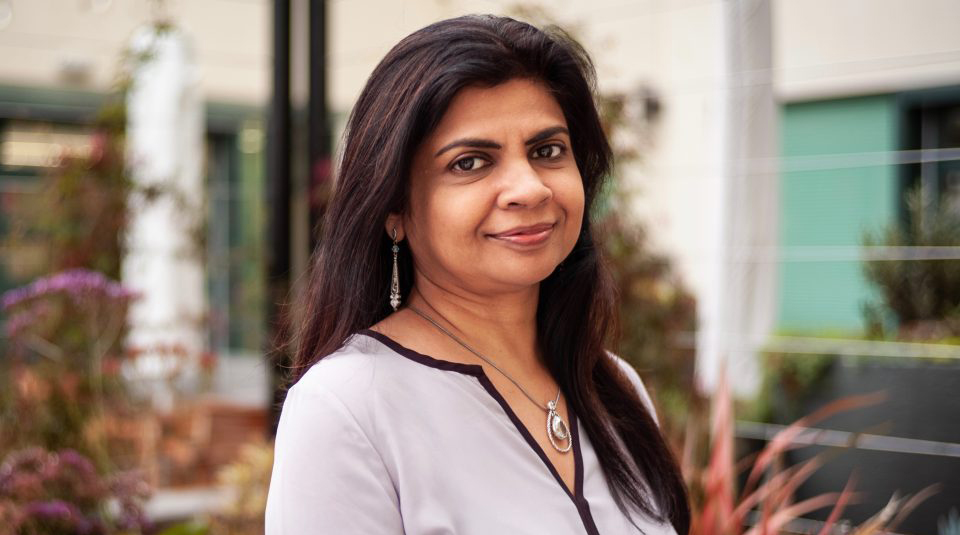
Aggarwal has noted several characteristics in common across many emerging jurisdictions: a fragmented and inefficient supply chain; the need for working capital; and a model for growth.
She has also noted, though, that no two places are the same. “You have to understand who the customer is and what their pain points are, then address those pain points, rather than taking an approach of: this is something that worked in the US and now I’m going to recreate it for Bangladesh.”
Nor does it work to simply assume there is one Asian model: as Zaman points out, Bangladesh is a high-density place with 160 million people sharing a country roughly the same size as New York state. That creates a different landscape for logistics and supply issues than in, say, Indonesia, which is spread across several thousand islands.
Embedding finance, with its consequent creation of reliable data, is a key for a business like this, Aggarwal adds. “It then creates a flywheel effect. You’re solving for their sourcing problem, which creates more data for lenders to give them credit, and as they gain more credit their sales and their sourcing increases,” she says. “It creates a really nice circle of growth, which is so essential for these MSMEs, and that triggers the entire economy cycle. We’ve seen this play out in India and we’ve seen this play out in Indonesia.”
Clearly, too, Covid is in the mix; as is the case all over the world, the pandemic has accelerated digital adoption through sheer necessity. “The pandemic showed that digitization is not only about efficiency and cost-cutting,” Aggarwal says. “It’s about survival and growth. If you were not contactless, paperless, digital, many businesses simply vanished during Covid.”
The difference between a frontier and an emerging market is that there is much more that needs to be done in a frontier place, with fewer providers attempting it. “If you compare us with India, that’s a much larger market which has evolved many more specialized verticals than are available here,” Zaman says. “Because Bangladesh is a smaller market, a player like ShopUp has to solve for almost all the problems themselves rather than rely on third-party specialists they can partner with.
“There are so many adjacencies ShopUp has gotten into because it makes sense, whereas in a larger market like India, it makes sense to be a specialist and focus on one vertical.
“The entire ecosystem is not built out,” he adds. “You cannot just build one part of it and expect someone else will do the others at some point in time. That’s a learning we had early on.” It made for a tough start but a bigger opportunity: a moat, as Aggarwal likes to call it.
Investors like Flourish do find the social inclusion element of ShopUp appealing, but equally they are keen to ensure that the customers are not misrepresented. “Small merchants are not poor,” says Aggarwal. “They are economically active. But they are underserved. They are ignored.”
Zaman learned a lot from his grandfather’s village in Patuakhali, in the delta areas south of Dhaka. It was here that he came to understand the nature of the local economy: no top-down ownership, a vast distribution network, numerous middlemen, no access to formal finance.
In this environment, Bangladesh has been a proving ground for much of what we now know about microfinance. But ShopUp is aiming a little higher – to what Aggarwal calls the missing middle, between microfinance institutions and the banks. The scale of that missing middle, and its contribution to the country’s GDP, is the key.


