
Euromoney awarded Nubank the best bank Latin America in its 2021 regional Awards for Excellence, in addition to awarding it best digital bank in the region.
It is now unquestionable that the recent growth of digital banks, coupled with their cost-lite business models, have moved them beyond being a theoretical threat to brick-and-mortar banks – they are now very much an existential threat.
No digital bank has previously won this best bank award, but given how the industry is evolving, it is fair to ask: will a traditional bank ever win again? Is their story now just one of managed decline?
Maluhy is going to reform – not reject – the branch model
It’s a risk. And it’s one that Itaú – the biggest private sector in the region – has recruited to address. The bank chose Milton Maluhy, a mid-40s banker with a digital pedigree, to respond to this growing threat.
Itaú’s Q1 2021 results were Maluhy’s first full quarter flying solo as CEO and the interest was intense – not so much for what those results were, but for his comments on future strategy.
The first impressions were good. Maluhy gets it. He’s clearly not afraid of cannibalization – often the psychological stumbling block of CEOs trying to build out digital operations while ring-fencing profitable segments.
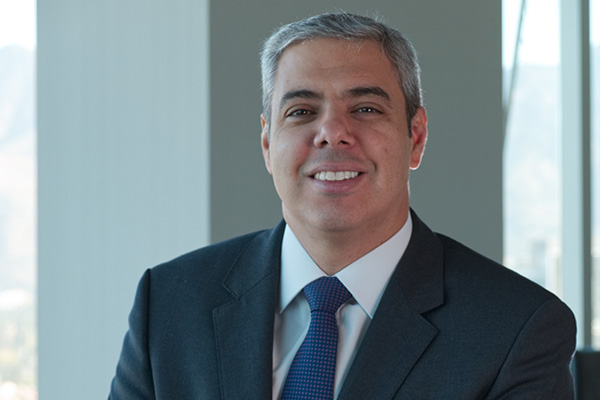
On the results call in May, when it was put to him that the bank had seen more than one million of its fee-paying clients move to its free online bank – Iti, recently extended from a digital wallet to a full online platform – Maluhy was rightly unapologetic.
First, he added some perspective: while 16% of Iti’s clients were cannibalized, 84% were not. If those clients hadn’t gone to Iti, they would probably have gone to no-cost banks elsewhere.
“I have a very simple view regarding this cannibalization question: either we do it or someone [else will],” says Maluhy.
He later confirmed that the bank is also being proactive in this – it’s not just passively accepting migration of clients to Iti; it is approaching customers that don’t fit fee-paying account profiles to suggest they move across to Iti.
When challenged about how Itaú would monetize its Iti customers, Maluhy was disarmingly blunt. He doesn’t know. Yet. Rather he’s focusing on rapid growth – the target is 15 million by the end of 2020 – while keeping customer acquisition costs low. He’ll work out how to monetize the business later. There’s no five-year plan, there’s no P&L target – just rapid, low-cost growth.
Throughout Itaú’s climb to the pinnacle of Brazil’s banking industry, it has never run a business such as this – and yet it’s exactly the right thing to do.
However, while Maluhy’s digital strategy hit all the right notes, he also recognises that Itaú will never just cut its way to become a Nubank. He pointed out that, while declining as a percentage of all transactions, agencies are still growing on a nominal basis. And many customers still want the option of face-to-face advice or transactional support. Maluhy is going to reform – not reject – the branch model. The strategy, the proposition, is still differentiated.
Playing to strengths
And Maluhy’s Itaú will continue to play to its strengths. It still enjoys the lowest cost of funding in the market and the bank is using this to aggressively undercut the competition on price to grow its mortgage book. The bank grew new mortgage loans by R$10.3 billion in the quarter – a 216% jump from the first quarter of 2020. The bank grew so quickly it suffered bottlenecks, but is working quickly to bring capacity online. Mortgages are a small part of credit in Brazil, but they are growing quickly and they tie in clients for long periods and offer huge cross-sells. It’s a strong foundational move.
Ultimately, Maluhy believes that Itaú’s credit underwriting will keep the digitals at bay. The bank is also targeting other sectors for loan expansion – such as agriculture and car loans. He thinks Itaú’s longer experience in data – and the huge internal data sets the bank enjoys – will enable it to keep its leadership position.
That remains to be seen: the digital banks are growing capacity and capability in credit extremely quickly – and they are recruiting the necessary experience.