
Nearly all banks talk about corporate responsibility, few make it integral to the way they work. What sets Bank of America apart is that it has been doing just that for years and this year it receives the award for North America’s best bank for corporate responsibility.
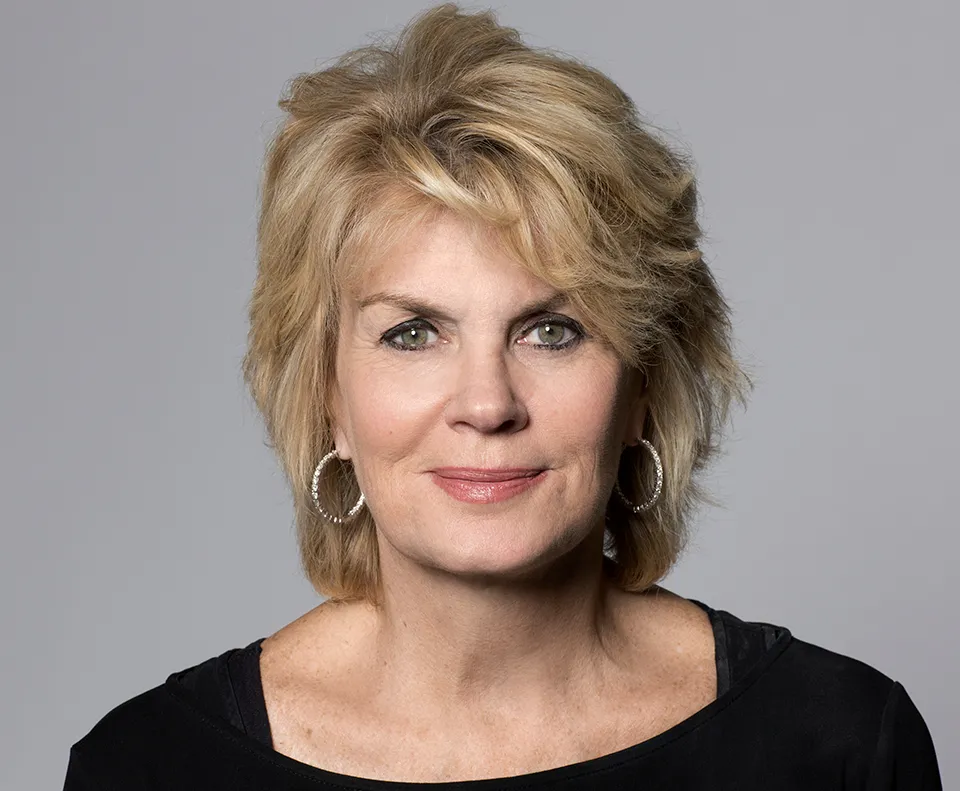
Vice chairman Anne Finucane, who leads the bank’s ESG efforts, argues that much of its approach is the result of its history. In the wake of the 2008 financial crisis, the bank felt broken. When Brian Moynihan took over as chief executive in 2010, he was convinced it needed a complete overhaul to allow it to stand the test of time and be fit for the future. That came to be reflected in the bank’s “responsible growth” mantra that Moynihan has championed ever since.
“This was not just about being a good place to work but looking at how we interact with customers and be a valued member of our community,” says Finucane. “It was a business plan for us. We could improve the client satisfaction, lower employee attrition and be a large piece of the economy in local regions.”

Finucane chairs Bank of America’s ESG committee, which includes senior management across every business line. In 2020 the policy of embedding ESG concerns in every part of the bank’s business brought itself to bear on three areas that Finucane argues were key to the year: what the bank could do in the pandemic; what it could do to address racial equality and opportunity; and how it could tackle the climate challenge.
Finucane sums up the approach. “What could we do that banks don’t normally do?”
When lockdowns came, the bank started gathering its entire senior management for daily calls at 7.30am that reviewed everything from PPP to how the bank could redeploy its supply chain to help with the sourcing of PPE.
It extended more than $25 billion in PPP loans to 343,000 small businesses, as well as nearly two million payment deferrals through the bank’s own programmes.
It also had its own employees to look after. Some 85% of the bank’s workforce was working from home and the disruption brought challenges not just in technology but also in childcare. Employees could access $100 daily childcare grants even if they were working from home and backup child and adult care reimbursements now total some 4.1 million days, an investment of more than $370 million.
The bank also provided transport and meals for those required to work in offices and contributed $100 million in community philanthropy – on top of the $250 million annual amount it already commits – for medical supplies, food kitchens and shelters.
The bank’s $1 billion corporate social bond in May 2020 was the first from a US bank, with proceeds aimed at healthcare institutions working to combat the pandemic.
When the issue of racial equality was raised to prominence following the killing of George Floyd in May 2020, Finucane knew that it was incumbent on Bank of America to respond. In June the bank announced a $1 billion four-year commitment aimed at addressing disparities, which has since been extended to $1.25 billion over five years, including targeting help for Asian-American communities.
The bank has put money and equity into minority depository institutions and community development financial institutions, and is working with community colleges and Black and Hispanic-targeted institutions to provide training programmes that will lead to employment. It already had two programmes under way but increased that to 21 colleges.
The world is 80% fuelled by fossil fuels. Those that wish us to cut these clients off need to have a solution
Anne Finucane
Finucane and others worked on more ways to support small minority-owned businesses, deciding that investment in venture funds that could directly infuse equity would be quick and efficient. To that end, Karim Assef, chairman of global investment banking, assembled a group of investment bankers to work with the bank’s 90 market presidents – each of whom is responsible for a geographic area – to identify funds that support minorities. The bank quickly blew through its first $200 million of commitments.
On climate issues the bank has had strong credentials for some time. Its sustainable markets committee, chaired by Finucane and chief operating officer Tom Montag, works to support the UNSDGs. And the bank upped its 2019 commitment to deploy $300 million through its environmental business initiative to a pledge to commit $1 trillion by 2030.
But when it comes to guiding companies through transition, Finucane is unapologetic. “The fact is that the world is 80% fuelled by fossil fuels,” she says. “Those that wish us to cut these clients off need to have a solution. Do we just dim the lights on the world?
“While we are united in the outcome, which is achieving net zero, that approach is impractical. We need to transition our clients to renewables on a broad scale over time.”


