The various changes in leadership of European banks in the past few months have all involved the exit of high-profile chief executives who had turned around their institutions.
The replacement CEOs are generally less well-known, often insiders, less charismatic and certainly less powerful. And the general direction of travel appears, if anything, to be the opposite when it comes to bank chairmen.
This trend fits with the sector’s wider evolution. The very future of many European banks was in question a decade ago, so CEOs naturally gained more power. It is a CEO’s job to be on top of the operational and financial detail.

Now, balance sheets are stronger, but profitability is structurally lower. The short term looks safer, but the long term is less assured.
M&A is coming to the fore again, and that’s something in which chairmen will inevitably have more of a role, compared to the nitty-gritty of systems integration and balance-sheet repair. Big mergers require board and even government buy-in.
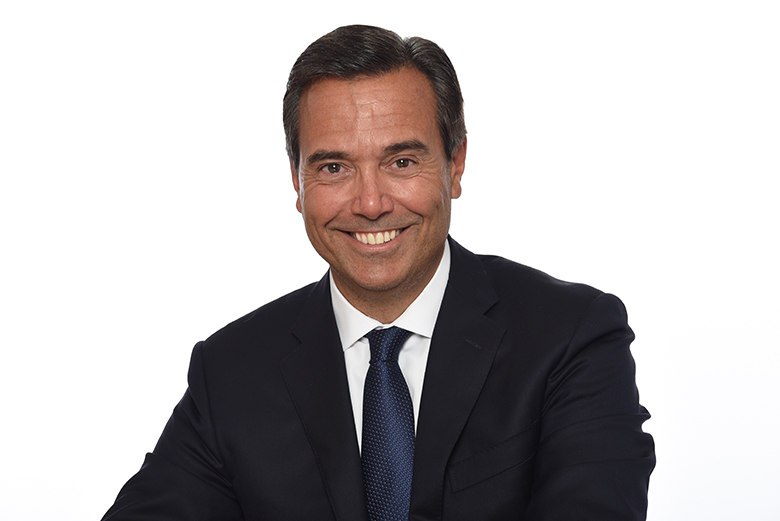
The attendant shift in personality and influence away from the top executive job, and towards the chairman, is most obvious in António Horta-Osório’s surprise decision not to take up another CEO role after his departure from Lloyds Banking Group.
Instead, he is becoming chairman of Credit Suisse.
Horta-Osório, credited with turning Lloyds from a basket case into one of Europe’s most profitable banks, was already a City star when he became Lloyds’ CEO in 2011.
Charlie Nunn, Horta-Osório’s successor at Lloyds, arrives with far less fame and less scope to turn things around. He previously managed HSBC’s wealth and personal banking division.
Thomas Gottstein – a Credit Suisse lifer who previously ran its Swiss business – also fits far less into the superstar CEO category than his predecessor, Tidjane Thiam. The latter was already well-known from having turned around UK insurer Prudential, before he moved to Switzerland in 2015.
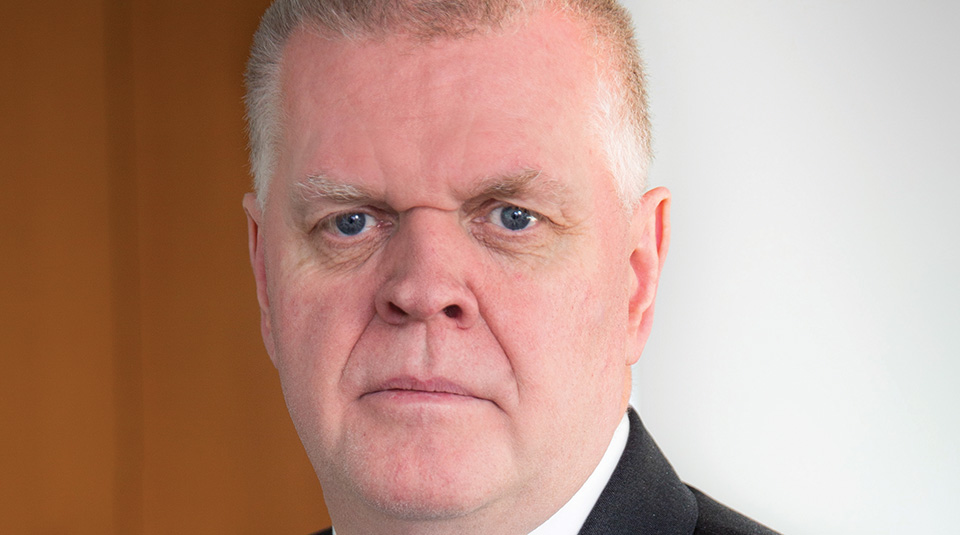
At HSBC, there is another case of a strong, outsider chairman Mark Tucker, and lifer CEO Noel Quinn.
Quinn had to work as an interim CEO for his first seven months before being confirmed in the role. Much-rumoured alternative candidates for HSBC CEO had included figures of wider experience and renown than Quinn, including then-UniCredit CEO Jean Pierre Mustier and Horta-Osório.
So, what about Andrea Orcel’s arrival as Mustier’s replacement as CEO of UniCredit this year?
Orcel is an investment banker previously behind many of Europe’s biggest and most formative bank mergers. He spent the best part of a decade shaking up UBS’s investment bank. That gives him a star-like quality.
Yet Orcel will have much less of a free rein at UniCredit than Mustier, a former paratrooper whose charisma and maverick style made him the essence of a superstar CEO.
As UniCredit’s first foreign CEO, Mustier’s role in bringing UniCredit’s reputation back from the brink made him almost unassailable – until former Italian finance minister Pier Carlo Padoan arrived as chairman in October.
Now Orcel is becoming UniCredit’s CEO largely to counter fears among investors that Padoan was too powerful, after the chairman forced out Mustier in November.
But Padoan has no intension of leaving Orcel with the sometimes-grudging acquiescence that Mustier enjoyed. Orcel’s ascendance at UniCredit is also somewhat overshadowed by his pay dispute with Santander, after its reversal of a decision to name him CEO in late 2018.
Perhaps Orcel’s experience with Santander, and before that at UBS, has made him more accepting of potentially overinvolved chairmen.
One can’t help thinking that Ana Botín’s desire to continue as executive chairman is part of the reason that a new superstar CEO has not yet been installed to sort out the Spanish bank’s ills.
Meanwhile, at UBS, chairman Axel Weber’s choice of Ralph Hamers to replace Sergio Ermotti last summer might appear something of a superstar appointment.
As CEO of ING, Hamers gained a continental reputation for digital evangelism, but while the legacy of that strategy is now more in question for ING’s international expansion, Hamers was never going to have his old Amsterdam swagger when he arrived in Zurich.
Unlike Switzerland, the Netherlands has been a banking backwater since 2008. Hamers had spent his entire career at ING. Running UBS’s high-profile private and investment banking business is entirely new to him.
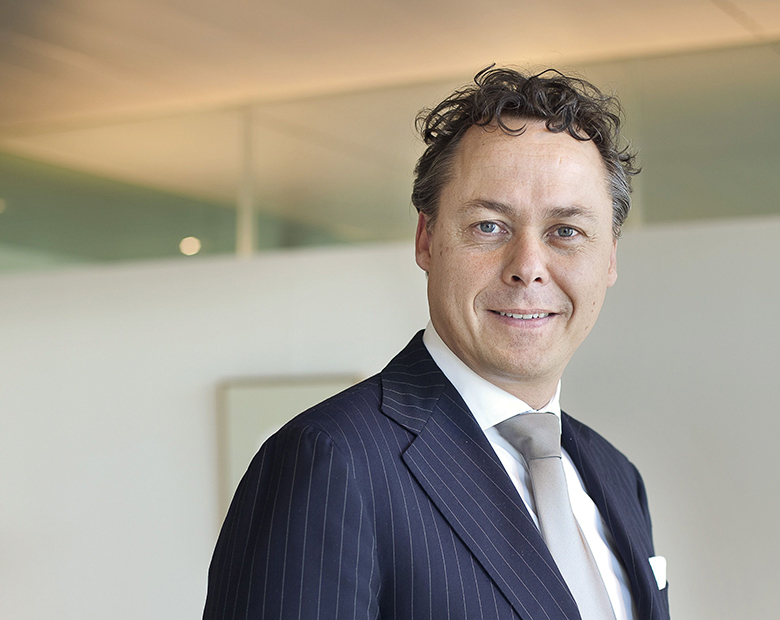
His position at UBS is now even less secure, after Dutch prosecutors in December ordered a criminal investigation into his tardiness in forcing through improvements in anti-money-laundering (AML) controls at ING.
Risks such as the one that UBS now faces with Hamers might highlight the benefit of choosing CEOs who are lower-profile, even boring. And if superstar CEOs are on their way out, it is also because the consequences of the global financial crisis have taken so long to sink in.
Only now are more European banks beginning to properly acknowledge that they cannot compete globally in investment banking. Neither can bankers justify astronomical salaries, when their institutions stand no prospect of earning, never mind exceeding, their cost of equity.
CEOs need to be called to account in a robust manner, so to that extent it is a good thing if the chairman is powerful.
In banking, Societe Generale is an obvious example of a firm that could still maybe do with a more activist chairman, given Frédéric Oudéa’s longevity as CEO, even as the bank has severely underperformed.
The danger, however, is when the balance shifts too much towards the latter at the expense of the former. The CEO often has invaluable insight into how, for example, a merger might play out and needs to be in a position to influence any such decision.