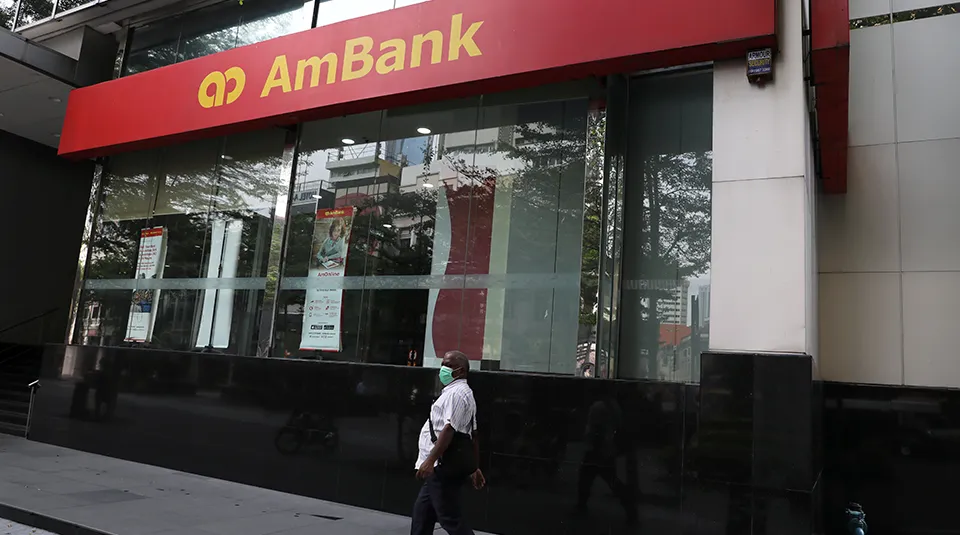
AMMB Holdings, the Malaysian bank widely known as AmBank, has agreed a RM2.83 billion ($699 million) settlement with the government of Malaysia.
It moves a step closer to putting the 1MDB scandal in the country’s rear-view mirror, but also blights the bank’s earnings, surprising its investors – and delivering a knock-on hit to shareholder ANZ.
AmBank was one of the Malaysian institutions most closely linked to the 1MDB scandal. It held prime minister Najib Razak’s bank accounts, including one through which Najib received a $681 million payment from the Saudi royal family that was at the heart of the drama.
The fine – the rationale of which the ministry of finance does not spell out – came as something of a surprise to the market, given that AMMB has already been fined once. It received a RM53.7 million penalty from Bank Negara Malaysia, the central bank, in 2015, over some unspecified matters of non-compliance related to 1MDB.
AmBank had positioned itself as something of a victim of circumstances, acting under pressure from the prime minister. It is believed to have raised concerns about the accounts with the central bank – something that the then-governor, Zeti Akhtar Aziz, is likely to shed light on when called to give evidence in the continuing trials of Najib.
The fine… came as something of a surprise to the market, given that AMMB has already been fined once
One analyst, Chan Jit Hoong at Hong Leong Investment Bank, in a report titled ‘Mother of all fines’, calls it a “huge negative surprise, especially when we thought AMMB had laid the past behind them when they settled [in 2015]”. He calls it “jaw-dropping” and “a sucker punch”.
Tengfu Li at Moody’s says the settlement “will materially erode its capital”.
The settlement, announced by the finance ministry for “all outstanding claims and actions in relation to the AmBank Group’s involvement in the 1MDB matter”, caused the bank to request a two-day trading suspension on Monday and triggered a raft of downgrades.
The bank said it would set aside provisions in the fourth quarter, which in the Malaysian financial year runs to the end of March.
The news had a knock-on effect for ANZ, which holds a 24% stake in AMMB Holdings.
The Australian lender reduced the carrying value of ANZ’s interest in the bank from around A$1.05 billion to A$850 million, it said in a statement. The total financial impact is A$212 million, and will be recorded as part of the equity accounted earnings from AmBank in ANZ’s 2021 first half numbers.
ANZ has been keen to shift its minority holding if a suitable buyer appears, and this is unlikely to change its position. In fact, it may make a sale easier by removing an overhang risk for a potential buyer. ANZ has previously sold out of Shanghai Rural Commercial Bank and a Cambodian joint venture.
Tarnished reputation
AMMB said in a statement that it had strengthened and enhanced its processes since the events of 1MDB. It acknowledged the impact of the settlement – core equity tier-1 will drop from 13.52% to 11.01%, and there will be no dividend – but it “remains financially resilient and has sufficient financial resources to absorb this settlement without having to raise additional equity capital”. It said it would raise tier-2 debt capital.
“The settlement of these legacy matters will enable the AmBank Group to focus on executing on its strategies for its business without any distractions,” the bank says.

There is no question the opening of the secret accounts at AmBank for Najib tarnished the bank’s reputation, but it is not quite as simple as looking at one institution and seeing a homogeneous pattern of behaviour throughout.
AmBank’s then CEO, Cheah Tek Kuang, had helped Jho Low, Najib’s associate, with the setting up of the private accounts for Najib. But his replacement, Ashok Ramamurthy, who was an ANZ appointee, is understood to be the one who told both Bank Negara and his own board about the accounts, supposedly after Jho Low got associates to take sacks of cash into AmBank branches to top up deposits, triggering anti-money laundering (AML) alerts at the bank.
Nevertheless, the finance ministry clearly considered this notification too little, too late; AmBank was also a lender to 1MDB and had set up the secret accounts for Najib in 2011, but Ramamurthy’s disclosures came at the end of 2014. Rather than contest any of this, AmBank clearly wanted to take the hit and move on.
“AMMB is run by a new management team and was doing well, on stronger footing, before this fine came into the picture,” says Chan at Hong Leong.
Cheah Tek Kuang gave evidence in a previous Najib trial in which he said he personally told Zeti of the opening of Najib’s personal account. The High Court has not yet heard evidence from Zeti herself; her previous interview with Euromoney has itself been drawn into the Najib trials.
Ramamurthy left AmBank and Malaysia at the end of 2014. Since 2015, the job of moving on from 1MDB has fallen to CEO Dato’ Sulaiman Mohd Tahir.
Goldman Sachs drew a line under its own sorry involvement in 1MDB in July when it agreed a $3.9 billion settlement with the Malaysian government related to its involvement in arranging bond deals. It then concluded settlements globally in October.
In the background, the Najib trial continues; in February, a series of High Court dates were set stretching from May to December. The former prime minister faces a number of separate trials and was already found guilty on seven charges in July.