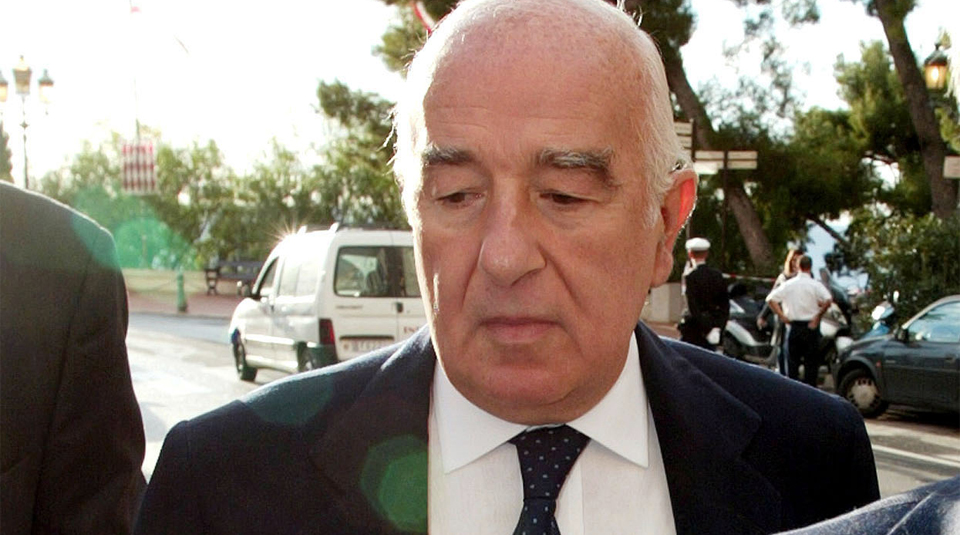
The death of Joseph Safra, the owner of Brazil’s fifth largest bank, on Wednesday, December 9, has led some bankers to speculate about a possible battle for control of the banking group.
Some senior Safra bankers attended the funeral of Brazilian’s richest man the following day, while others at the bank followed a live Youtube transmission. Tributes also poured in from the country’s other leading banking luminaires, including Itaú’s chief executive, Candido Bracher, Bradesco’s president, Luiz Trabuco, and the president of the country’s central bank, Roberto Campos.
It hasn’t taken long for thoughts of succession to swirl in the bank’s lavish headquarters on Paulista Avenue
However, it hasn’t taken long for thoughts of succession to swirl in the bank’s lavish headquarters on Paulista Avenue in São Paulo.
Bloomberg estimates Joseph Safra’s personal fortune as $17.6 billion. He owned global assets, including London’s St Mary Axe building known as the Gherkin.
The biggest question focuses on what Alberto Safra – Joseph’s middle son – might do.
Family business
When Joseph stepped back from day-to-day control in 2013, he left the running of the bank to his three male children: Jacob, the oldest, headed (and still heads) the international operation; Alberto was put in charge of corporate banking; and David (known as Davi) was given individual banking and investment banking.
All three went to Wharton University in the US.
Joseph also had a daughter, Esther, who married Carlos Dayan, a member of the family that owns Banco Daycoval.
On his retirement, Joseph left Eduardo Sosa, a trusted confidante, as chief operating officer. One of his main responsibilities was to try to keep Alberto and David from clashing.
Sosa did not succeed in his mission: after a couple of skirmishes over control over some of the bank’s evolving operations, the power struggle came to a head with Safra’s digital Wallet in 2019.
In the end, Joseph adjudicated that David should have control over the product, leading Alberto to exit the bank, as did Sosa.
Alberto launched ASA Bank, which targeted smaller corporate clients, though it has since pivoted to an investment firm.
ASA failed to capture share in an increasingly competitive marketplace in Brazil – one that Safra also targeted after Alberto’s departure.
High tension
Tensions between the two brothers are understood to remain high. When David made a presentation on assuming control of all Brazilian operations, he told the assembled bankers that the values of the bank were based on the Safra family’s. He showed a picture of himself with his father and elder brother. Alberto wasn’t pictured.
“Itaú is bank of technocrat rule – the system tells you what to do,” reckons one banker. “Bradesco is a feudal system – it’s your own group that matters and whoever runs your division gives the orders.
Safra is based on imperial rule. Whatever the family says, goes.”
Safra is based on imperial rule. Whatever the family says, goes
Since assuming control, David has focused on modernising the bank. Safra has completed a soft launch of a new digital bank, called AgZero, aimed at the broad retail segment.
This year, he launched SafraInvest, a network of autonomous agents in a similar vein to XP Inc.
“I don’t think Alberto will be able to dislodge Davi,” says one banker, who thinks that Jacob will support the status quo, though the shareholding is split more broadly through the Safra family. “But I definitely think that Alberto will try now the family patriarch has gone.”
In the first nine months of this year, the bank made a profit of R$1.4 billion ($276 million), a fall of 13%.
There is almost no expectation that the family will opt for an IPO to lessen the potential for sibling conflict.
“No way,” says one Safra banker when asked. “They don’t need the money, and they don’t want the transparency and reporting that comes with being a listed company.”
Power play
Joseph was a very private person – he never gave press interviews and he disliked his photograph being taken. He – like his children – also went everywhere with a five-strong security detail of ex-Mossad personnel, which even followed the Safras on to the beach.
The family were fond of going to Praia da Baleia on the north coast of São Paulo state, where the family has a mansion.
“It looked more like an airport departure lounge than a summer beach,” says one source. “Did other beach-goers mind? What did the Safras care what they thought – they’re billionaires.”
The potential power struggle is reminiscent of a similar dynamic that marked the relationship between Joseph and his older brother Edmond.
Both were successful in building different parts of the Safra banking empire: while Joseph created the institution that today is Banco Safra, Edmond created Republic National Bank of New York, which he sold to HSBC Holdings for $10 billion.
Their relationship reportedly deteriorated following the death of their father, Jacob, in 1963, and remained bad until Edmond’s death in a house fire in 1999.