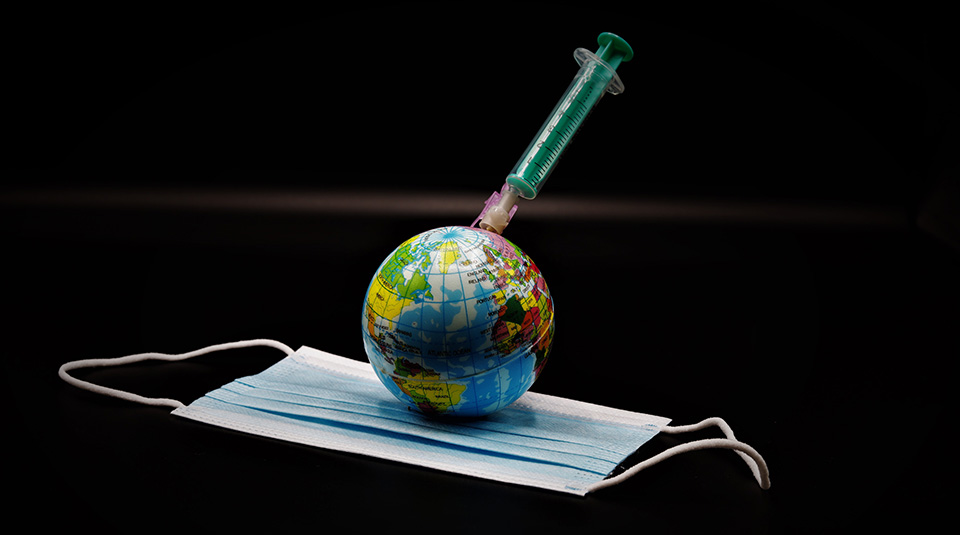
In early November, vaccine alliance Gavi – a public-private global health partnership to increase access to immunization in lower-income countries – announced the appointment of Citi as financial adviser to its Covax Facility.
The Facility aims to procure, equitably allocate and deliver two billion doses of safe and effective Covid-19 vaccines by the end of 2021.
Covax was launched in April in response to the coronavirus pandemic. It is a global collaboration of pharmaceutical companies, governments, multilaterals and non-governmental organizations.
This may be one of the most important risk structures and finance mechanisms of our era – everyone should be paying attention to it.
Some 94 higher-income economies have joined the programme as self-financing members. They pay into the Covax Facility, which provides a large portfolio of vaccine manufacturers with investments and incentives to ensure they are ready to produce the doses needed as soon as a vaccine is approved.
The Covax Facility could serve as a blueprint for the management of future global crises
Most of the vaccines in the portfolio won’t work, but the Facility is a crucial mechanism for fairness. Collaboration and pooled purchasing power should mean lower prices from manufacturers, to everyone’s benefit.
In tandem, there are 92 lower-middle income economies members of the facility who will have their participation supported by Covax AMC [advance market commitment] – a separate facility funded by official development assistance, as well as contributions from the private sector and philanthropy.
It is an impressive feat of collaboration.
Citi’s role will be to advise on what is just and fair in financial terms, as well as what the risks are to manufacturers, to their balance sheets and reputations, in creating a product of unknown efficacy.
Citi will have to determine at what point the market stops absorbing that risk and it falls to the country members, and the extent to which that risk is made fair across nations of varying wealth and demand.
It is a huge task of mitigating sovereign, credit and operational risk for something entirely unknown.
Unprecedented
These feel like unprecedented times. This kind of structure is probably a once-in-a-century occurrence, but it could also be a foretaste of what is to come in the decades ahead as the impacts of climate change worsen.
We know that those impacts will not be fairly distributed and that many countries will not be able to afford to adapt. This, in turn, might create a global refugee crisis, among other things.
It is not inconceivable that there will come a time when a similar structure is required to fund technology that the human race needs as a result of climate change. This could include vaccines for further pandemics, but could also be related to water shortages, sea-level rises or depleted air quality.
The Covax Facility could, therefore, serve as a blueprint for the management of future global crises. We should be observing its development intently.


