The economic cost of the Covid-19 pandemic has become truly frightening. In October, the UK’s Institute for Fiscal Studies (IFS) projected a 2020/21 budget deficit for the country ranging from £345 billion (16.7% of GDP) under an optimistic scenario to £376 billion (18.9% of GDP) in a pessimistic one.
Back in March, the forecast was just £55 billion (2.4% of GDP).
During the summer, French budget minister Gerald Darmanin forecast a budget deficit of 11.4% this year, up from 2% in December 2019. But that was before the country was locked down for a second time.
Countries will borrow to plug the gap, but – as economies shrink and take their tax bases with them – how are they ever going to be able to repay?
Governments around the world face several choices. The first is to raise funding in the capital markets at often historically cheap rates.
The response to the EU’s €17 billion offering under its emergency Support to mitigate Unemployment Risks in an Emergency (Sure) programme this month leaves little doubt as to investor appetite for this type of risk.
But governments cannot simply borrow their way out of the deficits that they are now burdened with – not least because the more borrowing they do, the more expensive this will eventually become. They urgently need to explore other public funding options.
Chequered history
That is why combining private-sector and public-sector solutions is high on the agenda once again.
Despite the chequered history of schemes such as Public Private Partnerships (the dubious benefits of which have come under close scrutiny), better management of public assets must be a priority as huge public-sector deficits loom.
According to the IMF, the value of public assets globally is twice that of global stock markets, twice that of global GDP and much larger than the public debt markets.
These assets are, however, unaudited, unsupervised and often unregulated.
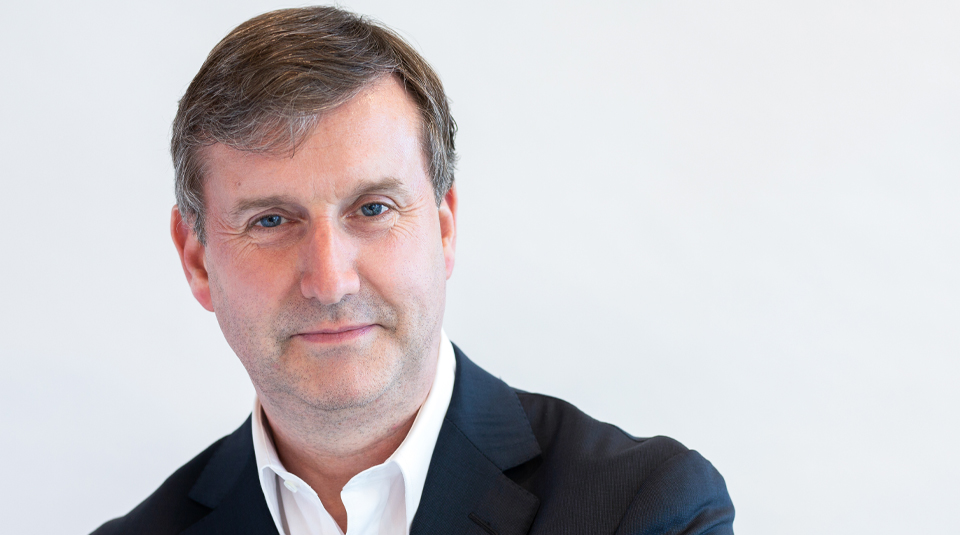
“When market conditions are benign, you can run a fiscal deficit, a current account deficit and you can borrow money, so there isn’t the pressure to change,” points out David Walker, head of public sector group EMEA at Citi.
“There needs to be an element of crisis to force a rethink. So, if not now, when?
“This is the missing part of the financial management agenda for the public sector,” he continues. “As a result of the Covid-19 pandemic, the vast majority of public-sector clients that we deal with face some level of fiscal vulnerability.
“Those with vulnerabilities have seen wholesale downgrades, or their sovereign outlook has deteriorated. Those on a steepening part of the yield curve are the ones that can benefit the most from this kind of approach.”
This is not about privatization. It is about the creation of special entities that can capture the value from managing public assets in a more productive way.
The idea is not new; New Zealand has been a pioneer, as has Sweden, which adopted this approach 20 years ago.
It has been successfully applied to transportation assets: Hong Kong used a holdco for the development of real estate assets associated with the construction of its metro transit system and, in the UK, the Kings Cross development involved publicly owned property manager LCR working with the private sector.
Unlocking value
Dag Detter, who as director at the Swedish ministry of industry led the country’s public asset restructuring programme from 1998 to 2001, is adamant that this approach can unlock value for cash-strapped sovereigns.
“There are $160 trillion public assets worldwide, and if you can generate a return of 3% pa on them, that is $5 trillion a year,” he told a recent online forum. “We need to get 100% of public assets under profitable management. The obstacle to this is political, not technical.”
There are $160 trillion public assets worldwide, and if you can generate a return of 3% pa on them, that is $5 trillion a year
Dag Detter
The vision is for public wealth funds that would have the professional capacity to manage assets.
It would involve a change in mindset by the public sector away from individual departments focusing on budgets for the year towards looking at the overall government balance sheet.
It would also require a switch to accrual accounting, to establish the cashflow and revenues generated by – together with the liabilities of – a public-sector asset portfolio.
If a weighted average cost is applied to every item of real estate on the fund’s balance sheet, and a capital use cost charged for underutilized assets, this will act as an incentive for better asset management.
“If you have a capital charge to an asset, you don’t want that asset to be unproductive,” says Walker at Citi. “So, you should crowd in private sector capital to make it productive.”
The classic example of this is a real estate development of, for example, office space above a publicly owned car park.
It is hard to argue against more efficient management of public assets by governments facing such eye-watering budget deficits.
For many their first job would be establishing exactly what assets they have and what they are worth.
When one city in the northeast US took an inventory of its publicly owned assets it reportedly found that their realizable current value was 70x the historic book value at which they were held.
The lion’s share of public assets in any future public wealth funds will be commercial or residential real estate.
The economic damage that Covid-19 has already wreaked on this sector, combined with the damage it has already sustained from technological innovation in the retail and office sectors, mean that looking to generate superior returns from it will be far more challenging in the future than it has been in the past.
The good news is that there is a huge investor base of insurance companies and pension funds desperate for the types of long-duration public-sector assets that these funds would be managing.
“People need to think less about how governments can prevent themselves from making project finance mistakes and they need to think more about how institutional investors with long-term liabilities can fund long-term assets,” Walker says.