The value of financial inclusion and financial education has become more evident during the Covid-19 crisis. One bank stands out for its investments in financial inclusion around the world and its work bringing a broader investor community to microfinance. That bank is BNP Paribas, which wins the award for the world’s best bank for financial inclusion this year.
BNPP launched its first microfinance partnership with Crédit Rural de Guinée 30 years ago in 1989 – a partnership that continues to this day. Since then, the bank has offered financial support to 84 microfinance institutions (MFIs) in 33 countries, with a total of €900 million in accumulated loans.
In 2019 alone, the group’s overall support of microfinance exceeded €357 million, enabling the direct financing of 28 MFIs in 15 countries, plus more than 100 indirectly in most countries around the world via 11 dedicated funds in which different entities of the group invest.
During Covid-19, that support has increased: the bank has deployed specific support to microfinance in 10 countries and has provided subsidies to tackle the urgent difficulties that many clients have faced. BNPP has accepted all the requests for moratoriums received by the MFIs, to help them recover their liquidity.
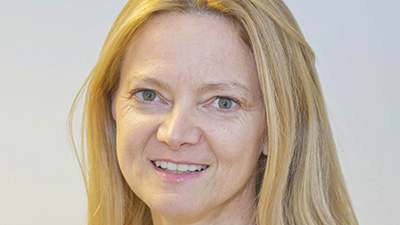
Most of the group’s financial investment in financial inclusion consists of direct lending from BNPP branches to MFIs using its balance sheet. As Claudia Belli-Jeanteur, head of social business and microfinance at BNPP, says: “It is not philanthropy but social business.”
The bank has a credit committee specifically engaged in overseeing lending to MFIs, with additional analysis of social impacts measured using a social performance-indicator tool, SPI4, designed by French non-governmental organization Cerise.
In a 2019 benchmarking study, BNPP’s MFI portfolio achieved an average score of 79%, compared with an average 65% for the SPI4 global database of nearly 300 MFIs worldwide.
Local
The bank only lends where it has a local presence and in local currencies. In Africa, it provides financial inclusion through its subsidiaries in Tunisia, Morocco, Senegal, Côte d’Ivoire and South Africa.
The MFIs that the subsidiaries lend to range from ones providing rural women with microcredit to those enabling agricultural cooperatives to make digital payments.
In Asia, the group has supported 20 MFIs in India, where 99% of micro-borrowers are women. The bank also finances at least two MFIs in each of Vietnam, Indonesia and China.
BNPP has also contributed financially to the UN Environment programme, Microfinance for Ecosystem-based Adaptation, and was involved in rolling out a project to Senegalese and Colombian micro-borrowers to improve the resiliency of these populations against the effects of climate change.
“The aim is to contribute to the emergence of green microfinance,” says Belli-Jeanteur.
It is not philanthropy but social business
Claudia Belli-Jeanteur
Through its core retail banking network, BNPP has financed some of the largest MFIs in Europe. In Italy, the biggest MFI, PerMicro, is financed by BNPP’s retail bank, BNL, which also holds a 20% stake.
In 2017, the bank launched Microlux, the first MFI for Luxembourg and the greater region. Co-founded by BGL BNP Paribas, last year it surpassed €1 million in loans for micro-entrepreneurs, most of whom tend to be from immigrant backgrounds.
In Belgium, BNP Paribas Fortis has a majority stake in Microstart, the largest microcredit lender in the country. In the US, BNP Paribas New York and subsidiary Bank of the West have provided several credit lines to Grameen America.
In France, the subsidiary Nickel offers prepaid digital bank accounts, accessible through tobacconists to anyone over the age of 12, with no conditions or minimum income requirements. At the end of 2019, nearly 1.5 million Nickel accounts had been opened (a 32% increase over 2018), 78% of them by people, often migrants, earning less than €1,500 a month. Nickel is now being rolled out in Spain.
Microfinance
In addition to direct lending, the bank has worked to bring investments in microfinance to its investor clients. Last year, BNPP Asset Management created the first savings fund dedicated to microfinance in emerging markets – the Global Bond Plus fund. It invests 20% of assets in microfinance investment vehicles, as well as investing in an impact fund dedicated to the development of microfinance in eastern Europe.
BNP Paribas Wealth Management also offers funds that give its high net-worth clients the opportunity to invest in microfinance. The Obli Etheis funds, for example, invest 10% in microfinance and the rest in socially responsible investments that finance micro-entrepreneurs.
Belli-Jeanteur says clients can receive social performance reports on the clients or projects they have helped support through their investment in these and other solidarity funds.
Since 2007, BNPP’s employees and retirees have volunteered skills to microfinance operators, with technical support missions set up for the benefit of MFIs and micro-entrepreneurs. Senior executives are trained in impact auditing and offer pro bono audits to MFI partners around the world.


