 |
BotswanaBest bank: First National Bank of Botswana |
|
|
First National Bank of Botswana (FNBB) continues to perform strongly and, after reporting a 16% year-on-year increase in market capitalization, wins the award for Botswana’s best bank again this year.
FNBB reported a 13% increase in profit before tax to P544.9 million ($46.2 million), while its return on tangible common equity increased 3% to 25.4% from 24.6% at the end of 2018. Interest income increased by 5% against growth in gross advances of 3%.
|
|
|
Steven Bogatsu, |
In 2019, the bank focused on improving credit discipline by tackling its distressed debt portfolio, reducing non-performing loans by 10% to 6.9% of lending from 7.6% a year earlier.
Even before the onset of the Covid-19 pandemic, FNBB noted that stress was evident in its credit portfolios, and it was adopting a cautious and selective approach to credit.
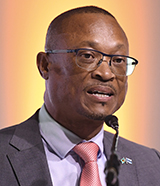
Chief executive Steven Bogatsu has said that the bank is expecting a downturn in both loan uptake and credit expansion.
However, it continues to invest in digital, which will stand it in good stead through the economic downturn and beyond. It launched new products in 2019, such as Cash Plus, which allows customers to make deposits and withdrawals from their FNBB accounts at retail outlets, and contactless point-of-sale devices and cards.
FNBB also remains focused on reaching the unbanked and promoting financial inclusion. Its ‘bank on wheels’ initiative improved its customer reach and service in previously unbanked villages and towns such as Shakawe, Tsabong and Masunga.
 |
EthiopiaBest bank: Awash Bank |
Awash Bank, the first private-sector bank in Ethiopia, is the country’s best bank this year thanks to its key roles in supporting the growth of international trade and the country’s burgeoning small and medium-sized enterprise sector.
In December 2019, the US Agency for International Development (USAid) and Awash Bank announced a partnership to provide $6.4 million to microfinance institutions and small and medium-sized agricultural businesses in Ethiopia.
The programme will expand commercial bank lending into underserved areas and provide the private capital needed to help farmers and businesses intensify production. It will also support Ethiopia’s efforts to modernize its agricultural sector.
Awash Bank has also established an SME banking operation unit. SMEs are big local employers and make a noticeable contribution to Ethiopia’s GDP; their exports are likely to be hard hit by the Covid crisis.
The bank must also be praised for its response to the pandemic. As well as communicating health risks to customers and staff, it also announced a raft of measures aimed at easing the burden on businesses. From April 1, it waived the commission fees on extending letters of credit, rescheduling of loans and ATM withdrawal fees.
Awash reported a net profit of Br2.4 billion ($68.8 million) last year, while total assets rose 35% in the year to the end of June 2019. Loans and advances rose to Br47.3 billion at the end of June 2019, up by 51% from Br31.3 billion a year earlier. Deposits were up 36% to Br62.5 billion over the same period.
The bank continues to play a key role in supporting international trade into and out of Ethiopia by providing financing instruments to both exporters and importers.
 |
GhanaBest bank: CalBank |
Last year saw upheaval in Ghana’s banking and financial services sector following a clean-up exercise by the Bank of Ghana of what were deemed to be weak banks, savings and loans and microfinance companies.
The central bank subsequently revoked the licences of over 400 non-bank and microfinance institutions that were deemed insolvent.
However CalBank, this year’s winner of Euromoney’s best bank in Ghana, goes from strength to strength. It saw annual growth in total assets of 30% to C7 billion ($1.2 billion) and reported a return on equity of 17.8% for the full year 2019.
It increased operating income to C596 million from C519 million, while its profit after tax was up by 13.2% on the year to C174.3 million from C153.2 million in 2018. Gross loans increased by 19.9% to C3.1 billion, from C2.6 billion at the end of 2018.
The bank continued to invest in digitalization and introduced various e-product and process initiatives. It launched agent banking and had 149 agents with 24,783 customers by the end of the year.
The bank also signed agreements with African Trade Finance, Agence Française de Developpement, Overseas Private Investment Corporation and Citi totalling $228 million, including a grant component to support clients working on renewable-energy and energy-efficient projects.
The bank also offered initiatives to support women, disbursing over C24 million loans to women in sectors such as trade, commerce and agro-processing.
 |
KenyaBest bank: Equity Bank
|
While it has been an impressive year for KCB Bank with the successful acquisition of National Bank of Kenya and the official launch of its digital strategy Vooma – which has boosted the number of its customers from four million in 2015 to over 19 million in 2019 – Equity Bank is this year’s best bank in Kenya.
Equity stands out for its digital offering and is well positioned to take advantage of the coronavirus-fuelled pivot towards cashless banking. As at December 2019, 97% of the bank’s transactions were done outside branches: 79% were done on mobile and 11% by agencies.
The bank has seen a 14% increase in post-tax profit to Ksh22.6 billion ($212 million), largely driven by the 23% growth in its loan book to Ksh366.4 billion from Ksh297.2 billion in 2018 – an impressive result given that interest rates in the country were capped until November.
At 9%, Equity’s non-performing loan ratio is lower than the market average of 12%, while the bank ended the year in a strong capital and liquidity position – an enviable situation considering what lies ahead.
The bank’s return on equity stands at 21.8%, up from 21.1% a year earlier, ahead of rivals KCB (20.7%), Co-op Bank (18.9%) and NCBA Group (11.8%).
It was also a year of regional expansion. Equity Group Holdings opened a commercial representative office in Addis Ababa, Ethiopia, in line with the bank’s strategy to expand into 10 African countries by 2020.
Equity also entered into a non-binding agreement with shareholders of Banque Commerciale du Congo to acquire a majority stake.
Stanbic Bank Kenya, a subsidiary of Standard Bank Group, remains the leader in debt arranging, loan syndications, capital markets and advisory services in Kenya and is Euromoney’s best investment bank in the country this year.
As well as recording higher revenue, return on equity and profit before tax in 2019 over 2018, it also arranged financing for many of Kenya’s leading corporates and was also integral to a number of innovative deals.
Acting as an adviser to Acorn Holdings on its KSh4.261 billion five-year senior bond, Stanbic helped arrange the first green bond to be issued in east Africa. The bond was rated B1 by Moody’s, which is a notch above Kenya’s sovereign rating.
The bank also arranged a $71 million equivalent multi-currency facility (MCF) across South Africa, Namibia and Kenya for Old Mutual Holdings that provided access to liquidity for key OMH subsidiaries in three countries and incorporated a sustainability linked funding element to be activated in the future.
MCFs are one of Standard Bank’s fastest growing products.
 |
MalawiBest bank: NBS Bank
|
Under the leadership of chief executive Kwanele Ngwenya, Malawi’s NBS Bank has embarked on a transformation to become a digitally driven transnational bank for retail and corporate customers.
Despite operating expenditure increasing by 16.5% in 2019 due to branch rationalizations and investments in staff as part of this transformation, it reported strong financial results nevertheless.
|
|
|
Kwanele Ngwenya, |

The bank recorded an astonishing 162% increase in profit after tax to MK4.5 billion ($6.1 million) in 2019, from MK1.7 billion a year earlier. This was buoyed by a 103% growth in net interest income, driven by loan growth of 136% and money market investments.
While non-interest income decreased by 13% year on year, the uptake of the bank’s products on digital platforms continued to improve as investments were made to increase network availability and reliability.
The bank introduced several products and services to improve its digital platforms. It introduced EazyApp for mobiles and a card-less withdrawal service. Deposits grew by 21%.
NBS also relaunched its small and medium-sized enterprise offering, allocating additional resources to the SME segment. It also continues to support corporate social responsibility (CSR) initiatives.
In 2020, the bank and its partner Farmse are offering customers in rural areas enhanced access to payment solutions, cash deposits and withdrawals, through Farmse’s agency network.
Standard Bank Malawi (SBM) has worked on a range of landmark deals during the review period. It is the country’s best investment bank.
Most notably, SBM advised leading Malawian telecoms company, Airtel Malawi, on its successful IPO. The offering raised MK27.92 billion for large shareholder Bharti Airtel Malawi.
It was the 17th IPO and largest yet on the Malawi Stock Exchange since the exchange’s inception in 1994.
|
|
|
Enock Kondowe, |
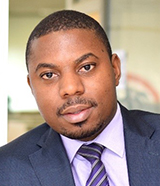
“The IPO provides a platform to deepen Malawi’s capital markets, providing new investment access to one of the country’s leading corporates on-exchange,” says Enock Kondowe, head of investment banking Malawi, for Standard Bank. “With 20% of Airtel Malawi now in the hands of the Malawian public, including strong retail participation in the IPO, Malawians, including the customers of Airtel Malawi, can share in the company’s success story.”
SBM also worked on several structured trade and commodity finance transactions, including a $25 million seasonal loan facility to Alliance One Tobacco, the largest foreign currency deal on the bank’s Malawi balance sheet, and a $15 million revolving structured trade facility for Petroleum Importers.
SBM has also taken a proactive approach to supporting clients through the Covid-19 pandemic by extending a moratorium on principal and interest payments by up to six months for affected clients on their term and vehicle financing loans.
The bank is also granting temporary overdrafts for three months.
SBM’s corporate and investment banking revenue was up 19% on 2018 to MK 33,482 million, while loans and advances grew 34% to MK70,788 million from MK52,945 million.
SBM CIB’s cost-to-income ratio fell 17% to 34%.
 |
MauritiusBest bank: Mauritius Commercial Bank |
Mauritius Commercial Bank (MCB) is the only investment-grade bank in sub-Saharan Africa and the largest bank in Mauritius.
As well as onshore banking, MCB has been able to expand its operations in Africa and its exposure to the energy business, although the bank has adopted a cautious approach to this given the downturn in commodity prices.
MCB saw a 29.9% increase in net profit to MauR8.8 billion ($218 million) for its financial year ending 2019, with total asset growth of 21.5% to MauR428 billion. Customer loans and deposits grew by 13.1% and 10.1% respectively.
The bank has a capital adequacy ratio of 16.6% and a return on equity of 19.2%. Its market share of domestic credit to the economy was around 41%
MCB is implementing a digital transformation programme and has improved its JuiceByMCB mobile banking service, which saw it pick up an additional 85,000 users in the bank’s reporting period.
It retains a sound capital and funding position: it raised $800 million last year with a syndicated term loan in the international debt markets and is rated Baa2 by Moody’s.
 |
MoroccoBest bank: Attijariwafa Bank |
Morocco’s best bank, Attijariwafa Bank, continues to be a standout financial institution: it has outperformed its peers BCE and BCP and maintains its commitment to renewable energy.
|
|
|
Mohamed El Kettani, |
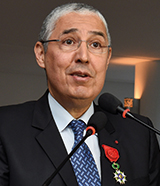
Under the stewardship of chief executive Mohamed El Kettani, Attijariwafa recorded an increase in net income to Dh7 billion ($719 million) from Dh6.7 billion in 2018 and maintains a return on equity of 14.8%, while managing to shave its non-performing loan ratio to 6.6% from 6.8% a year earlier. It maintains a capital adequacy ratio of 13.1%.
The group has obtained accreditation to the United Nations Green Climate Fund, the only bank in the Middle East and north and sub-Saharan Africa to do so.
At home, Attijariwafa has launched a project to set up a system for managing environmental and social risks for business credit activity and large projects in Africa by the end of 2020.
Its commitment to renewable energy was reinforced in 2019 with the financing of the new Boujdour wind farm in Morocco, bringing the bank’s total commitments in this sector to more than Dh7.5 billion.
Support for SMEs is also core to Attijariwafa’s strategy. In 2019, the group reserved Dh27 billion for this sector: Dh18 billion for SMEs, and Dh9 billion for 45,000 very small businesses.
 |
MozambiqueBest bank: Absa Bank Mozambique |
Absa Bank Mozambique has suffered from the separation from Barclays, and its net profit was down by 20% year on year in 2019. But the institution has nevertheless still seen an increase in business and sales in a tough operating environment.
Discounting the impact of the separation, Absa’s managing director Rui Barros says the hit to profits in the year was around 12% and was attributable to market conditions and reductions in interest rates.
|
|
|
Rui Barros, |
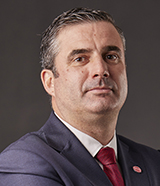
Absa reported a net profit of Mt1.04 billion ($14.8 million), despite the fact the Absa brand is new in Mozambique – it was introduced on November 11 after an 18-month transition from Barclays.
Absa reported 8.2% growth in total assets, a 32% increase in loans and advances to customers and a 14.7% increase in customer funds, with capital growing 10.3%.
During the year, Absa implemented the integration of its banking platform with M-Pesa and announced plans to launch Byte Money, which will facilitate payment of school fees by customers in its branches.
In investment banking it has the strongest offering in Mozambique, completing several important deals. These include acting as lead arranger for the financing of the expansion of the port of Maputo through a syndicated funding line with a total investment of $200 million.
Absa also participated in the two largest-ever equity deals in Mozambique, the IPO of Hidroeléctrica de Cahora Bassa and rights issue of Cervejas de Moçambique, the leading local brewery.
 |
NigeriaBest bank: Guaranty Trust Bank
|
Guaranty Trust Bank (GTB) has set its sights on increasing its customer base from 20 million to 50 million. It is, in the words of chief executive Segun Agbaje, “outrageously ambitious” in its outlook, but the bank’s profitable and innovative offerings make it Nigeria’s best bank.
Its drive towards digitalization has created a strong business platform: in 2019 the bank added four million new customers, while maintaining its leading position as a driver for e-payments across the continent.
Agbaje has also overseen the transformation of GTBank into one of Nigeria’s biggest retail banks.
|
|
|
Segun Agbaje, |
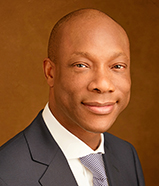
“We used to be a high-end corporate business, but in the last few years we decided to start to focus on deepening the retail and SME business,” he says. “Rather than drive this through brick-and-mortar banking, we leveraged digital technologies, predominantly mobile and USSD [quick-code] technology. So we are, today, a retail bank that wears the halo of a high-end bank.”
GTB is also looking to deepen its retail and SME business using digital technology.
“For SMEs, we realized that a lot of them didn’t have security, so we created a lot of cash-flow lending where small businesses could borrow off their sales,” says Agbaje.
Over 50% of the bank’s funding is retail, another 12% is SME.
GTB is also looking to capitalize on digital technologies to diversify the bank’s earnings.
“We are going into a holding company structure so that we would be able to compete in different spaces apart from banking in order to diversify and grow our earnings,” says Agbaje.
Initiatives launched in the awards period include Free2Crea8, which makes banking free for undergraduates and young people aged 16 to 25 by covering all charges on cash transfers and dollar transactions.
GTB has seen a 22% growth in the number of undergraduates opening a GTCrea8 account, many of whom are opening a bank account for the first time.
As part of its corporate responsibility programme, the bank is providing hundreds of students in some of the remotest parts of the country with bicycles to help them get to school.
The GT Bank Group reported a profit after tax of N196.9 billion ($507 million) in 2019, an increase of 6.6% on 2018.
The bank’s subsidiaries achieved a profit before tax of N34.5 billion, which represented a 14.9% contribution to group profitability, up from 12.1% in 2018. It reported a capital adequacy ratio of 22.5% and loans and advances at group level grew by 19.2%. Return on equity was 31.2%, while the bank’s cost-to-income ratio was 36.1%.
At the end of 2019, GTB had eight international banking subsidiaries and two sub-subsidiaries in Ghana, Gambia, Liberia, Sierra Leone, Côte d’Ivoire, Tanzania, Kenya, Rwanda, Uganda and the UK.
Stanbic IBTC Capital advised on 50 investment banking transactions with an aggregate value of about $9.7 billion between April 2019 and March 2020, making it the clear market leader and Nigeria’s best investment bank.
Stanbic IBTC Capital advised on the first direct equity listing on the premium board of the Nigerian Stock Exchange – a listing segment for an elite group of issuers that meet the most stringent corporate governance and listing standards of the exchange – the N1.8 trillion listing of MTN Nigeria Communications. The listing was the second largest in the history of Nigerian capital markets.
Other transactions of note include the N460 billion merger of the Cement Company of Northern Nigeria and Obu Cement Company, the largest M&A transaction in Nigeria in 2019.
It also acted as joint lead and bookrunner on the inaugural N23 billion bond issue by Interswitch, a leading technology company focusing on the digitalization of payments.
 |
RwandaBest bank: Bank of Kigali |
In 2019, Bank of Kigali (BK) became the first home-grown Rwandan company to reach RF1 trillion ($1.04 billion) in total assets – a fivefold increase from an asset base of RF200 billion in 2011. This impressive achievement and consistent profitability make it Rwanda’s best bank once again this year.
Under chief executive Diane Karusisi, the bank’s strategic focus is to diversify its lending portfolios and to optimize value chains to boost SME and retail banking. Digitalization is at the core of this strategy and the bank has enlisted the help of Swiss bank technology provider Tenemos T24 to drive this agenda.
|
|
|
Diane Karusisi, |
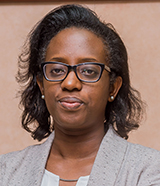
BK has improved its offering for the unbanked. Its lkofi digital wallet, launched in May 2019 and designed to help farmers manage agricultural outputs and encourage a culture of saving, has 200,000 users.
The bank also launched Zamuka Mugore, which aims to empower underserved Rwandan women in business by providing them with affordable loans and competitive savings rates.
The bank recorded profit after tax of RF37.3 billion, an increase of 36.3% over 2018, while total assets stood at RF1,019 billion, up 16.1% year on year. In 2019, the bank’s cost-to-income ratio fell to 42.2% from 48.1% in 2018.
BK’s net loans and advances increased by 19.3% to RF678 billion, while its return on average equity rose from 17.2% to 18%. Non-performing loans stood at 5.7%, with a coverage ratio of 105.2%.
BK holds market shares of 29.3% of total assets, 34% of net loans and 29.3% of customer deposits.
 |
South AfricaBest bank: Standard Bank
|
Despite disappointing financial results on the back of a losses incurred by ICBC Standard following an explosion at a US oil refinery, Standard Bank continues to improve its retail offering and saw good growth in personal and business banking last year. It has a 22.4% return on equity.
It certainly wasn’t an easy period for the bank, and its plan to improve its retail banking offering in South Africa involved some difficult changes. The continued migration of transactions from branches to digital platforms saw it close 90 such offices and make over 1,000 people redundant.
The flip side to this pain was the digitalization of services, as well as the launch of new products and online features such as MyMo, a low-cost paperless account with access to mobile data.
Digital adoption has been strong, some 99% of transaction volumes in South Africa and 92% in the region are now made on the bank’s digital channels and platforms.
Personal and business banking recorded strong asset growth, driven by the digitalization of personal loans in both South Africa and the wider region, which delivered an 8% growth in client numbers and 53% growth in headline earnings.
The bank has launched a number of digital initiatives including OneFarm, currently being piloted in Uganda, which uses a smartphone app to integrate financing for inputs, weather-related advice and the purchasing of crops. The farmers who participated in the pilot have already doubled their plantings.
To help stimulate small and medium-sized enterprise growth and access to banking in South Africa, Standard Bank launched SimplyBlu, an online ‘business in a box’ for SMEs.
SimplyBlu is a payment solution that enables small firms to start and manage online businesses. It also launched the My360 app for retail clients and African Markets Tracker for corporate clients, which provides real-time market information, insights and alerts to mobile devices.
Group profit for the year was R30.7 billion ($1.78 billion) in 2019, down from R32.6 billion a year earlier.
Personal and business banking saw an increase in profits from R16.2 billion to R17.3 billion in 2019, while corporate and investment banking profits rose to R13.7 billion from R13.2 billion. Group headline earnings were R28.2 billion for 2019, 1% up year on year.
If Standard Bank has revitalized South Africa’s domestic capital markets, JPMorgan is the bank that has brought much needed foreign capital to South Africa. The bank is well placed to advise on transformative cross-border transactions, as well as M&A and ECM, in the tough year ahead.
JPMorgan led the DCM, ECM and M&A league tables for sub-Saharan Africa over the review period, and the bulk of the deals were South African. This is not a position the bank would have been in three or four years ago, says Kevin Latter, senior country officer and head of investment banking for sub-Saharan Africa.
|
|
|
Kevin Latter, |

JPMorgan was the only international bank to advise on the country’s largest international deals last year: Naspers’ Amsterdam listing, the unbundling of Investec’s asset management business and PepsiCo’s acquisition of Pioneer Foods.
While not a new theme, Latter says it is encouraging to see the continued internationalization of South Africa’s most successful companies over the last 12 months and to see large-scale cross-border activity return.
JPMorgan has also been integral in securing large-scale foreign direct investment; Pepsi’s takeover of South Africa-based Pioneer had a price tag of approximately $1.7 billion.
“Multinationals like Pepsi conduct thorough due diligence to get comfortable with the country’s macroeconomic and political outlook, acting as a catalyst for further waves of interest,” says Latter. “For companies smaller than Pepsi, it makes sense for them to look at the specific company opportunities and worry less about the political macro picture.”
He adds that after Covid, the big themes in South Africa will be risk mitigation and liquidity. The bank has been busy on this front since March and put in place the first and largest liquidity facility for Anglo Gold. JPMorgan co-arranged the $1 billion deal with Deutsche Bank.
A broader economic slowdown will mean that M&A and ECM are even more important as local liquidity dries up. The US bank is the market leader in both, as well as fixed income, currencies and commodities trading across the continent.
“There isn’t a deep local DCM market, therefore funding has to come primarily from the banks, which inevitably is limited to a point.” Latter says. “The next place to turn to is the equity market. We’ll see more rights issues and 5% to 10% primary equity issuance to shore up balance sheets.”
The bank is also active in state-owned enterprise financing and has been the leading investment bank for electricity utility Eskom for the past 30 years.
“We’ve supported Eskom consistently as a key client relationship but also as an important national imperative,” says Latter.
JPMorgan operates a full corporate and investment banking operation in South Africa and has had a banking licence there since 1995.
 |
TanzaniaBest bank: NMB Bank |
Tanzania is dominated by CRDB Bank and NMB Bank. While CRDB has worked hard to reduce its non-performing loans to 5.5%, rival NMB Bank has generated higher overall profits and a better return on investment, making it Tanzania’s best bank this year.
NMB leads in digitalization, some 93% of all its transactions are now through digital channels – a number that has been growing year on year by 24% while branch transactions have fallen by 10%.
In 2019, the bank launched its ‘Fanikiwa’ loan for micro and small enterprises and ‘Afya’ loans for health facilities in the country. NMB also partnered with Mastercard to launch a cashless payment solution for boda boda [bike taxi] riders.
NMB’s net profit rose by 46% year on year to TSh142.2 billion ($613.9 million), while the bank’s return on equity stood at 14.6%. Impairment costs were also much lower, falling 27%, from TSh137 billion in 2018 to TSh100.4 billion in 2019.
NMB’s balance sheet grew by 15% year on year to TSh6,556 billion in 2019. Growth in assets was funded by a 14% year-on-year increase in customer deposits to TSh4,992 billion in 2019 and a 14% annual growth in other liabilities.
Year on year, loans and advances grew 11% to TSh3,596 billion from TSh3,252 billion in 2018.
The bank also remains committed to its corporate responsibility programme: in 2019, it delivered beds and stretchers worth TSh345 million to 58 hospitals and health centres in Tanzania.
The bank has enhanced its financial inclusion programme to build a savings culture and improve access to financial services for young people.
 |
UgandaBest bank: Stanbic Bank Uganda |
Stanbic Bank Uganda (SBU) is the country’s leading bank by market share, assets and earnings – all good reasons for it to retain Euromoney’s award for Uganda’s best bank again.
The bank has played a key role in financing private-sector growth in the country, as well as supporting SME growth and investing in education.
Credit growth in Uganda’s private sector averaged 14% in 2019, and SBU extended USh344 billion ($91.9 million) of new credit to key sectors of the economy such as manufacturing and agriculture. In retail personal, it provided more than 40% of new lending.
In the last two years, SBU has trained over 1,000 small and medium-sized enterprises through a four-month business incubator programme in partnership with the World Bank. SBU has now expanded this initiative to four regional incubator centres.
The bank reported profit before tax of USh259 billion, up almost 20% year on year in 2019, while customer deposits were up by 21% and the bank’s total assets grew by 23%.
 |
ZambiaBest bank: Stanbic Bank Zambia |
Zambia’s economy continued to show severe signs of stress in 2020, with rising debt and decreasing foreign reserves a key point of concern.
The outlook for economic growth has been worsened by the onset of the Covid-19 pandemic. The government is seeking to restructure its debt after years of heavy borrowing.
Despite the challenges, Stanbic Bank Zambia (SBZ) reported a 21% rise in profit after tax to ZK433 million ($23.8 million) from ZK359 million in 2018. SBZ’s return on equity stood at 26% and the bank has a capital adequacy ratio of 17.2% as of December 31, 2019.
As part of a continuing digital transformation, in May 2019 the bank launched remote customer onboarding, allowing it to open accounts and issue debit cards within five minutes.
In June 2019, it launched a digital lending platform that enables customers to access personal loans. Where it used to take the bank two to five days to process an application, SBZ says customers can now be granted loans far more quickly. It plans to roll this out to first-time borrowers and then SMEs.
In the financial services sector, the bank has worked on several transformative deals, making it a player of note in the development of Zambia’s economy.
In the energy and mining sector, the bank, alongside ICBC, committed $2 billion to the Kafue Gorge Lower hydro-power project. Over 2,500 Zambians are working on various areas of the project, while over 4,000 people are expected to be employed once the facility is up and running.
SBZ has also worked on the North Western Power project with an investment of $575 million.
It has also invested in a number of mining infrastructure projects, including raising and funding over $3 billion worth of projects for copper, cobalt, uranium, gold and lime production.
In response to the Covid-19 crisis, the bank purchased ventilators, personal protective equipment and wash basins for public places, as well as introducing debt relief for clients.
In a bid to improve the mortality rate of mothers and new-born babies, SBZ is building its second maternity shelter in the eastern province of the country and has partnered with USAid and the Churches Health Association of Zambia to build more around the country.
 |
ZimbabweBest bank: First Capital Bank |
Bank lending in Zimbabwe is hampered by the extremely high inflation rates in the country.
With an inflation rate of 785.5%, banks cannot effectively lend and make real returns, so they have scaled back operations markedly.
Loan-to-deposit ratios average 35% and banks make money through non-interest income.
Non-performing loans have fallen below 10% on average after hyperinflation in 2008/09 saw companies unable to repay and NPL rates shoot to above 15%.
Analysts warn that the effects of Covid-19 will likely put pressure on these rates once again.
Two banks stand out in this market. CBZ, Zimbabwe’s largest bank, which has undergone a big transformation under chief executive Marc Holtzman, and First Capital Bank (FCB), formerly known as Barclays Bank of Zimbabwe.
It is the latter that is Zimbabwe’s best bank this year.
The bank has a diversified business and income stream, and a clean balance sheet. It has been able to expand into insurance, small-scale lending, property development and stockbroking.
FCB’s profit before tax increased 973.8% to Z$270 million ($746,000) in 2019. This extraordinary growth is largely driven by its joint venture Makasa Sun, a property holding company that is anchored in the tourism industry.
“Initially, Makasa Sun was held on the books as a non-current asset, but during the financial year it was reclassified as an investment, with FCB owning a 50% stake,” says Balamanja Sepiso Made, equities research analyst at IH Securities.
In 2019, FCB reported 79.9% growth year on year in interest income to Z$74.64 million, from Z$41.8 million the year before. This was driven both by inflation, as well as lending, mostly to high net-worth individuals (HNWIs) with income in foreign currency, especially to the agriculture, mining and manufacturing sectors in the later part of the year.
“From what we’ve seen in general, it’s loans to HNWIs in the key sectors, who have the ability to borrow and repay loans thus driving the increase in activity in key productive sectors,” says Made. “Additionally, on banks’ financial statements we typically find that 30% to 40% of their loans are to HNWIs spread out among those three sectors.”
Non-funded income was up 445.57%. Overall, the bank registered a 264.6% growth in revenue over 2018. Net impairment charges grew to Z$30.05 million, from Z$2.46 million, largely due to the growth in the loan book, but the bank maintains an NPL ratio below 1%.
FCB has a capital adequacy ratio of 26% and a return on equity of 77.5%.