Awards for Excellence 2019
|
|

UOB has a reputation for conservatism. It is a family dynasty bank that thinks for the very long term, so the digital shifts of recent years there are highly important. The announcement during our review period of a new digital bank for the region came alongside a greater level of openness at the bank. Both are welcome.
This work has been underway for some years, but the first sense of something truly new happening came in April 2018 when UOB launched a new business called Avatec, a joint venture with China’s Pintec Technology Holdings, designed to bring Chinese big data expertise to southeast Asian banking.
This involved a whole new method of risk assessment, along with the potential to reach a lot of customers UOB would normally never have served.
A partnership with Israel-based fintech Personetics, announced in July, aimed to improve the bank’s artificial intelligence capabilities in southeast Asia.
Then, in August, UOB used its first-half results briefing to unveil a new digital bank to be rolled out across five Asean markets, seeking, it said at the time, up to five million new customers.
 |
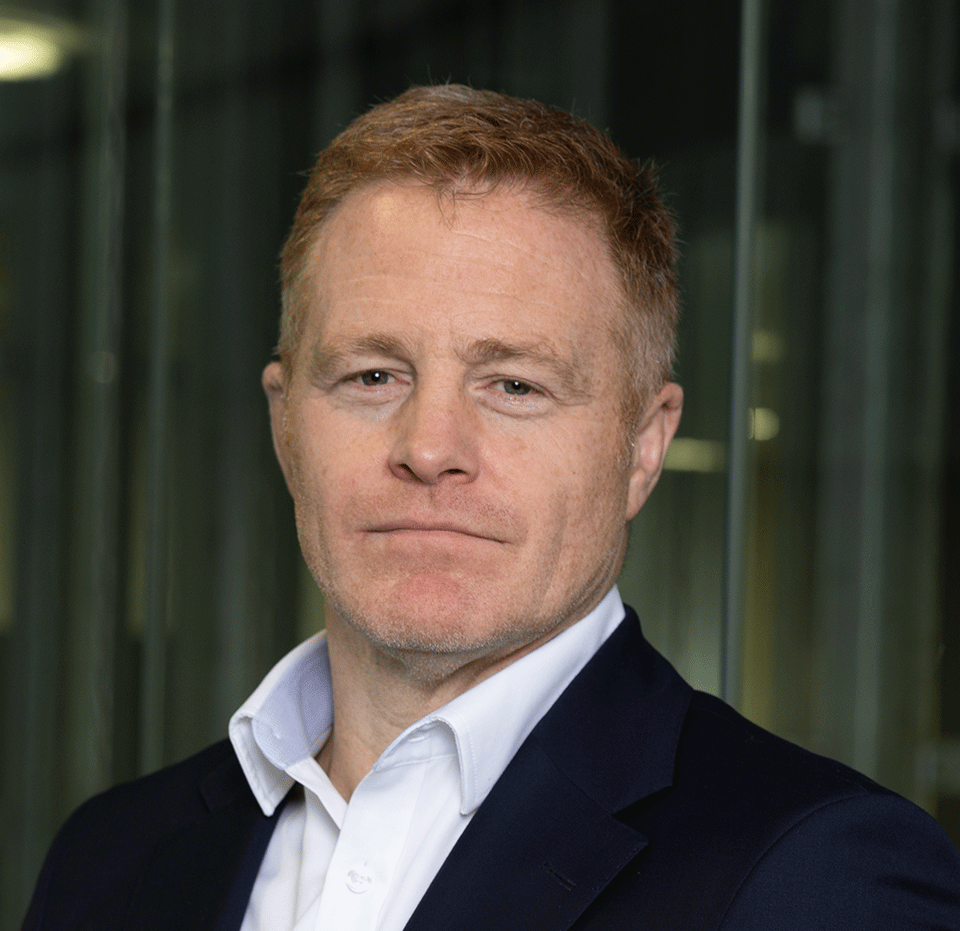
| Wee Ee Cheong |
Dennis Khoo, head of regional digital bank and digital banking, said it would be differentiated by a focus on customer engagement, which means that rather than a focus on mass acquisition of new clients, it would seek only those who would actually transact.
That’s easier said than done: UOB will not feature in our digital awards category until it can demonstrate that it can deliver. But the statement of intent was clear.
A partnership with Grab, announced in November, was an intriguing tie-up with a company that many think threatens the banks at the low-end, retail level. Then in February, UOB took the first step with that digital bank: it opened in Thailand, under the name TMRW. Euromoney has visited the operations in Bangkok; there is a buzz about them.
Perhaps the transformation has a deeper underlying resonance, as chairman emeritus Wee Cho Yaw, now 90, gradually steps into retirement and his son Wee Ee Cheong, already 12 years into the chief executive job, takes on more control. Whatever the reason, a transformation this ambitious cannot have been easy to undertake. It will be fascinating to see it develop.