Awards for Excellence 2019
|
|
| View full 2019 results |

When Andreas Treichl steps down as chief executive of Erste Group in December, it will mark the end of an era in more ways than one.
Not only has he been at the head of the Austrian group for an astonishing 22 years – longer than any other big European bank chief executive in recent history – he is also one of the last direct links to the heady decade after the fall of the Berlin Wall, when emerging Europe was a land of opportunity for bankers from the west.
The bank he leaves is very different from the one he took over in 1997. Back then, Erste was a traditional Austrian savings bank owned by a venerable foundation, with a staff of around 3,000 and a small footprint in central Europe. Today it is a listed company with subsidiaries in six countries in central and southeastern Europe, more than 16 million customers and 47,400 employees.
|
|
|
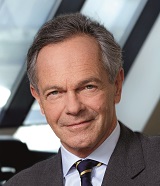
Andreas Treichl |
The first challenge for Treichl after his appointment was taking Erste public, which was completed in November 1997 in the largest listing in Austrian history. That set the stage for an expansion spree in central and eastern Europe, which kicked off in earnest in 2000 with big acquisitions in the Czech Republic and Slovakia. These proved so successful that Erste was emboldened to move further afield into Serbia, Romania and Ukraine.
The group’s eastern journey differed from those of domestic rivals Raiffeisen and Bank Austria. Instead of starting with corporate business, facilitating trade with the former communist bloc and helping western firms enter new markets, Treichl focused on providing retail banking to the region’s rising middle class.
For 10 years after its IPO, this strategy paid handsome dividends: profits hit new highs every year and Erste became a darling of emerging market investors, trading at close to three times book value.
As with so many bigger bets of the period though, some of Treichl’s subsequently turned sour.
The €3.5 billion Erste paid for a 62% stake in Romanian market leader BCR in 2006 looked optimistic at the time and excessive after the financial crisis revealed the endemic weakness of its corporate loan book. Joining in the foreign currency mortgage feeding frenzy in Hungary also proved ill-advised with the benefit of hindsight, as did a tentative venture into Ukraine.
But if Treichl was not immune to the irrational exuberance of the pre-crisis era, he was also proactive and effective in dealing with its aftermath. Costs were cut, tough decisions were taken – including a prompt and timely exit from Ukraine – and Erste was refocused on its core business.
Recovery proved a slightly more protracted process than originally anticipated, but the hard work of Treichl and his team – with a little help from increasingly buoyant economic conditions across CEE – eventually paid off.
By 2016 all Erste’s subsidiaries were back in the black, while overall return on equity reached 11.4%, the highest level since 2007. Last year, despite a continuing squeeze on net interest margins, ROE was up to 13.5%, while robust loan growth of 7% reduced the non-performing loan ratio to 3.2%.
The other important legacy of Treichl’s last years at Erste is a renewed focus on financial inclusion
Erste is also reaping the benefit of Treichl’s far-sighted digital strategy. As early as 2012, he was already floating plans for a ground-breaking, pan-regional banking platform. Eventually launched as George to wide acclaim in Austria in 2015, it is currently being rolled out across Erste’s CEE network.
So successful has it been, indeed, that the group is considering deploying George as a standalone platform to enter new markets in western Europe.
Also in 2012, Treichl commissioned the building of a new €300 million headquarters for Erste in Vienna’s new business district, Quartier Belvedere, to replace its unwieldy network of cramped and impractical offices across the city.
The other important legacy of Treichl’s last years at Erste is a renewed focus on financial inclusion. In 2016, the group launched an ambitious social banking programme, combining existing initiatives across its network into a new business unit and laying out a new strategy for future development.
The idea was to return to Erste’s 19th century roots as a provider of financial services to Austria’s unbanked to promote prosperity across its seven-country network, with a particular emphasis on populations in emerging Europe left behind during the transition to a market economy.
The programme – which must be financially self-sustaining – covers everything from microfinance lending and support for first-time entrepreneurs to Roma housing projects and funding for NGOs. It is backed by the charitable Erste Foundation, the bank’s biggest shareholder, where Treichl takes up the post of chairman next year.
The choice of Treichl as Euromoney’s banker of the year for 2019 recognizes his outstanding contribution to the development in banking in emerging Europe, his successful restructuring of Erste in the post-crisis period and his commitment to financial inclusion.