|
| © 2019 Euromoney |
| Regional awards |
| View full 2019 results |


 |
AlbaniaBest bank: Banka Kombetare Tregtare |
Declining non-performing loan ratios and a reviving economy set the stage for a flurry of M&A activity in the Albanian banking sector last year as international shareholders – including Piraeus Bank, National Bank of Greece and Société Générale – took advantage of improved valuations to exit the market. Local buyers took up some of the slack, but the sales also attracted two new players from within the region, Komercijalna Banka from neighbouring North Macedonia and Hungary’s OTP.
At the top of the market, however, there was little change. Number two player Raiffeisen Bank posted another good set of numbers and made healthy progress on digitalization – including implementing Albania’s first cloud-based banking systems – but the standout performer was market leader Banka Kombetare Tregtare (BKT), the winner of this year’s award for Albania’s best bank.
The Turkish-owned lender put more clear water between itself and the chasing pack in 2018, growing its balance sheet by 7.7% and taking its market share by total assets to just under 30% – nearly double Raiffeisen Bank’s 15.1%. BKT’s profitability metrics were equally impressive. Despite a slight decline in net profit due to extra provisioning under IFRS9 accounting standards, the bank posted a return on equity of 18.7% and a return on assets of 1.9%.
Some of the profits will be paid to owner Calik Holding as dividends, but BKT is also looking to put its cash to work outside its current markets of Albania and Kosovo, as well as continuing its investment in digitalization. Last year saw the implementation of upgrades to BKT’s mobile banking application and ATM network, while the budget for digital transformation and fintech cooperation in 2019 has been doubled.
Meanwhile the bank’s fundamentals remained sound. At the end of December, its capital adequacy ratio stood at a comfortable 17.5%, while non-performing loans were down 0.5 percentage points from a year earlier at a sector-beating 4.4% of total book.
 |
ArmeniaBest bank: Ameriabank |
Ameriabank wins the award for Armenia’s best bank again this year by virtue of its superior profitability, impressive growth and commitment to innovation. In 2018, the Armenian market leader boosted its bottom-line results by 37.3% to Dram10.5 billion ($21.9 million), giving a return on average equity of 12.6%.
Growth was strong but balanced, with overall loans increasing by 15.2% and deposits by 13.5%, and was underpinned by a 28.4% expansion of the bank’s equity base. That in turn drove a two percentage point increase in the tier-1 capital ratio to 10.8%. Asset quality deteriorated slightly during the year, but a non-performing loan ratio of 3.3% at the end of December was still among the best in sector and coverage was healthy at 89%.
|
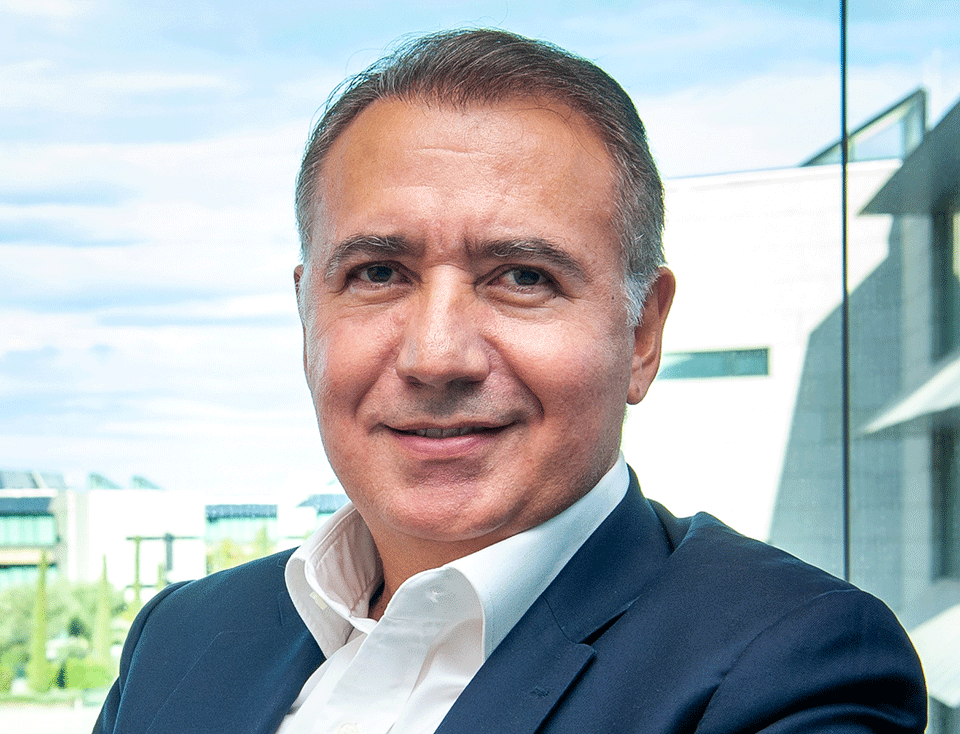
Artak Hanesyan, Ameriabank |
Under the leadership of chief executive Artak Hanesyan, Ameriabank has long been the partner of choice for international development entities operating in Armenia, and last year it cemented this position, entering new initiatives with a diverse range of institutions including the Eurasian Development Bank, the Netherlands’ FMO, the Global Climate Change Partnership Fund and responsAbility Investments.
The bank also signed an agreement with the Asian Development Bank (ADB) for an equity investment of $30 million, marking the ADB’s first such venture in Armenia. Ameriabank also became the country’s first recipient of funding from the EBRD’s Green Economy Financing Facility.
On the digital side, Ameriabank continued to impress, with launches last year including online credit scoring for individuals, online account opening and Armenia’s first contactless Visa PaySticker offering. This helped drive a 59% increase in online banking transactions over the course of 2018, while a parallel focus on the point-of-sale market saw payment terminal transactions increase by more than 13 times.
 |
AzerbaijanBest bank: International Bank of Azerbaijan |
It is just over two years since International Bank of Azerbaijan (IBA), Azerbaijan’s best bank, stunned markets by announcing plans to restructure $3.3 billion worth of debt. Since then, the state-owned lender has made a lot of progress in addressing the issues that led to a catastrophic decline in asset quality following double devaluations of the manat in 2015.
Senior managers have been replaced – chief executive Abbas Ibrahimov joined the bank in 2017 as first deputy chairman and stepped up to the top job in December – and a new risk management department has been created. IBA is also working with the EBRD to further enhance corporate governance standards ahead of a proposed privatization.
In the meantime, the bank’s metrics have improved dramatically following the debt restructuring, the transfer of nearly $8 billion of distressed assets to a state bad bank and a recapitalization by the government. Return on equity hit 40.4% in 2018 on the back of a 7.8% increase in outstanding loans, as IBA began to rebuild relationships with large corporates, made its first forays into the small and medium-sized enterprise market and streamlined processes for retail borrowers.
Last year also saw the bank boost its capital adequacy ratio by 15 percentage points to 32%, while a tier-1 ratio of 20% at the end of December offered ample scope for further growth. IBA is the largest bank in Azerbaijan by total assets, with a market share of 27%, and has a retail customer base of 1.3 million.
 |
BelarusBest bank: Alfa-Bank Belarus |
Foreign-owned banks continue to set the pace in Belarus, with Raiffeisen subsidiary Priorbank moving up to the number five spot on the back of a 21.7% increase in net assets and easily outperforming larger state-owned rivals with a pre-tax return on equity of 26.3%. This year, however, it is Alfa-Bank Belarus that wins the award as the country’s best bank by virtue of its rapidly improving metrics and impressive mobile-led growth.
In 2018, the lender – which is owned by Luxembourg-based ABH Holdings, part of Mikhail Fridman’s Alfa-Group – recorded the fastest growth among the top 10 banks in Belarus, expanding its balance sheet by 35%. This was partly achieved via the purchase of Home Credit’s Belarusian operation, which closed last June, but primarily through organic growth driven by a pioneering mobile-first digital transformation strategy.
In the 12 months to the end of March, enhancements to Alfa-Bank’s mobile app, InSync, included remote account opening, video-selfie authentication for loan applications and a unique seven-second credit-scoring mechanism.
As a result, the number of monthly active users of the app and financial transactions performed through it doubled last year – to 180,000 and one million respectively – while mobile penetration of the bank’s customer base increased to 57%. Mobile banking also accounted for 15% of monthly loan sales and 60% of monthly deposit sales.
Other digital milestones in the awards period included the launch of a web portal, Alfa-Developer Hub, as part of the bank’s open application interface (API) initiative, the introduction of a co-branded loyalty card with Alibaba subsidiary AliExpress and the addition of Alfa-Clients Club10, a platform for offering goods and services between customers, to Alfa-Bank’s growing small and medium-sized business and business ecosystem.
 |
Bosnia and HerzegovinaBest bank: Raiffeisen Bank |
Both of Bosnia’s leading lenders posted record bottom line results last year despite pressure on margins. Market leader UniCredit again had the edge in terms of lending growth, expanding its portfolio by 10.3% in the 12 months to the end of December, but for a second year in succession Raiffeisen Bank’s superior profitability and track record on innovation earned the number two player the award as Bosnia’s best bank.
The Austrian subsidiary, which has a market share by total assets of 14.8% compared with UniCredit’s 25.6%, boosted its return on equity by 1.1 percentage points in 2018 to an impressive 16%. The bank’s non-performing loan ratio remained below the sector average – and the level recorded by UniCredit – at 7% of the total, while a fully loaded common equity tier-1 (CET1) ratio of 11.7% provided a comfortable capital cushion.
Notable growth areas included retail lending, which saw an 8% increase in the outstanding portfolio last year, and the point-of-sale segment, where merchant turnover and fees were up 13.5% and 10.4% respectively.
In terms of technology, advances during the awards period included the introduction of Bosnia’s first mobile payments service, a digital makeover of the bank’s branch network and the introduction of new facilities for small and medium-sized business customers. Raiffeisen Bank also redesigned its website and improved the online application process for products and services.
 |
BulgariaBest bank: Raiffeisenbank |
Bulgaria’s banking sector remains one of the most dynamic in central and eastern Europe, with consolidation reshaping the competitive landscape and a clutch of credible contenders lining up to take on long-standing market leader UniCredit Bulbank.
United Bulgarian Bank has jumped into third place since its acquisition in 2017 by KBC and subsequent merger with the Belgian group’s existing subsidiary, while the position of number two player DSK Bank – part of Hungary’s OTP Group – will be strengthened by the acquisition of SG Expressbank from Société Générale.
The standout performer of last year, however, and the winner of the award for Bulgaria’s best bank is Raiffeisenbank. Ranked sixth by total assets, the Austrian subsidiary easily outperformed its larger rivals on profitability and growth, as well as continuing to make the running on digitalization.
By the end of December, the bank’s market share of overall lending stood at 8.2%, a 0.5 percentage point increase from a year earlier. Loan growth of 14.6% was well balanced across segments, with the corporate and retail loan portfolios expanding by 16% and 15% respectively. Even faster growth was recorded in the microfinance segment, where outstanding loans increased by 19%.
This rapid expansion helped drive a further 1.5 percentage-point reduction in the bank’s non-performing loan ratio to 3%, while a parallel focus on the liability side of the balance sheet kept the loan-to-deposit ratio stable at 80%.
On the technology side, Raiffeisenbank enhanced its retail offering with the introduction of Bulgaria’s first end-to-end digital consumer loan for pre-approved customers, as well as upgrades to its mobile and online banking platforms. The eLoan product was devised by the local winner of Elevator Lab, Raiffeisen’s regional fintech initiative.
Last year also saw the Bulgarian operation migrate its entire banking card system to contactless technology.
 |
CroatiaBest bank: Zagrebacka Banka
|
The operating environment for Croatian banks remained mixed last year as strong GDP growth and increasing consumer confidence were offset by another round of large corporate defaults. Asset quality and profitability were among the weakest in southeastern Europe, with only the strongest lenders managing to post double-digit returns on equity.
Leading this cohort was Zagrebacka Banka, Croatia’s best bank, which last year nearly doubled its net profit to K2 billion ($310 million). That translated into a sector-beating return on equity of 11.6%, 6.4 percentage points up on 2017. At 11.1% of outstanding loans, non-performing loans were high by regional standards but in line with peers, while a capital adequacy ratio of 21.3% was well above the regulatory minimum.
|
|
|
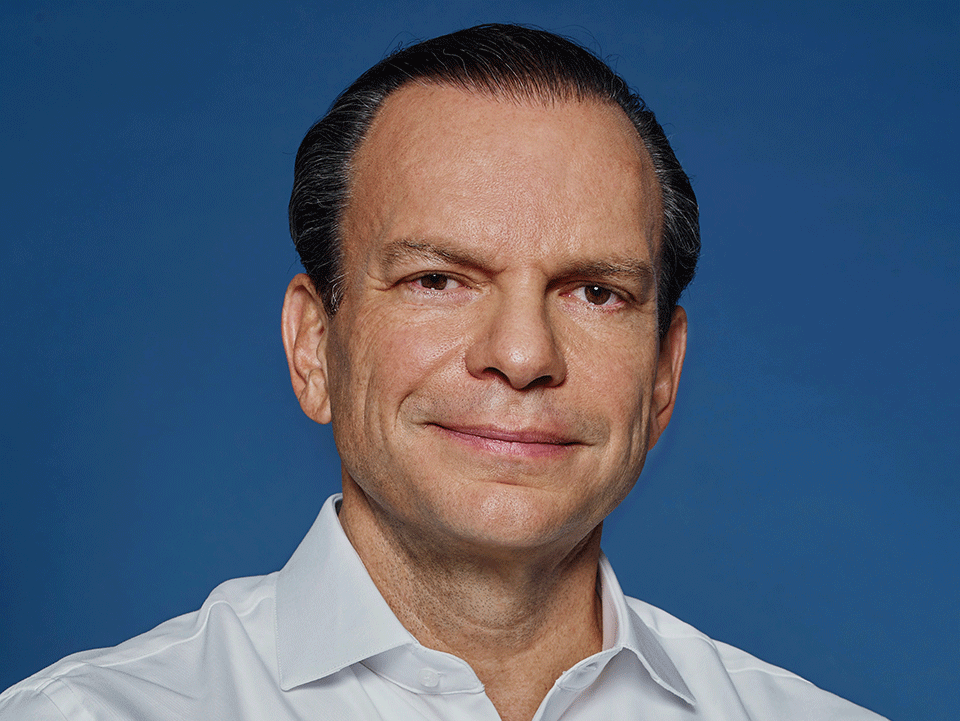
Miljenko Zivaljic, Zagrebacka Banka |
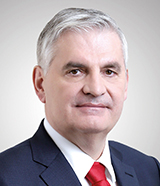
Zagrebacka Banka also made notable progress on digitalization last year, boosting mobile banking transactions by 41% and introducing an electronic wallet service. The bank followed up at the start of this year by signing a ground-breaking agreement with telecoms operator Hrvatski Telekom to cooperate on and distribute a new digital banking service.
Part of the UniCredit Group, Zagrebacka Banka is the largest bank in Croatia with a market share of 27.3% by total assets at the end of 2018. It has been led by chief executive Miljenko Zivaljic since 2015.
This year’s best investment bank in Croatia is growing regional player InterCapital Securities. Headquartered in Zagreb, the firm is the largest equity broker on the local stock exchange and dominates OTC bond trading in Croatia, as well as covering the capital markets of Slovenia, Romania, Serbia, Bosnia and Bulgaria. It is also the advisory partner of choice for a large cohort of leading corporates in its home market.
Notable mandates during the awards period included advising Croatian energy firm Crodux on the final stages of its takeover of oil and gas distributor Tankerkomerc; acting as financial adviser to shipping firm Palumbo Group on its purchase of a stake in Croatian shipyard Viktor Lenac via a public offer; and arranging a capital increase for leading local confectionery manufacturer Kras.
InterCapital also worked with AlixPartners on the restructuring of Agrokor group and continued long-term share buyback programmes for Adris Grupa and Hrvatski Telekom.
 |
Czech RepublicBest bank: Ceskoslovenska Obchodni Banka |
Strong growth, best-in-class profitability and continuing progress on digitalization earn Ceskoslovenska Obchodni Banka (CSOB) the best bank award again this year.
The KBC subsidiary registered a dip in net income in 2018 from the previous year’s high of Kc17.5 billion ($772 million), which was flattered by one-offs, but still easily outperformed its market peers on profitability with a return on equity of 17.5%.
Operating income remained flat year on year as the effect of a higher base in 2017 was offset by a sector-beating 14.6% rise in net interest income. This was supported by the highest net interest margin among the three largest Czech banks: 3.1% versus 2.7% for market leader Ceska Sporitelna and 2.3% for number three player Komercni Banka.
CSOB’s bottom line result was all the more impressive in light of a 9% rise in operating expenses, partly due to a rising wage bill in the increasingly tight Czech labour market but primarily to investment in innovation.
That investment included the acquisition in April 2018 of Usetreno.cz, Czech Republic’s largest comparator website, as well as the launch of an upgraded version of the bank’s Smartbanking app – including biometric technology – and the introduction of an online transcription service for hearing-impaired users of its helpline.
Take-up of digital services also remained strong, with users of CSOB’s mobile banking app increasing 25% in 2018 and mobile transactions rising by 38.9%. This in turn contributed to healthy growth of the bank’s loan portfolio, which expanded by 5% last year. Asset quality remained excellent, however, with non-performing loans accounting for just 2.4% of the total at year-end. Capitalization was also high – at the end of December CSOB’s total capital ratio stood at 18%.
 |
EstoniaBest bank: LHV Bank |
Estonia’s leading lenders failed to impress in the current awards period. Number two player SEB Pank may not have been caught up in the money-laundering scandals that engulfed market leader Swedbank and smaller rival Danske Bank, but it saw profitability eroded as the squeeze on margins continued.
Meanwhile Luminor, the lender created by combining the Baltic businesses of Nordea and DNB, was still in the throes of restructuring and integration. The award for Estonia’s best bank therefore goes again to home-grown digital challenger LHV Bank, which last year maintained its recent track record of stellar growth and impressive profitability.
The Tallinn-based bank saw net profit jump by 22.5% to €27.2 million in 2018, exceeding financial forecasts by €1.1 million and making for a return on equity of 19%. Outstanding loans increased by 27.6%, driven mainly by growth in the corporate and mortgage portfolios. LHV Bank’s ability to gain traction among larger Estonian and regional firms was enhanced last year by the addition of trade financing products to its corporate offering and by securing a Baa1 credit rating from Moody’s in December.
On the retail side, a focus on housing loans in larger cities drove a 78.2% increase in outstanding lending to the segment, while an account package launched in August targeted sophisticated younger customers with an offer comprising a youth card, student loan and micro-investment service.
Other innovation highlights included the implementation of an e-identification service allowing remote account opening, while the sale of a €20 million subordinated bond issue in December reinforced LHV’s capital base and provided a firm platform for future growth.
 |
GeorgiaBest bank: TBC Bank |
Another year of outstanding results earn TBC Bank the country award for Georgia for the sixth year in succession. In 2018, the FTSE250 lender again leveraged its market dominance and technological superiority to extend its lead over closest rival Bank of Georgia.
Lending rose by 21.3% in the 12 months to the end of December, boosting the bank’s market share by 0.6 percentage points to 38.8%. This was balanced by a 19.6% increase in deposits, maintaining TBC Bank’s commitment to a diversified funding structure.
|
|
|
Vakhtang Butskhrikidze, TBC Bank |
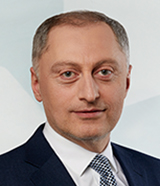
Profitability was equally impressive, with return on equity for the year coming in at 22.8% on the back of a 0.4 percentage point increase in net interest margins (to 6.9%) and 25.1% growth in net fee and commission income. The latter was driven by a jump in the number of active cards and point-of-sale terminals, by 17.8% and 15% respectively, as well as by a rise in income from payments subsidiary TBC Pay and affluent retail offering TBC Status.
Combined with increased front- and back-office automation and efficiency improvements from digitalization, this contributed to a 3.9 percentage point fall in the cost-to-income ratio to 37.8% despite some large further investments in technology.
Last year saw the launch of Georgia’s first fully digital bank, Space, which was developed in-house by TBC in just 15 months.
Under the leadership of chief executive Vakhtang Butskhrikidze, the bank also began work on digital ecosystems designed to deepen relationships with customers and enhance its value proposition by buying Georgian online discounter Swoop, acquiring online real estate platform Allproperty.ge and developing an e-commerce marketplace through digital trading platform Vendoo.
At the same time, the bank maintained strong fundamentals. non-performing loans accounted for just 3.1% of total loans at the end of December, while a tier-1 capital ratio of 12.8% was comfortably above the regulatory minimum.
 |
HungaryBest bank: K&H Bank |
K&H Bank wins the award as Hungary’s best bank this year by virtue of its superior profitability and dynamic approach to digital transformation. The Hungarian number two – part of the KBC Group – easily outperformed peers last year with a return on equity of 20.9%. This was flattered by exceptional gains from property and financial instruments transactions, but even excluding these one-offs net profit rose 28% year-on-year to Ft53.6 billion ($187 million).
Operating income was up by 10.7% on the back of increases in net interest income and fee income of 3.3% and 11.4% respectively, while the loan portfolio expanded by 7%. This was balanced by a 4.3% increase in deposits and contributed to a 1.3 percentage point reduction in non-performing loans to 5.8% of total loans at the end of December.
A customer acquisition drive also paid off, with regular income transfer clients increasing by 7.1% and 4,000 new business clients signing up during the year. Meanwhile the digitalization of K&H Bank’s customer operations proceeded apace. A 212-strong network of cash-in ATMs – the largest in Hungary – enabled the lender to remove tellers from 44 branches and refocus staff on advisory services.
K&H Bank also broke new ground last year with the launch of a fully digitalized, robot-operated cash loan service. The result of collaboration with a fintech firm, the facility provides disbursement in 30 minutes even for new clients, a unique service in the Hungarian market. This contributed to a 66% increase in active mobile users in the 12 months to the end of December.
On the corporate side, highlights last year included financing head office developments for two of Hungary’s largest companies, as well as Ft50 billion-worth of solar energy projects and the introduction of K&H Trade Club.
 |
KazakhstanBest bank: Halyk Bank
|
Following the takeover of larger rival Kazkommertsbank (KKB) in 2017, Halyk Bank has firmly established itself as the dominant force in Kazakh banking and is a clear winner of this year’s best bank award. The new national champion, which has a market share of between 30% and 50% across all segments and nearly all business lines, delivered outstanding results in 2018.
Despite undertaking the integration of KKB in the second half of the year, which contributed to a 22.2% increase in operating expenses, Halyk Bank increased its annual return on average equity by 5.2 percentage points to 27.9%. A flight to quality on the part of Kazakh depositors following a succession of bank failures, combined with a reduction in the cap on deposit interest rates, helped by giving Halyk a ready supply of low-cost liquidity to invest in higher-yielding local government bonds.
The bank’s loan-to-deposit ratio fell to 53.9% at the end of December despite a 7.1% expansion of the loan portfolio in the previous 12 months, contributing to a 40.1% jump in net interest income. Growth in net fee and commission income was also healthy, however, at 29.2%. The strong performance was maintained in the first quarter of this year, when Halyk posted a 26.8% return on average equity on the back of a 20.1% year-on-year rise in net income.
Asset quality was a slight concern, with non-performing loans rising to 9.1% of the total by the end of March, but a common equity tier-1 ratio of 19.5% provided a comfortable cushion against further deterioration. A two percentage point year-on-year decline in the ratio of loans counted as stage 2 under IFRS9 – to 3.1% – was also a positive indicator.
Meanwhile digital development continued apace at Halyk during the merger period, as evidenced by the launch of QR code payments in September and Apple Pay in November. By the end of December, the bank boasted 2.5 million active retail users of its digital platforms and 116,000 business users.
The award for Kazakhstan’s best investment bank goes to Tengri Capital for its contribution to the development of the country’s local currency bond market. In July 2018, the Almaty-based firm broke new ground with the placement of KT8.5 billion ($22 million) of notes for the IFC, the first ever on the Kazakhstan Stock Exchange by a triple-A rated institution.
Tengri Capital not only led and underwrote the deal but was also instrumental in securing adjustments to local legislation beforehand to enable the bonds to be settled through the local depository system and to ensure their inclusion as eligible collateral for the National Bank of Kazakhstan’s discount repo window.
The issue was warmly welcomed by local banks and investors looking to diversify away from Kazakh government bonds, as well as by international financial institutions keen to expand their operations in Kazakhstan and avoid currency mismatches. It was followed by a further two deals from the IFC, as well as two each from the Asian Development Bank and the EBRD, all of which were led by Tengri Capital.
The firm was also active in the private sector during the awards period, advising KazMunayGas on the sale of its downstream retail petrol station network business and acting as local lead arranger and financial adviser on a secondary listing in London and Almaty for leading emerging vanadium producer Ferro-Alloy Resources.
Formerly known as Visor Capital, Tengri Capital has been a big player in Kazakh investment banking since 2004. The firm, which is also the leading brokerage house in Kazakhstan, was bought and rebranded by regional private equity firm Tengri Partners in 2016.
 |
KosovoBest bank: Raiffeisen Bank |
A rapidly expanding economy and rising consumer demand provided ample scope for growth for banks in Kosovo last year. Market leader Raiffeisen Bank, Kosovo’s best bank, took advantage of this fertile operating environment to expand its loan book by 11%. At the same time, a strategic reduction in the Austrian subsidiary’s deposit base by 0.9% ensured a loan-to-deposit ratio of above 80% at the end of December.
The rapid growth in the bank’s loan book contributed to a sharp decline in its non-performing loan ratio, which fell by two percentage points during 2018 to 3.2%, as well as to a 2.6 percentage point increase in pre-tax return on equity to 20.6%.
Raiffeisen Bank also notched notable gains in its drive to increase the uptake of multichannel services. A branch transformation programme and a range of awareness campaigns helped drive a 20% increase in e-banking transactions in 2018 and a 36% increase in active users of mobile banking.
Transactions performed via ATMs rose 18% year on year, while point-of-sale transactions were up 28%.
Meanwhile the volume of digitally initiated sales was six times higher than in 2017. Raiffeisen Bank also lived up to a reputation for innovation, supporting local fintech players through the Austrian group’s Elevator Lab initiative and establishing a competence centre in Kosovo that provides services to other group members in areas including data, digital technologies and business platform management.
 |
KyrgyzstanBest bank: DemirBank |
Once again, the standout performer in the Kyrgyz market last year was market leader DemirBank, which wins the best bank award by virtue of its impressive profitability and outstanding progress on digitalization. In 2018, the Turkish-owned lender notched a return on equity of 23.4%, up 6.7 percentage points on the previous year, on the back of a 67% increase in net profit.
This sector-beating result was primarily driven by rising income from the bank’s loan portfolio, which expanded by 18.4% in the 12 months to the end of December. At the same time, the net interest margin increased by 0.9 percentage points to 6.8%. Asset quality remained strong, however, with non-performing loans accounting for just 1.6% of the total at year-end, while a loan-to-deposit ratio of 49.6% offered ample scope for further expansion.
Under the leadership of long-serving chief executive Sevki Sarilar, DemirBank also endorsed its reputation as the Kyrgyz banking sector’s innovation leader last year with the launch of a clutch of new digital products and services, including wireless point-of-sale terminals with contactless functionality, a new online banking interface for retail customers and mobile banking apps for both retail and corporate segments.
As a result, the number of active users of the bank’s digital channels jumped by 50% during the year. DemirBank also became the first Kyrgyz lender to accept digital payments on behalf of the state tax service and traffic police department.
 |
LatviaBest bank: SEB Banka |
The upheavals that shook the Latvian banking sector last year had little impact on SEB’s local subsidiary, which had steered clear of the non-resident business that brought down ABLV Bank and caused a radical restructuring of many of its peers. As a result, SEB Banka was able to maintain a track record of healthy profitability and digital leadership, making it a worthy winner of the award as Latvia’s best bank for the third year in succession.
Ranked third by total assets behind market leader Swedbank and newly merged entity Luminor, SEB Banka achieved a return on equity of 12.7% last year on the back of a 5% increase in net income.
Lending growth was muted, but the bank confirmed its leading position in the corporate segment with the signing in December of last year’s largest financial transaction in Latvia, a €130 million long-term financing for state-owned energy company Latvenergo.
Meanwhile in the digital sphere, notable launches in the awards period included a video-consultation service, a mobile app for companies and a QSCD-certified authentication app for smartphones.
SEB Banka also last year became one of the first banks in Latvia to introduce instant payments.
 |
LithuaniaBest bank: SEB Bankas |
The choice of SEB Bankas as Lithuania’s best bank recognizes the Swedish subsidiary’s consistent profitability and commitment to innovation.
Ranked second in Lithuania by total assets, with a balance sheet of €7.9 billion, SEB Bankas boosted return on equity by 1.4 percentage points last year to 14.1% on the back of a 10.5% increase in net profit. Combined with a digitally focused efficiency drive, this brought the lender’s cost-to-income ratio down to just 39%.
Overall loan issuance was slightly weaker than in 2018, largely due to a moderation in corporate demand.
New lending to retail clients was up 7.5% to €489 million, however, while net loans and leasing across all segments rose 10%. This was more than matched by strong growth in the bank’s deposit base, which expanded by 16.7%.
Meanwhile a focus on the development and improvement of multichannel services continued to produce results. By the end of December, SEB Bankas boasted more than half a million online banking customers and 200,000 active users of its mobile banking applications.
The number of card payments last year was 18% higher than in 2017, while the number of branches converted to financial advisory centres with self-service zones for cash transactions reached 26 out of a total of 29.
Digital highlights in 2018 included the launch of SEB Bankas’s open banking initiative, the integration of new functionalities in its mobile application and the introduction of a new app designed for businesses.
The lender was also one of the first in Lithuania to offer customers instant payments for euro-denominated transactions.
 |
MontenegroBest bank: NLB Banka |
Despite its tiny size, Montenegro remains a profitable and highly competitive banking market. The Balkan state’s largest lenders all posted strong results last year, with subsidiaries of both Société Générale and Slovenia’s NLB Group notching record net profits.
However, it is NLB Banka that wins the award for best bank in Montenegro thanks to its impressive growth, superior efficiency and progress on innovation.
Ranked fifth in Montenegro by total assets, with a market share of 11.1%, the lender more than doubled its return on equity to 14.9%.
This was driven partly by lower net impairments and provisions – non-performing loans fell 2.8 percentage points during the year to 5.2% – but also by rising revenues. Net interest income rose by 9.9% thanks to double-digit growth in retail lending, while non-interest income was up 12.9%.
A new ‘super-fast cash loan’ product, offering five-minute decision-making in-branch or via Viber, proved particularly popular with Montenegro’s retail borrowers.
On the corporate side, NLB Banka coordinated the first joint cross-border financing with its parent group for a real estate development project on the Montenegrin coast.
Combined with a 0.6% reduction in operating costs, the jump in net profit brought NLB Banka’s cost-to-income ratio down to a sector-beating 51.8%.
Capitalization meanwhile remained comfortable, with the overall capital adequacy ratio increasing by 1.3 percentage points in the 12 months to the end of December to 16.2%.
 |
North MacedoniaBest bank: NLB Banka Skopje |
Growing household consumption and increased government spending boosted North Macedonia’s GDP growth to 2.7% last year, after the economic stagnation of 2017.
This played to the strengths of leading retail lenders such as NLB Banka Skopje, the winner of this year’s best bank award.
The Slovenian subsidiary ranks number three in the sector by total assets, with a market share of 16.3%, but accounted for 21.1% of gross retail lending at the end of December.
This figure was boosted by sector-beating growth in the segment of 9.6% last year, contributing to an overall rise in outstanding customer loans of 7.8%.
Combined with increasing revenues from card operations, payment services and the sale of insurance products, this helped offset a 0.3 percentage point decline in net interest margin following a series of rate cuts by the Macedonian central bank.
NLB Banka Skopje’s bottom line result was flattered by a one-off capital gain from the sale of pension fund provider NLB Nov Penziski Fond in March, but a return on equity of 19.9% for 2018 impressed nonetheless.
The bank also lived up to a reputation for innovation, with launches last year including an electronic wallet, a loyalty programme and self-service branches.
 |
PolandBest bank: ING Bank Slaski
|
The reshaping of Poland’s banking landscape continued last year. BNP Paribas expanded its operations in the country via the acquisition of Raiffeisen Polbank, while Bank Zachodni WBK – now rebranded as Santander Bank Polska – overtook Bank Pekao to become the market number two after completing the integration of Deutsche Bank’s Polish retail and private banking operations in record time.
The Spanish subsidiary also ranked second in profitability last year despite the costs associated with the merger and rebranding processes, posting a return on equity of 11.9%. However, it was unable to match the performance of smaller rival ING Bank Slaski, which takes the best bank award for a second year in succession with a winning combination of organic growth, cost discipline and cutting-edge technology.
|
|
|
Brunon Bartkiewicz, ING Bank Slaski |

The Polish number five player grabbed market share in loans and deposits across all segments last year, boosting its share of corporate and retail lending by 0.86 percentage points and 0.7 percentage points respectively. Highlights included a 13.9% rise in retail credit volumes – boosted by a 27% jump in new mortgage lending – and a 13% rise in factoring sales. Net fee and commission income was also up by 9%, contributing to a sector-best return on equity of 12.5% for 2018. This in turn helped to knock another 0.3 percentage points off ING Bank Slaski’s already low cost-to-income ratio, which fell to 44.5%.
Under the leadership of president Brunon Bartkiewicz, the Dutch subsidiary also maintained its pre-eminence in innovation, making a ground-breaking move into Poland’s rapidly growing e-commerce market with the launch of Imoje, a payment gateway for online retailers.
Santander Bank Polska takes the award as Poland’s best investment bank because of its broad-based capital markets and advisory franchise. The lender’s corporate and investment banking unit boasts a customer base made up of nearly 250 of the largest companies and groups by turnover in Poland.
During the current awards period, it was the most consistent partner for Polish firms in the capital markets, ranking third by volume in Dealogic’s Eurobond bookrunner league tables and fourth for equity capital markets.
Notable mandates included PKO BP’s €100 million covered bond, Bank BGZ’s Zl800 million ($210 million) secondary equity placement and an accelerated bookbuild for mining equipment manufacturer Famur, as well as Santander Bank Polska’s own €500 million Eurobond in September. The bank was also well-represented on the advisory side, taking sixth place in Dealogic’s M&A league table during the awards period, and remained a market leader in syndicated lending.
 |
RomaniaBest bank: BCR |
Growth in the Romanian economy cooled last year after spiking at 7% in 2017, but at 4.1% it was still well above the European average. This rapid expansion was accompanied by returning inflationary pressures, prompting a series of rate hikes by the central bank that fed through into a welcome increase in net interest margins across the banking sector.
The rosy outlook for the industry was clouded at the end of last year by the announcement of plans for a steep bank tax, which knocked millions off the value of Romanian banks and groups with large operations in the country. While it was subsequently moderated, it seems unlikely that Romania’s banks will be able to replicate last year’s excellent results, which saw all the leading players post substantial increases in net interest income, as well as benefiting from the release of provisions.
National champion Banca Transilvania again outperformed its closest rivals, notching a return on equity of 17.2% for the year, but it was occupied for much of last year in absorbing Bancpost, which it bought from Eurobank in April 2018. This year’s award for best bank goes instead to BCR in recognition of its solid financials and market-leading innovation.
The Erste subsidiary was relegated to second place last year in terms of total loans and deposits following Banca Transilvania’s integration of Bancpost but retained its leadership in the fast-growing mortgage segment, accounting for 25% of lending under the government-guaranteed Prima Casa programme. This contributed to a 6% expansion of the bank’s overall loan portfolio, which in turn helped reduce its non-performing loan ratio by a further 2.3 percentage points to 5.8%.
Growth in retail lending was also the main driver of a 7.9% increase in net interest income, which boosted return on allocated capital by 4.9 percentage points to 17.4%. Last year also saw the arrival in Romania of Erste’s ground-breaking George digital banking platform. Launched in October, the platform enrolled more than 100,000 customers in the first month, contributing to more than 30% growth in the number of active digital customers at BCR last year.
 |
RussiaBest bank: Sovcombank
|
Low interest rates and returning consumer confidence created a fertile environment for Russia’s retail lenders last year. The winner of the award for Russia’s best bank, Sovcombank, took full advantage of this trend, expanding its retail loan portfolio by 39% in the 12 months to the end of December.
Unlike many leading rivals, however, the bank largely eschewed the increasingly popular unsecured loan segment and achieved its breakneck growth primarily through the sale of lower-risk mortgage and auto loans. Organic growth was muted on the corporate side, but Sovcombank nonetheless achieved a 20% increase in lending to the segment through the purchase and integration of small and medium-sized business specialist Rosevrobank. The merger, which was completed in November, boosted Sovcombank’s total assets by 40%, making it the third-largest privately owned lender in Russia. It also helped knock 150 basis points off Sovcombank’s cost of funding, thanks to Rosevrobank’s strong deposit base.
|
|
|
Dmitry Gusev, Sovcombank |
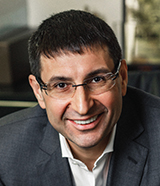
Retail lending remained the key driver of revenues and profitability for the combined entity last year, however, accounting for the majority of a 44% rise in net interest income. Return on equity for the segment came in at 38.1%, against 17.3% for the newly created Sovcombank Group under chief executive Dmitry Gusev. For core business lines alone, the figure was 23.2%. Asset quality remained stable and well above the sector average, with non-performing loans accounting for 1.8% of the total at the end of December.
The group’s rapid growth was also underpinned by a 34% increase in equity. This came partly from retained profits and the placement of subordinated bonds, and partly from a $106 million investment in August by a consortium of sovereign wealth and public-sector funds as part of a pre-IPO funding round.
On the digital banking side, Sovcombank does not aspire to be an innovation leader in a competitive Russian market. Nevertheless, last year it was one of 12 lenders in the pilot phase of the central bank of Russia’s faster payments system, which allows individuals to make money transfers using only a mobile phone number.
It was also among one of the first banks in Russia to equip branches with biometric technology to enable customers to register in the central bank’s biometric ID system. Other technological advances in the awards period included the successful deployment of AI and machine-learning tools in Sovcombank’s four call centres.
Meanwhile for investment banks operating in Russia, conditions last year were much less favourable. The announcement of US sanctions on individual businessmen at the start of the current awards period in April 2018 effectively cut Russian entities off from international capital for several months, while aversion to emerging-market risk kept investors on the sidelines later in the year.
With flows dwindling to a trickle, even the largest Russian state-owned and global investment banks struggled to stand out. For independent players with no balance sheet leverage and without a dominant franchise in areas such as wealth management or transaction services to build on, the situation was even more challenging.
This makes the achievements of Renaissance Capital, Russia’s best investment, all the more impressive. The independent Russian firm secured mandates on a clutch of capital markets deals in the 12 months to the end of March, including Gazprom’s reopening of the dollar Eurobond market for Russian corporates in February, Evraz’s $350 million international issue in March and share buybacks for Magnit, Tinkoff Bank and MTS.
Renaissance Capital also built on its revitalized franchise in the domestic rouble bond market, leading transactions for issuers including Uralkali and Gazprom, as well as the first-ever consent solicitation for an international issuer – Kazakhstan Temir Zholy – on the Russian local market. Meanwhile, financial advisory mandates from MTS and Sistema demonstrated that efforts to gain traction on the M&A side were starting to pay off.
 |
SerbiaBest bank: UniCredit Serbia |
Widely seen as one of central and eastern Europe’s most promising growth markets, Serbia has become a focus of attention for regional banking groups in recent years. On the technology side, Raiffeisen has maintained an edge over its international rivals. The momentum player, however, and the winner of the best bank award, is UniCredit Serbia.
Last year, the Italian subsidiary overtook state-owned lender Komercijalna Banka to become the country’s number two player by total assets for the first time on the back of a balance-sheet expansion of 21%. Customer numbers also rose by just under 11%, while deposits and loans were up 18% and 11% respectively.
Growth was particularly strong in the retail segment, where outstanding loans increased by 16% on the back of a raft of new credit products for household and small business customers.
Non-lending business also showed impressive growth. Fee and commission income rose 19% year on year, driven by a 34% increase in payments and a 15% increase in financial services fees. This helped boost the bank’s net profit by 38% to RSD9.4 billion ($88.8 million), which translated into a return on equity of 12.6% and a sector-beating cost-to-income ratio of 39%.
Non-performing loans fell to 3.5% of the total by the end of December, down 2.2 percentage points from a year earlier, while a capital adequacy ratio of 19.9% provided a comfortable cushion against renewed deterioration.
UniCredit Serbia also made progress on digitalization, increasing the penetration of digital banking and mobile banking clients in its active client base to 36% and 26% respectively.
 |
SlovakiaBest bank: Slovenska Sporitelna |
A year of strong results and improvement across all key metrics earns Slovenska Sporitelna the award as Slovakia’s best bank. The market leader grew its balance sheet by a further 6.7% in 2018, mainly thanks to impressive growth of 19.8% in the corporate loan portfolio and a 50% rise in loans to small and medium-sized businesses. Housing loans increased by 8.3% and consumer loans by 4.8%, taking the Erste subsidiary’s share of total retail lending to 26.7%.
This rapid portfolio expansion helped shave a further 0.5 percentage points off the defaulted loans ratio, which fell to 3.3% by the end of the year, and was balanced by a 9.4% rise in deposits. Combined with continued pressure on margins, this capped growth in net interest income at 1%. Net fee and commission income rose 14.3% on the back of higher insurance brokerage and an increase in fees from lending and payments, contributing to a 12.2% jump in net profit to €184 million. Return on equity came in at a sector-beating 12.3%, up 1.4 percentage points from 2017, while the cost-to-income ratio fell to 48.3%.
In the digital space, Slovenska Sporitelna benefited last year from the roll-out in Slovakia of Erste’s ground-breaking pan-regional digital platform, George. Over the year, the bank managed the migration of more than one million clients to the new platform and saw the number of active mobile users more than double to over 250,000.
 |
SloveniaBest bank: NLB |
NLB wins the best bank award for a second year in succession on the back of another set of strong results in its home market and impressive progress on digitalization.
The Slovenian market leader leveraged its dominant position in retail last year to grow outstanding loans to the segment by 6%, giving it a market share at the end of December of 23.2%. As a result, net interest income from retail rose 9% despite a continuing low interest-rate environment.
On the corporate side, overall lending contracted by 8% as loans to mid-sized and large firms matured and syndicated loans were repaid. A focus on the higher-yielding small and medium-sized business segment paid off, however, with lending to SMEs increasing by 9%. Investment in technology also paid off, with take-up of online and mobile banking services rising to 34.6% and 27.4% respectively.
Digital highlights included a suite of upgrades to NLB’s retail and business mobile apps, including face-recognition technology and integrated video and chat support, and the launch of Slovenia’s first mobile electronic wallet.
Slovenia remains the largest market in NLB’s six-country Balkan network, accounting for 69.2% of total group assets of €12.7 billion at the end of December. Last year was a watershed for the group, which was privatized in November via a listing in Ljubljana and London, and finally saw the lifting of restrictions imposed by the European Commission following its bailout in 2013.
 |
TurkeyBest bank: Akbank
|
There was little to choose between Turkey’s largest private-sector lenders during the awards period in terms of profitability. Isbank posted a return on average tangible equity of 15.5% for 2018 against Akbank’s return on equity of 13.6%, while for the first quarter of this year the figures were 11.6% and 12.3% respectively.
Despite a proactive approach to balance-sheet management by Isbank, however, Akbank maintained an edge in asset quality and capitalization. At the end of March, Akbank’s non-performing loan ratio of 4.1% was one percentage point below that of its larger rival, while a tier-1 ratio of 13.8% provided a stronger defence against further volatility in the Turkish market than Isbank’s 13.4%.
Combined with a hugely successful mobile-first digitalization strategy, these solid fundamentals make Akbank a worthy winner of the best bank award. In 2018, the bank responded promptly to weakness in the Turkish lira, reducing its sensitivity to currency movements by deleveraging its FX loan book and reducing holdings of non-lira securities. At the same time, Akbank maintained a breath-taking pace of innovation, investing $250 million last year in technology and digitalization.
|
|
|
Mahmut Unlu, Unlu & Co |

If Turkey’s leading commercial banks remained resilient last year, however, market volatility took a toll on their investment banking counterparts. Deal flow slowed to a trickle as both foreign direct investors and fund managers took fright.
Of the international players active in Turkey, the strongest performer across business lines during the awards period was Citi. However, the award for Turkey’s best investment bank this year goes to local independent firm Unlu & Co, which – under the leadership of founder and chairman Mahmut Unlu – demonstrated the strength of its advisory franchise and markets coverage by winning mandates on a clutch of landmark M&A and capital markets transactions.
These included the $450 million IPO of Sok Marketler, the €360 million acquisition of a stake in airport operator ICF Antalya by TAV Airports and the first-ever convertible corporate bond issue in the Turkish market.
Unlu & Co also expanded its international presence during the awards period, adding an on-the-ground presence in London to its offices in New York and Singapore as part of a drive to develop new markets for Turkish debt.
 |
UkraineBest bank: Raiffeisen Bank Aval |
Another year of strong growth, outstanding profitability and dramatic improvement in asset quality earn Raiffeisen Bank Aval the best bank award again this year.
The Austrian subsidiary posted a record net profit of Hrn5.1 billion ($194 million) for 2018, up 14% on the previous year, on the back of growth of close to 30% in its performing loan portfolio and the release of provisions.
Corporate borrowing accounted for the majority of the portfolio expansion, but reviving retail credit demand also showed in a Hrn2.8 billion increase in lending to the segment. Meanwhile renewed efforts to tackle legacy bad debts resulted in a Hrn3 billion reduction in the non-performing loan portfolio, bringing the NPL ratio down by 8.8 percentage points to 10% by the end of December. Loan growth was balanced by an 11.6% increase in deposits, while a capital adequacy ratio of 19% provided a comfortable cushion against renewed market volatility.
Raiffeisen Bank Aval also maintained impressive progress on digitalization last year, updating its mobile banking application, launching a new online banking platform for retail clients and rolling out technological upgrades across its branch network.
Other innovations include the introduction of a business navigation facility for small and micro business clients, made up of a suite of business-oriented banking services from individual consulting and full business diagnostics to tailored long-term financial solutions for business development.
Raiffeisen Bank Aval is the largest private-sector bank in Ukraine, with a market share of 5.8% by total assets and 6.2% by customer liabilities.