|
|

It was yet another painful year for Deutsche Bank: 2018 began with an unscheduled warning that US tax changes announced at the end of 2017 would lead to an after-tax loss for the full year.
In February, the bank pre-announced that it would not meet its previous adjusted cost target of €22 billion for 2018 and that it was guiding now instead to €23 billion for the year. Reports soon emerged that supervisory board chairman Paul Achleitner was sounding out potential replacements for chief executive John Cryan.
In April, the man Achleitner himself had anointed just three years earlier as the chief executive to repair the broken institution left behind by Anshu Jain was unceremoniously ousted.
More management turmoil followed.
The IPO of DWS had meant to draw attention to a hidden jewel in the bank’s business portfolio and help retain its staff. But net new money slowed and the chief executive of that business was also replaced.
The global transaction bank, another supposed diamond, lost its sparkle, even as the cash management and payments businesses of other banks grew. The head was changed in October.
 |
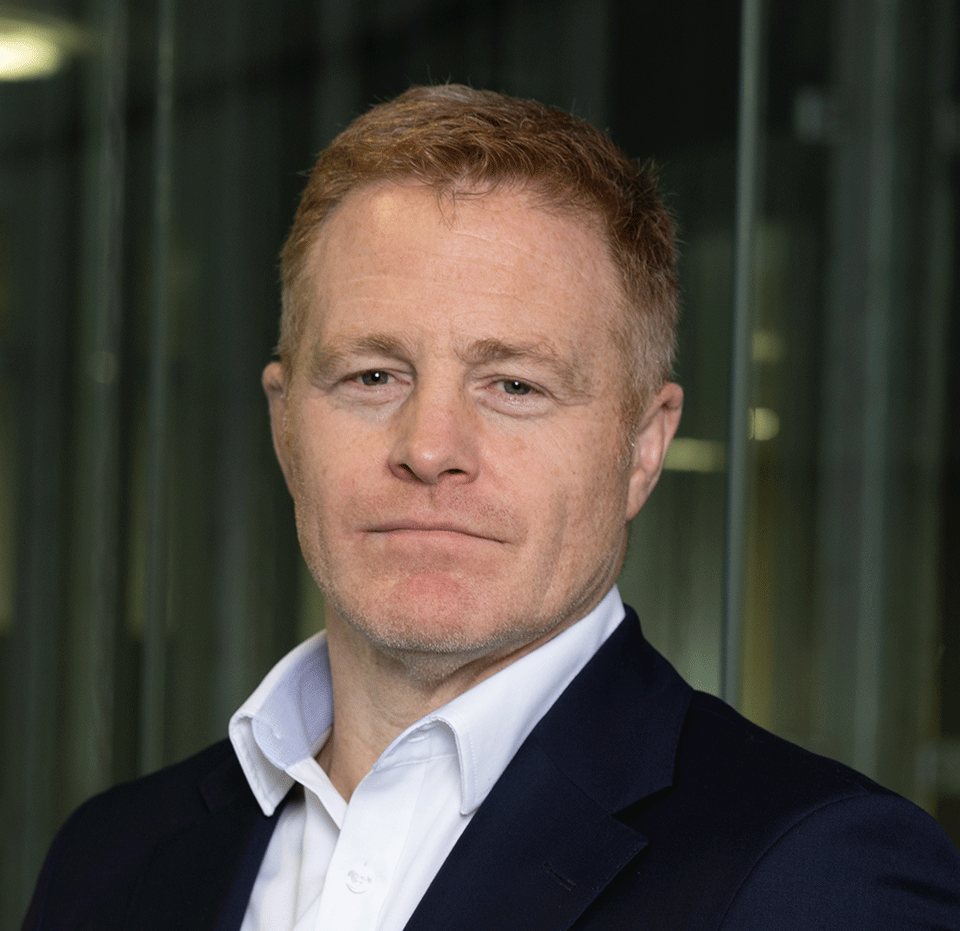
| James von Moltke |
The year ended with images of police vans drawn up outside Deutsche’s headquarters as the Frankfurt public prosecutor pursued allegations against two named – as well as further unnamed – employees of aiding and abetting money laundering. In the background lurk separate fears of what might eventually emerge from the bank’s role as a former correspondent of Danske Bank, itself now caught up in investigations into a $200 billion money-laundering operation through its Estonian branch.
In early December, the stock price was down at an historic low of just under €8, having halved over the course of the year. It has fallen by 30% since the appointment of Christian Sewing as chief executive to replace Cryan. Deutsche’s additional tier-1 (AT1) securities were trading at 83 cents on the euro in early December.
The still-new management team needs to establish some credibility by setting targets and delivering on them.
“We are on track to achieve our €23 billion cost target for 2018 and the €22 billion target for 2019,” James von Moltke, chief financial officer, tells Euromoney. “We expect to retain revenues while still cutting costs.”
The battle this year will be to do much more than retain revenues. It will be to boost them substantially. This is now the most pressing concern not just for equity investors but even for creditors and rating agencies, who want to see a bank capable of generating some earnings to retain, even if it takes more risk to do so.
Deutsche has been extremely conservative in its capital and especially liquidity buffers, ever since the panic in 2016 over its ability to service AT1 coupons. Its last published number for liquidity reserves was €268 billion, mostly in cash.
“We think we can reduce the drag on the cash we have on deposit with the ECB over the next five quarters, and drive earnings up, by shifting some cash into yielding high-quality liquid assets such as government bonds without being particularly aggressive in terms of duration or credit risk,” says von Moltke.
It sounds like an easy win. Boosting core business revenues is the tougher battle
The new management team moved quickly in the second quarter of 2018 to overhaul the CIB, which for many years has been the biggest earnings driver and source of most of Deutsche’s problems. Sewing and the executive board quickly scaled back in US rates, cut resources to prime finance, focused away from high touch coverage of cash equity market clients towards greater electronification, all with an aim of maintaining a global presence sufficient to serve its core German and European corporate clients.
“We published a target for leveraged balance sheet reduction of $100 billion, and achieved that much more quickly than the market seemed to think we would,” says von Moltke. “By the time we got to September, that reshaping was behind us. And we now intend to invest leverage exposure where our clients value it most and where we can generate better returns.”
The battle to be a global investment bank is lost. Forget competing for domestic business in the US. This may well be a long-overdue realization. But the current management team at least seems to be presenting sensible short-term goals and delivering them.
Deutsche has big positions in the smaller investment banking and markets revenue pools of Europe, although its leadership there could become a useful strength if recovery and rising rates should follow the path seen in the US. With big deposit books in its German retail bank and its global transaction bank, Deutsche’s revenue would be boosted strongly by rising rates at home.
This bank needs to catch a break.