Awards for Excellence 2018
|
|

Many banks in CEE have been forced to restructure in the wake of the succession of crises that have impacted the region over the last decade, but few have managed a turnaround as fast and effective as that implemented by Raiffeisen Bank International (RBI) over the past three years.
The Austrian group announced plans for an overhaul of its CEE network in February 2015, after turmoil in key markets, including Russia and Ukraine, forced it into its first-ever full-year loss and a depleted capital base drew unwelcome attention from regulators in Vienna and Frankfurt.
The restructuring strategy, formulated by former chief executive Karl Sevelda, called for the disposal of non-core assets in the US and Asia, a big reduction of exposure in riskier markets such as Ukraine and Russia, and the sale of RBI’s subsidiaries in Slovenia and Poland.
The main objective of the transformation was to boost RBI’s CET1 ratio from a meagre 10% in March 2015 to 12% by the end of 2017. Analysts were sceptical, but in the event this target was hit 18 months ahead of schedule. By end of June 2016, the ratio was already up to 12.2%, and by the end of that year it had hit 13.6%.
An increasingly benign operating environment across the region contributed to this impressive recovery, but RBI, under CEO Johann Strobl, can nonetheless take considerable credit for rapidly implementing most of the key components of the restructuring plan.
Before the end of 2015 the group had arranged the sale of its Slovenian subsidiary to Apollo Global Management, slashed risk-weighted assets in Russia and offloaded a 30% stake in its Ukrainian operation to the EBRD.
While all of these moves had a positive impact on RBI’s capital position, however, the group’s ability to raise new equity remained impeded by the structure of the Austrian Raiffeisen organization. This problem was resolved in March 2017 through the merger of RBI with its unlisted holding company, Raiffeisen Zentralbank.
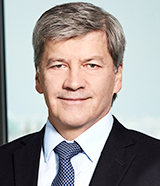 |
| Johann Strobl |
By the start of this year, the only big job outstanding was the sale of Raiffeisen’s Polish operation, which had been repeatedly stymied by regulatory issues. A planned sale to local state-controlled lender Alior Bank failed to go through in late 2016, while an IPO attempt in June was also cancelled due to pricing concerns.
In early April, however, the final piece of the puzzle fell into place when BNP Paribas agreed to buy Raiffeisen Polbank for €775 million. The bank’s €3.5 billion portfolio of FX loans, which had been one of the main barriers to the sale of the operation, will be retained and transferred to a newly created Polish branch.
The results of RBI’s transformation programme were evident in the group’s 2017 results. Net profit more than doubled to €1.1 billion, giving a return on equity of close to 14%, while NPLs were down to less than 6% of the total after intense work-out and restructuring efforts. This not only enabled RBI to resume dividend payments this year but also freed up capital for investment in digitalization and expansion in core markets. RBI today is a much stronger, more sustainable financial institution than it was three years ago and a worthy winner of CEE’s best bank transformation.