|
|
|
View the Euromoney 25 |

Jean Pierre Mustier is allowing no let-up in the relaunch of UniCredit after its €13 billion rights issue in the spring of 2017.
The share sale ended an immediate crisis of confidence over the bank’s capital position with impressive dexterity. It was the culmination of Mustier’s whirlwind return to the bank as chief executive in mid 2016.
His shock-and-awe tactics have brought a transformation in the market’s view of the pan-European lender. As the year drew to a close, even habitual bears Berenberg noted that costs and capital would beat the bank’s own 2017 targets.
On Project Fino – the €17.7 billion non-performing-loan securitization that was crucial to the success of the rights issue – progress has included ratings from DBRS and Moody’s, and the signing of definitive transfer agreements with investors Fortress and Pimco.
On the new business side, its trailblazing launch of instant payments between Germany and Italy in November brought new promise for its pan-European offering.
Mustier and his team are, however, well aware of the fundamental and difficult issues facing cross-border European commercial banks like UniCredit. The job is not just to convince investors of balance-sheet solidity and short-term profitability, it is also to improve the culture and coherence among bank staff in such a way that it creates confidence about the institution among clients and shareholders.
“We cannot relax; we need to keep transforming, but now we are making sure that we create the franchise,” Mustier tells Euromoney.
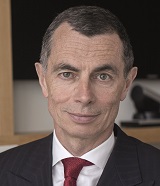 |
| Jean Pierre Mustier |
Boosting confidence within the bank’s various businesses comes after a heavy toll on both its external reputation and self-image from the precipitous pre-Mustier decline in its share price and from the continued strains of cost-cutting. It is also, perhaps, especially important for this French leader of an Italy-based bank to build support for his programme inside and outside the bank.
In the autumn, ready for the board’s renewal, UniCredit announced governance reforms, including changes to the board nomination process and voting rights. It is also moving its registered office from Rome to Milan. Around the same time, it announced the exit of veteran board member Fabrizio Palenzona (previously at one of the Italian banking foundations).
Palenzona’s replacement is respected former Italian finance minister and ex-central banker Fabrizio Saccomanni, who the board hopes will succeed the outgoing chairman, 82 year-old Giuseppe Vita.
Among senior management, the move to Deutsche Börse of Theodor Weimer, HVB’s chief executive, is possibly more to do with developments at the stock exchange than the bank, while leadership by his successor, former corporate and investment banking head Michael Diederich, might give the German business a fitting refresh.
Another senior pre-Mustier appointee left in September, former chief risk officer (CRO) Massimiliano Fossati. TJ Lim, Mustier’s deputy CRO and architect of the Fino transaction, was appointed CRO. Former Germany CRO Andrea Varese occupies the newly formed function of chief lending officer.
Mustier highlighted the pursuit of good management and client-orientated principles in a code of conduct published in May. He pointed to the start in December of microfinance in Italy, new financing for social entrepreneurs and financial education in schools by former and existing UniCredit employees in conjunction with the Italian education ministry.
Similarly, alleviating the stresses of the digital era are core to a recent declaration with the bank’s European works council on work-life balance, which he believes is important these days in attracting the best youngsters.
Mustier’s argument for these initiatives is simple: “To do well, you have to do good.”
And to do that, the bank must have what he calls “a strong internal dynamic”.
In a recent speech to wholesale bankers from the four corners of the network, “I underlined how we are one of the few pan-European banks today,” he says. “Europe needs pan-European banks, and we want to be one of the winning ones.”
The UniCredit pencil box handed out to staff children starting primary school (complete with paw signing by the bank’s Nordic mascot, Elkette) is another way of creating culture: employees should feel good about the company, so their offspring should also be proud their parent works there. They must think their parent’s company is just as cool as the fintech their playmate’s parent works for.
“You want to make sure you avoid transformation fatigue,” Mustier concludes. “When the teams are motivated, it reflects with the clients.”