Awards for Excellence 2017
 |
|
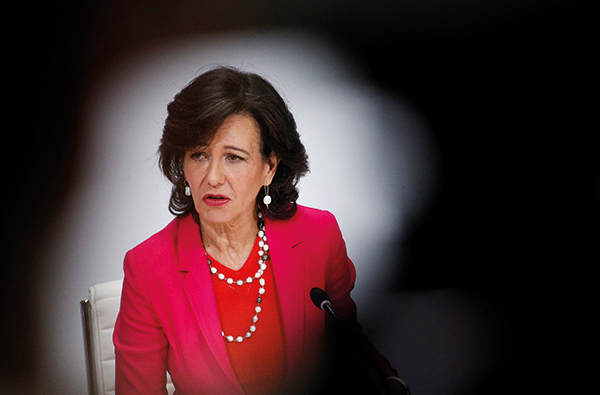
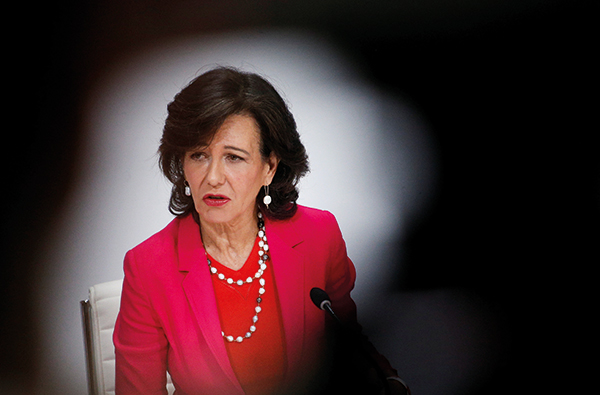
Group executive chairman Ana Botín. For Santander to be improving in all of its main countries is a truly remarkable achievement |
 |
| Full results |
Over the last year Latin American politics has bubbled over to dominate the region’s economies. Venezuela has been brought close to the edge of collapse by a dysfunctional populist regime that clings to power through the continuing loyalty of its military. The failure of Venezuela’s neighbours to produce a regional response to president Nicolas Maduro’s increasingly repressive regime reflects widespread problems of their own.
Brazil finally emerged from its biggest ever recession, only to face falling back into decline thanks to the political scandal overwhelming president Michel Temer. Argentina’s return to economic orthodoxy is creating the inevitable pain of transformation but, with key mid-term elections in October, it seems that foreign investors are waiting for signs that president Mauricio Macri’s project cannot be reversed. Investment waited nervously on the sidelines, until Argentina came with a surprise 100-year bond in June, generating an astonishing $10 billion of demand for its $2.75 billion deal.
The divergence of regional economic performance narrowed in the last 12 months, but not for wholly healthy reasons. While the southern Mercosur economies edged towards positive territory, the greatest driver of convergence was the slowing of the Pacific Alliance countries to the north as they face issues over energy and commodity prices. Also, these countries’ common theme – free trade – is beginning to seem a little out-dated in a Trump and Brexit world. Meanwhile, many of the central American economies are growing briskly as they benefit from low energy prices and the rewards of relative political stability.
Linguistic
As well as economic divergence, another regional split is linguistic. For global and regional retail banks, bridging the divide between the Spanish-speaking countries and Portuguese-speaking Brazil has seemed an insurmountable challenge.
Santander has for years been the nearest to pulling off this feat, but its Brazilian operation has disappointed. No more – but it is for much more than its Brazilian turnaround story that Santander wins the award for being the best bank in Latin America. Its Latin American operations have all been improving in recent years, not just in retail but also in corporate and investment banking. And for Santander to be improving in all of its main countries is a truly remarkable achievement.
The results translate into a very strong headline: attributable profit in the region was €3.39 billion ($3.79 billion) in 2016, up 19% year on year, with double digit growth in all units. Latin America contributed 40% of group profit in 2016 (Brazil 21%, Mexico 8%, Chile 6%, Argentina 4% and others 1%). Gross income grew 10% in the region thanks to better net interest income and higher fee income, while the bank also managed to constrain operating expenses.
The acceleration in performance continues. In the first quarter of 2017, Santander’s Latin America operations grew 30% year on year to €1.1 billion. The bank’s Brazilian and Chilean operations win this year’s awards for best banks in their home markets, while Mexico and Chile take the investment bank awards. And it is worth highlighting that its Mexican and Argentine banks are also market leaders. Santander Rio in Argentina is set to capitalize on the country’s resurgence as the banking market normalizes. Double-digit growth is forecast for the coming five years, and the bank is already posting impressive results: in the first quarter of 2017, its attributable profit rose by 69% to €108 million. This figure does not include its recent acquisition of Citi’s Argentine business, which will add 500,000 new retail clients.
In Mexico, where Santander has 13.5 million customers, it has been innovating with distinctive payroll and credit-card products and has refreshed its mortgage offering. It is also investing €750 million in a digital plan for the next three years. The bank increased net profits by 18% and attributable profit by 24% (to €163 million) in a tough business environment in 2016.