| 2009 Awards for Excellence | ||
ROTHSCHILD: Having helped governments prop up teetering banks, Rothschild is now advising on the overhaul of entire financial systems
|
Also shortlisted in this category: |
Previous generations of Rothschild bankers earned their firm the title of the great privatization adviser to governments across the world as European and developing nations eagerly embraced the UK’s Thatcher revolution in the 1980s and 1990s. The present generation stands at the forefront in advising sovereign governments on all the complexities of bolstering, safeguarding and reconfiguring their banking and financial systems. Often this requires them to advise on various forms of nationalization. It’s a new type of investment banking advisory business that has grown up in the past year, often beginning with a specific assignment relating to the recapitalization of a systemically significant institution and then quickly expanding into more wide-ranging and strategic advice around managing a sovereign’s larger contingent liabilities.
The business took off for Rothschild last year when the Dutch government decided it needed independent advice on all the complex issues arising from its support of ING. The share price of the large Dutch bank came under sustained pressure in September and October, and when it suffered large one-day falls the Dutch government, fearing a run on the country’s largest private deposit holder, decided it must step in to restore confidence.
Rothschild’s initial work centred on devising and structuring innovative capital instruments that would boost core tier 1 capital, deliver a commercial return to the Dutch government so as not to fall foul of EU restrictions on state aid, and carry sufficient incentives for ING to pay down the capital but not burden it with a crippling servicing cost. The same capital instruments were also applied to investments in Aegon and SNS Reaal, together totalling €13.75 billion.
It all came together over the classic long weekend, so familiar on both sides of the Atlantic in these months of financial system panics. After 72 hours of intense work, the immediate problem was stabilized but Rothschild bankers saw little time to relax. Jonathan Eddis, co-head of the UK financial institutions group, says: “Our advice to those we had been working with on the Dutch side was ‘that’s fine for now, but you should be preparing for the possibility of ING II, because the whole situation remains very unstable’. It wasn’t exactly what they wanted to hear. But we had to get down to the preparatory work for the next phase as quickly as possible.”
In the second stage of its work advising the government on ING, Rothschild helped structure the €28.1 billion illiquid asset guarantee facility against further losses in the bank’s portfolio of Alt-A and other structured mortgage assets that third-party specialists were brought in to value. It was devised, once again, to provide a commercial return and to avoid direct asset purchases, but also to leave some potential upside for the state on its economic exposure and to be of sufficient size to reassure the market about ING’s stability.
|
“The Dutch government must consider how to reshape the banking sector”
Maurice Topiol, Rothschild |
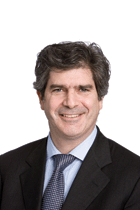 |
It was the fourth time the Dutch government had turned to Rothschild, and this all paved the way for further work. Maurice Topiol, head of Rothschild’s Benelux FIG team, says: “Because of its involvement in ING, ABN Amro and Fortis, the Dutch government is now a major investor in the country’s financial services industry. It must consider in the year ahead how to reshape the banking sector, in such a way that it is as competitive as possible, with as little government involvement as possible and as insulated against all the problems as possible.” Rothschild has done similar work for Denmark on its €13.6 billion credit institution support package and its recapitalization of Danske Bank, for the French government on its support to Dexia, for the Swedish government on its participation in the Nordea rights issue, and for the German government in relation to KfW’s stake in IKB Deutsche Industriebank.
In the past 12 months much of Rothschild’s work helped governments forestall systemic failure. Now what?
Ben Davey, co-head of UK FIG, says: “Most governments in Europe are not interested in running the banks but rather want to restore them to the point where they can stand on their own feet and operate again. There is a very delicate balance between ensuring banks have been sufficiently de-risked to cope while also sufficiently strengthened and incentivized to lend into the economy. A lot of the work we are doing now with governments is around how to stimulate SME lending.”
Not all this work is for European governments. After the government of Dubai decided it needed to provide targeted assistance to certain sectors of the economy and had issued bonds to the central bank of the United Arab Emirates to raise a $20 billion support fund, it retained Rothschild to advise on the establishment of the infrastructure of the new fund.
Because of its impressive track record, Rothschild now finds itself being approached by governments across Europe, Asia and the Middle East. It has even worked for the US government, advising it on the restructuring of the auto industry as it now travels through bankruptcy.


