 |
|
LATIN AMERICA |
| Pátria Investimentos |
| Mercado Mexicano de Derivados |
| BTG-Pactual |
| Eduardo Elejalde, Lavca |
| Protego Asesores |
| Latin America |
| Return to main index |
The 10-year old Mercado Mexicano de Derivados (MexDer), Mexico’s derivative exchange, has made a global name for itself. Unlike many of its emerging market peers, the exchange has taken steps to enable international members to operate remotely. The legal, regulatory and technological moves required for remote trading make MexDer a leading example of how to promote derivatives trading despite a small local market and stalled IPO issuance. “Back in 2004 the exchange was struggling. We have now turned things around,” says MexDer chief executive Jorge Alegria. “The first step was to get international members trading here and for that we needed to modernize the exchange. Now we have eight international members, including Morgan Stanley and Goldman Sachs.”
In 2004, the Mexican exchange signed an agreement with Meff, Spain’s futures and options exchange, to share technology and help Mexico develop an options market. Then, between 2005 and 2006, Alegria focused on revamping the legal framework in Mexico. To enable efficient remote trading of Mexican derivatives, the internal rules were altered – changes that the Mexican securities commission and the central bank were receptive to.
Next a letter of no action was required from the US and then withholding taxes were removed to make remote trading frictionless and easy. Once this was done, remote members started to join. The final step came in early 2009 when MexDer signed over to RTS front-end technology.
|
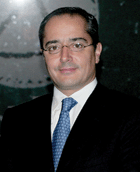
“If you trade outside an exchange then the cost of capital is greater” Jorge Alegria, MexDer |
 |
Alegria’s drive to meet international standards has even been at the expense of traded volumes. In 2008, volumes dropped, even though revenues increased, because a new 10-year swap contract was introduced to save large volumes of the small 28-day inter-bank equilibrium interest rate futures contract. Despite a busy four years, Alegria is not about to relax. “This year I think we will grow 11% in terms of revenues,” he says. “Then that will increase to at least 20% or more for several years. The derivatives market is about 25% of the cash market in Mexico. In Canada and Spain it’s about 50%. In Brazil and Korea the derivatives market is bigger than the cash market… this gives you some idea of how much room for growth we still have.” He credits a lot of Brazil’s derivatives market activity to the vibrant buy- and sell-side players: “Brazil has hundreds of brokerages. We have only 30 in Mexico.”
With the international platform in working order, Alegria is turning his focus to OTC clients and trying to eke out growth despite a total collapse in confidence in complex financial tools “We are well positioned to capture the migration from the OTC arena,” says Alegria. “If you are a bank, an intermediary, trading on an exchange has a lot of benefits. If you trade outside an exchange then the cost of capital, and the credit and market risk you take, is greater.”




