More on sovereign wealth funds
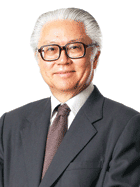 |
Tony Tan Keng Yam, GIC: usually takes small stakes |
You will have heard Singapore referred to as the Switzerland of Asia. There’s the emphasis on private banking; the willingness to protect the privacy of the client; even the whole gleaming cleanliness of the place. But now Singapore has overhauled the comparison, and perhaps changed its direction, by becoming the biggest shareholder in Switzerland’s most powerful bank. The Government of Singapore Investment Corporation, known as GIC, is one of two large sovereign wealth funds that invest on behalf of the Singapore state, the other being Temasek. It manages “well over $100 billion” in foreign reserves, according to GIC itself (that’s as specific as it gets; Standard Chartered reckons it’s $215 billion, Morgan Stanley $330 billion) through eight offices worldwide, invested in all the main asset classes. And in December it made its most high profile investment yet, when it put in SFr11 billion ($9.54 billion) of a SFr13 billion capital injection into UBS through a convertible note issue that will eventually give GIC around a 9% stake in the Swiss bank (the other SFr2 billion is from an unnamed Middle Eastern investor).
The injection follows UBS’s announcement of $10 billion of losses on sub-prime mortgage securities. The bank clearly needs the capital – and the market has responded well to the new investment – but what are the implications for UBS of having a Singaporean sovereign wealth fund as its largest shareholder?
Passive investor
GIC’s track record suggests that it will be a relatively passive investor. Tony Tan Keng Yam, deputy chairman and executive director of GIC, spoke in a statement about GIC’s “confidence in the long-term growth potential of the bank’s businesses,” although he did also note that the UBS purchase was an unusually high-profile one. “GIC’s preferred practice in respect of our public equity investments is to take relatively small stakes in companies for portfolio investment,” he said.
If this sounds familiar, it should: it mirrors the Abu Dhabi Investment Authority’s $7.5 billion, nearly 5% stake in Citi, secured a matter of weeks earlier. Like GIC, Adia is a below-the-radar investor by preference, generally trying to stay just below the limits at which regulators require disclosure of holdings in individual companies. Yet both have broken with their established practice because of what they see as the opportunities in ailing global financial services houses.
Tan singled out UBS’s global wealth management business for particular praise, and this is significant. Singapore has strong aspirations in wealth management and private banking; this is one of the handful of areas where it has clearly established itself as the regional centre at Hong Kong’s expense. A state-owned vehicle owning the largest stake in arguably the most important wealth management business in the world helps to bolster the message that Singapore wants to project: that it’s the place to go for wealth management in Asia.
From UBS’s side, one would imagine it won’t do the bank any harm at all in Singapore to have a state holding. It could pay off in attracting affluent capital, which might see the stake as a sort of stamp of approval; it could be handy in securing investment banking mandates too. But there is a flip side to that coin: Singapore is not beloved by all its neighbours, as the Thai response to Temasek’s holding in Shin Corp has shown. It might be the case that some Asian states have a problem with the bank’s new shareholder, although as things stand GIC is a long way short of anything like a controlling stake.
It has also been suggested that the stake might help UBS attract staff to the bank, a perennial problem in Singapore, particularly in wealth management. The bank already has 2,400 employees in the city state.
Useful partner
Matt McGrath, head of corporate communications for Asia Pacific at UBS, says the bank is “obviously delighted to have an investor of their [GIC’s] stature on the register… We feel that their investment has provided a meaningful endorsement of the underlying strength of our business.” Privately, the bank is understood to feel that GIC’s long-term approach makes it a useful partner and that there has been no indication it will interfere with the bank’s management. There is also a feeling that, for all the suspicion around sovereign wealth funds globally, Singapore’s is a reasonably safe bet given its legislative and regulatory framework and its western-style approach to financial markets. “It would be hard to see any circumstances where there would be day-to-day operational influence over the business,” says a bank insider.
One curiosity is that it was GIC, rather than Temasek, that took the stake. Temasek, after all, is the institution best known for its global banking assets, including stakes in Standard Chartered, Barclays, Bank of China, China Construction Bank, Hana Financial Group, ICICI, Bank Danamon Indonesia and (locally) DBS. Temasek, although hefty – it had a net portfolio value of S$164 billion ($112 billion) in March – is almost certainly smaller than GIC and might not have had the capital to spare to underpin a bid. Perhaps even sovereign wealth funds can at times be stretched for cash.


