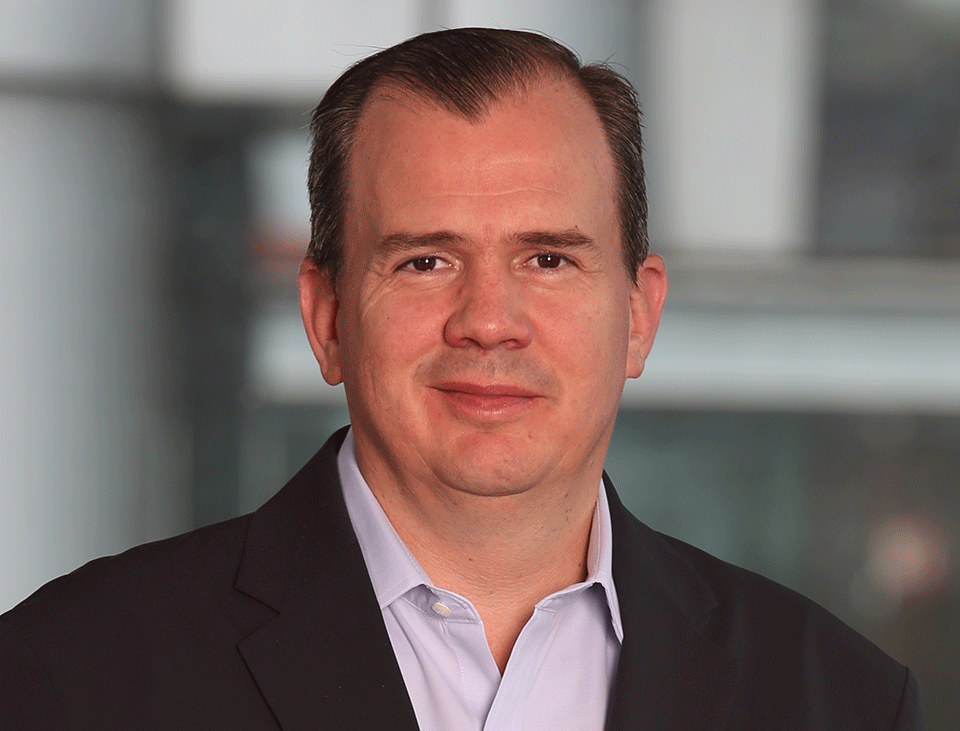
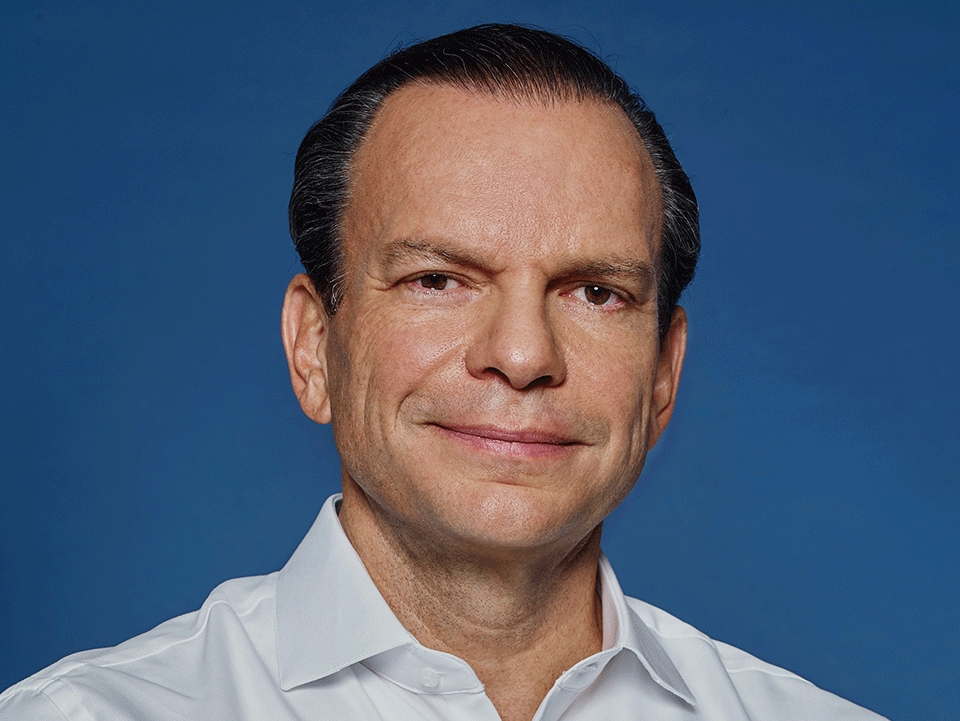
DIC Asset Management – a wholly owned subsidiary of Dubai International Capital, the international investment arm of Dubai Holding; HSBC Bank Middle East; and Oasis International Leasing – has concluded the first close of its MENA Infrastructure Fund with commitments totalling $300 million.
“The positive response by investors is indicative of their confidence in the region and in the fund’s ability to deliver attractive returns from an asset class with low volatility,” says Robert Swift, the fund’s chief executive. He adds that the infrastructure and energy sectors provide a range of opportunities and that the investment team at the fund has several initiatives already under way.
All three sponsors are also investors in the fund, which was established in 2006 with an ultimate $500 million final close target.
“The fund’s distinctive asset class provides investors with the opportunity for sector and geography-specific diversification of their portfolio and attractive returns on their investment,” adds Salem Rashid Al Noaimi, Oasis Leasing’s acting chief executive.
Infrastructure class
The background to the fund is that the mineral wealth and high GDP and population growth rates in the Middle East and North Africa region are driving the need for infrastructure and energy investment, which typically grows at a multiple to the underlying GDP growth rate. Countries in the MENA region are increasingly looking to the private sector for the delivery of such infrastructure and energy services, driving the need for private sector skills and capital. The MENA Infrastructure Fund will make investments across the entire infrastructure asset class, including utilities, energy, transportation, social infrastructure and public-private partnerships. The fund will invest in greenfield projects and corporate start-ups, and will provide capital to companies that are in their operational or growth phases.
Rabih Khoury, chief executive of DIC Emerging Markets, says that the venture of DIC, HSBC and Oasis provides an unrivalled combination of regional expertise, skills, relationships and financial strength.
“Investors will benefit from the experience and relationships of the three sponsors in the delivery of investment opportunities. In addition to the well-recognized stability and return prospects of the infrastructure asset class, the MENA Infrastructure Fund offers the added advantage of focusing on a region with a high-growth profile and hence large required infrastructure investments.”
Given that infrastructure expenditure over the next 10 years in the Middle East and North Africa region is estimated to be in excess of $300 billion, David Hodgkinson, chief executive of HSBC Bank Middle East, notes: “Not only does this sector provide good returns, but it also has a low correlation with other asset classes, which allows investors to reduce their portfolio risk.”